Following humanity's return to the Moon.
Moon Daily Editorial Team
Editorial Team

Moon Daily Editorial Team

Editorial Team

The Moon Daily Editorial Team produces Moon Daily's coverage of lunar exploration and science. We report on Artemis, landers and the Gateway, commercial lunar payloads, and the science of lunar geology, regolith and water ice. Articles reflect our team's collective editorial process, source verification, drafting, technical review, and editing, rather than a single writer's work. Moon Daily takes editorial responsibility for content under this byline. For more on how we work, see our editorial policy.

Moon Daily

The Trump administration’s proposed rewrite of the Uniform Guidance would require political appointees to review every discretionary federal grant for alignment with presidential priorities, turning peer-review panels of scientists into advisory bodies that agency officials could override at will

The Office of Management and Budget's May 2026 proposal to rewrite the Uniform Guidance drew nearly 500,000 public comments and a rare joint objection from the presidents of all three National Academies, who warned that inserting political appointees into peer review would reshape how every discretionary federal science grant is awarded.

Physics News

At Fermilab near Chicago, physicists raced muons around the same magnetic ring first used at Brookhaven in the late 1990s and, with more than double the 2023 data, confirmed the tiny particles still wobble in a way the Standard Model could not fully explain

Fermilab's Muon g-2 experiment, using a 50-foot superconducting ring shipped from Brookhaven in 2013, produced the most precise measurement of the muon's magnetic wobble ever taken — and a decade-long lattice calculation now suggests the Standard Model can explain it after all.

Terradaily

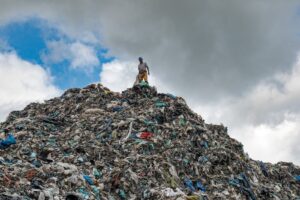
If nothing changes, the world is projected to generate enough mismanaged plastic waste between 2010 and 2050 to build a pile the size of Manhattan and 10 times the height of the Empire State Building, while most annual plastic waste will still go to landfills or incinerators

On a business-as-usual path, humanity will generate enough plastic waste by 2050 to bury Manhattan under a pile ten Empire State Buildings tall — and most of it will still end up in landfills or burned overseas.

Space Scopes

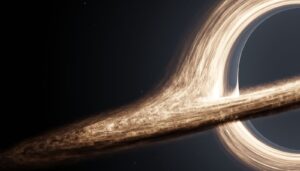
Ten years after LIGO’s first detection, the collaboration has now heard the clearest evidence for Stephen Hawking’s 1971 theorem that merging black holes must grow, not shrink, their combined surface area even as energy pours away as gravitational waves

A decade after LIGO's first detection, the collaboration has confirmed Stephen Hawking's 1971 black hole area theorem with a failure rate of only a few parts per thousand, using the clearest gravitational wave signal ever recorded.

Early Earth

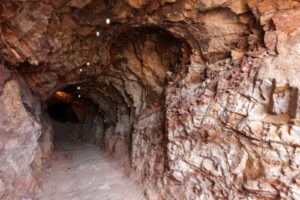
Pyrenean archaeologists long assumed sites above 2,000 metres were only used briefly in passing, but Cova 338 at 2,235 metres held 23 hearths and malachite fragments showing repeated planned occupation from the 5th to the 1st millennium BCE

At 2,235 metres in the eastern Pyrenees, Cova 338 has yielded 23 stacked hearths and burnt malachite fragments spanning from 5,500 to 3,000 years ago — overturning the assumption that high-altitude sites were only transit points and revealing one of Western Europe's earliest known copper-processing camps.

South America

Chile’s regional planning document lists a target date of 2035 for a buried tunnel under the Strait of Magellan’s Primera Angostura, a 3.7-kilometre crossing where ferries between Punta Delgada and Bahía Azul are routinely stopped by wind and waves

Chile's Magallanes region has written a target date of 2035 into its official development plan for a road tunnel under the Strait of Magellan at Primera Angostura, replacing a weather-dependent ferry crossing between Punta Delgada and Bahía Azul.

Moon Daily

The U.S. Ocean Observatories Initiative cost about $386 million to build a network of more than 900 ocean instruments meant to run for 25 years, and the National Science Foundation ordered four of its five arrays pulled from the water a decade in before reversing course

The U.S. Ocean Observatories Initiative built a $386 million network of more than 900 deep-sea sensors designed to run 25 years. A decade in, NSF ordered four of its five arrays pulled from the water — until a bipartisan revolt in Congress hit pause.

Earth Observation

Every year, roughly 27.7 million tonnes of dust lifted from the Sahara crosses the Atlantic and settles on the Amazon, and the phosphorus in that red haze is what stops the rainforest soil from starving

Every year, roughly 27.7 million tonnes of Saharan dust cross the Atlantic and settle on the Amazon, delivering about 22,000 tonnes of phosphorus — almost exactly what the rainforest loses to its own rivers. NASA's CALIPSO satellite traced the flow to a single dry lake bed in Chad.

Earth Observation

Why did a Southern Hemisphere reef system suffer four mass bleaching events in seven years while isolated patches within the same 2,300-kilometre structure kept their coral cover almost untouched?

Between 2016 and 2022, the Great Barrier Reef bleached four times — a cadence never recorded before. Yet parts of the same 2,300-kilometre system barely changed. Water depth, cloud cover, current patterns, and which coral species arrived first explain why one reef died white while its neighbour stayed intact.

Moon Daily

The Moon is under constant micrometeoroid bombardment, and because there is no atmosphere to slow anything down, even grain-sized particles arrive at up to 72 kilometres per second and briefly vaporise the rock into a glowing plasma — the Artemis II crew watched six of those flashes in April 2026

The Moon has no atmosphere to slow incoming debris, so grain-sized meteoroids strike its surface at velocities approaching 72,000 kilometres per hour — briefly vaporising rock into glowing plasma. In April 2026, Artemis II astronauts watched this bombardment happen in real time.