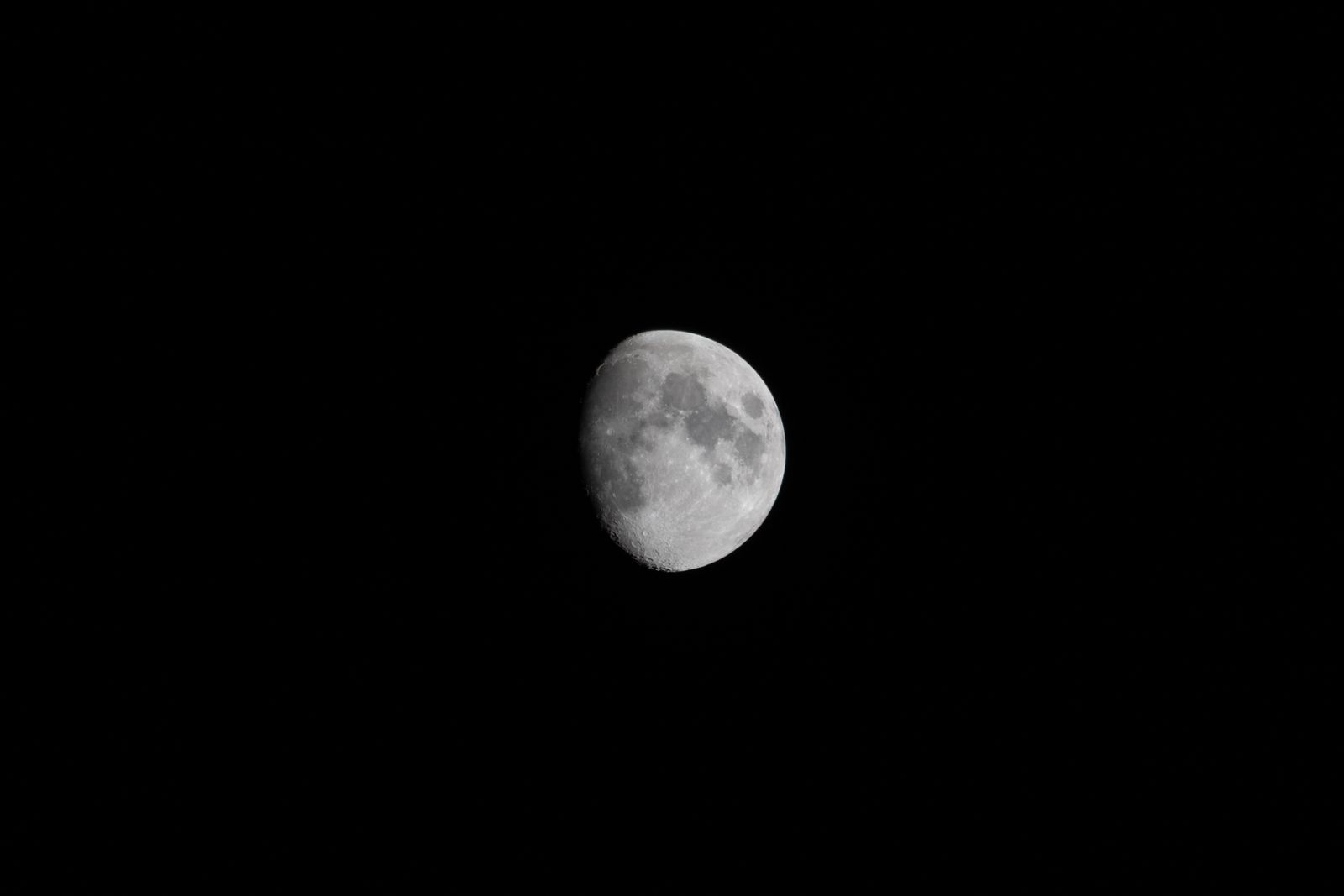
On 6 February 1971, near the end of Apollo 14’s second and final moonwalk, commander Alan Shepard stood on the powdery surface of Fra Mauro and attached a modified six-iron head to the handle of a lunar sample collection tool. The stiff, pressurised suit made a normal two-handed golf swing impossible, so he planted his boots and swung with one arm.
The sequence was less effortless than the famous footage can make it seem. Shepard’s first attempt mostly struck the regolith. His next contact moved the first ball only two or three feet, but on another swing he caught that same ball properly and sent it approximately 24 yards into a nearby crater. He then dropped a second ball and struck it roughly 40 yards, calling out, “Miles and miles and miles.” Later analysis put the two completed shots at approximately 24 and 40 yards.
A six-iron hidden in a tube sock
Shepard did not bring a complete golf club to the Moon. He worked with Houston golf professional Jack Harden to modify a Wilson Staff Dyna-Power six-iron head so that it could be attached to the collapsible handle of a contingency sample collection tool. According to the United States Golf Association’s history of the object, the clubhead and two balls travelled inside a tube sock.
The sampling tool’s handle, made for lunar fieldwork rather than golf, served as the improvised shaft. Shepard carried the small collection privately and paid for it himself.
He also sought permission before the mission. Shepard presented the idea to Bob Gilruth, then director of NASA’s Manned Spacecraft Center. Gilruth agreed on strict conditions: the demonstration could happen only after the mission’s planned work was complete, and Shepard would abandon it if anything had gone wrong.
Why he could only swing with one hand
The Apollo A7L suit was pressurised against the vacuum outside. Its joints resisted bending, and the life-support backpack further restricted Shepard’s movement through the shoulders and waist. Bringing both hands together and rotating through a conventional swing was not practical.
Instead, Shepard held the improvised club with his right hand and made several short, chopping motions. Bulky gloves reduced his feel for the club, while the uneven regolith offered nothing resembling a stable tee box.
Once the demonstration was over, Shepard put the clubhead away and completed the final preparations for departure with lunar module pilot Edgar Mitchell. The clubhead returned to Earth. The golf balls remained at Fra Mauro.
Apollo 14 had already survived serious problems
Apollo 14 was the third crewed mission to land on the Moon. Shepard commanded the flight, Stuart Roosa remained in lunar orbit aboard the command module Kitty Hawk, and Mitchell descended with Shepard in the lunar module Antares. The Saturn V launched from Kennedy Space Center on 31 January 1971.
The journey was not trouble-free. NASA’s mission account records that six attempts were required to achieve a secure docking between Kitty Hawk and Antares. Later, a faulty signal from the lunar module’s abort switch created the risk that the guidance computer could initiate an unwanted abort during descent. Mission Control developed a software workaround before Shepard and Mitchell landed on 5 February.
The most frustrating episode came during the second moonwalk. Shepard and Mitchell attempted to reach the rim of Cone Crater, where geologists hoped they could collect material excavated from deep beneath the lunar surface. Navigation across the rolling terrain proved harder than expected. NASA’s reconstruction of the moonwalk says time and consumables forced them to turn back when they were approximately 150 feet from the rim.
How far a golf ball can travel on the Moon
Lunar gravity is approximately 1.62 metres per second squared, compared with about 9.81 on Earth. The Moon also has no substantial atmosphere, which means a flying ball encounters virtually no aerodynamic drag.
In a simplified ballistic calculation, a projectile launched at the same speed and angle would remain airborne roughly six times longer under lunar gravity and could travel about six times farther. That comparison assumes an ideal launch and ignores the atmospheric effects acting on the Earth version of the shot.
Shepard’s swing was nowhere near ideal. He was using one hand, wearing thick gloves, standing in loose dust and striking with a clubhead attached to a scientific tool. Seen in that context, a 40-yard shot was not an embarrassing distance. It was a remarkably successful one-handed chip made inside a spacecraft-shaped pressure garment.
The image work that pinned down the distances
For decades, the distances remained uncertain because the live television picture was grainy and neither ball could be followed clearly to its resting place. Shepard’s playful claim of “miles and miles and miles” became better remembered than the physical result.
In 2021, British imaging specialist Andy Saunders revisited high-resolution scans of the original Apollo photography. His analysis for the USGA used a stitched panorama made from Hasselblad photographs, along with enhanced mission footage, to identify Shepard’s position, the divot marks and the two likely resting places.
Imagery from the Lunar Reconnaissance Orbiter supplied scale and helped match larger features, equipment tracks and terrain around the landing site. The orbiter itself did not photograph the golf balls as individually resolved objects. The ball locations came from the much closer Apollo photographs, interpreted against the broader lunar landscape.
The resulting measurements were approximately 24 yards for the first ball and 40 yards for the second. The correction does not diminish the moment. It replaces a joking astronaut’s exaggeration with a result that is more impressive once the restrictions of the suit and equipment are understood.
The clubhead came home. The balls did not.
Shepard later gave the original modified clubhead to the USGA Museum. The organisation’s current account says a replica club and the tube sock used to carry the equipment are displayed by the World Golf Hall of Fame.
The two balls remain at the Apollo 14 landing site, alongside the descent stage of Antares, scientific equipment and other material left by the crew. No human mission has returned to Fra Mauro since 1971.
The balls have spent more than half a century exposed to vacuum, radiation, extreme temperature changes and occasional micrometeorite impacts. Those conditions may have altered their surfaces, but their exact condition is unknown because nobody has inspected or photographed them at close range since Shepard left.
The conspiracy footnote
The golf footage has also attracted its share of suspicion. In May 2026, professional golfer Bryson DeChambeau said that he believed people had reached the Moon but doubted whether the familiar footage was authentic. The Guardian reported his distinction between accepting the landing and questioning the video.
The documentary record does not depend on a single television clip. The event appears in mission communications and surface photography, and it was transmitted as part of the live lunar television feed. Later image work connected Shepard’s stance, divots and equipment with photographs of the same terrain, while orbital imagery independently matches the larger landing-site features and astronaut tracks.
The evidence therefore supports the ordinary explanation: Shepard really did strike two golf balls on the Moon, although neither travelled anything close to the miles he jokingly announced.
What it meant, and what it did not
Shepard died in 1998. In a NASA oral-history interview recorded shortly before his death, he described the demonstration as both a piece of fun and a way to show the difference between Earth and lunar gravity. He emphasised that the equipment had been privately funded and that the stunt would have been cancelled if the mission encountered unresolved problems.
The family connection to space continued. Shepard’s daughter, Laura Shepard Churchley, flew aboard New Shepard in December 2021. Blue Origin’s official mission account identified the flight as the company’s third human spaceflight.
The golf shot lasted only a few moments at the end of a demanding mission. It did not advance lunar science, but it gave viewers on Earth an intuitive glimpse of movement in one-sixth gravity and revealed something recognisably human inside an operation governed by checklists, engineering limits and risk.
More than 55 years later, the two balls are still somewhere on the grey surface of Fra Mauro, approximately 24 and 40 yards from the place where Alan Shepard stood.