
Following humanity's return to the Moon.
Moon Daily Editorial Team
Editorial Team

Moon Daily Editorial Team

Editorial Team

The Moon Daily Editorial Team produces Moon Daily's coverage of lunar exploration and science. We report on Artemis, landers and the Gateway, commercial lunar payloads, and the science of lunar geology, regolith and water ice. Articles reflect our team's collective editorial process, source verification, drafting, technical review, and editing, rather than a single writer's work. Moon Daily takes editorial responsibility for content under this byline. For more on how we work, see our editorial policy.

Moon Daily

In 1952, Rosalind Franklin captured an X-ray diffraction image she catalogued as Photo 51 — the dark cross at its centre showed DNA was helical months before Watson and Crick built the model that made them famous

In May 1952, Rosalind Franklin and Raymond Gosling exposed a strand of DNA to X-rays for 62 hours in a King's College basement. The resulting image, Photo 51, showed the helical structure of DNA months before Watson and Crick built the model that made them famous.

Moon Daily

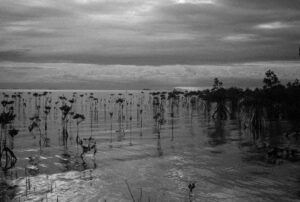
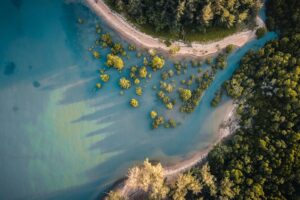
How does a coastal tree that grows with its roots in salt water store three to five times more carbon per hectare than mature tropical rainforest, and why do most large-scale plantings of it still fail within a decade?

Mangrove forests lock three to five times more carbon per hectare than tropical rainforest by burying it in anoxic tidal mud — and most replanting schemes fail because they put the wrong species on the wrong elevation in soil that was never forest to begin with.

Moon Daily

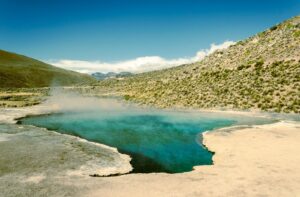
The boiling river of the Peruvian Amazon runs for about 6.4 kilometres at temperatures near 100 degrees Celsius, hot enough to cook small animals that fall in, and it flows nowhere near an active volcano or any obvious geothermal source

The Shanay-Timpishka in central Peru runs hot enough to cook small animals, with water temperatures approaching boiling — yet the nearest active volcano is hundreds of miles away. The heat comes from a subtler system, and the surrounding forest offers a rare preview of a warmer Amazon.

Moon Daily

What happened when a Pacific archipelago began systematically removing rats, stoats and possums from offshore islands, and native birds that had not nested on the ground for a century started returning within a few breeding seasons?

New Zealand's Predator Free 2050 programme has cleared rats, stoats and possums from offshore islands and fenced sanctuaries — and native birds like kaka, kereru and tui have returned to Wellington suburbs within a few breeding seasons, some by more than 300 percent.