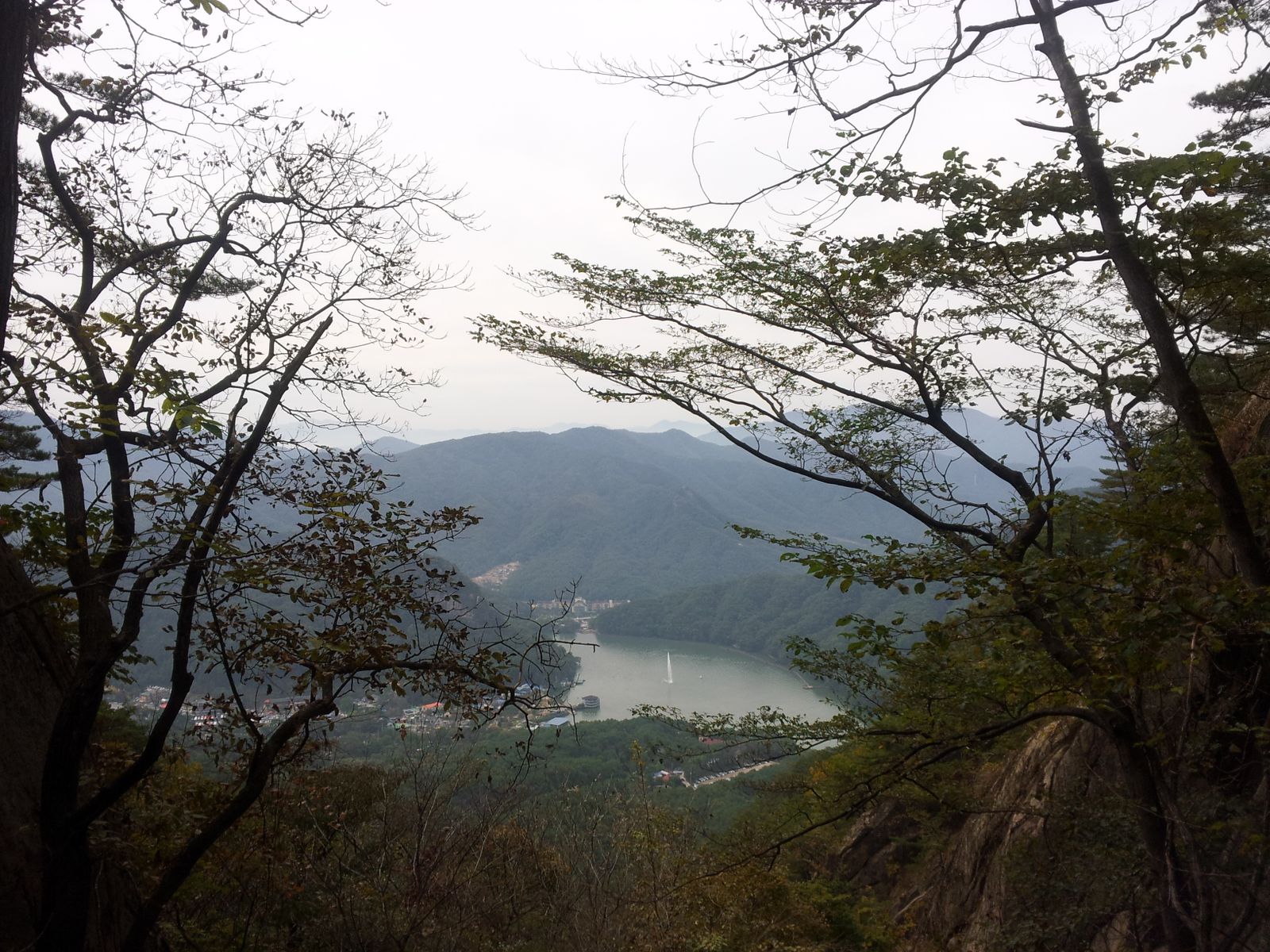
South Korea rebuilt its forests through two centrally directed rehabilitation plans beginning in 1973, but planting was only half the mechanism. The government restored roughly 2.14 million hectares during the first two plans, planted about 4.9 billion trees, shifted households away from gathering firewood, and tied the programme to village development and rising rural incomes. Researchers studying the country’s forest transition identify that combination of planting, energy substitution, public participation, and government coordination as the reason the recovery held.
The starting number needs careful wording. In 1955, stocked forest covered only about 35 percent of South Korea’s national territory, while large areas officially classified as forest were bare or severely degraded. The peer-reviewed reconstruction of South Korea’s forest transition places the turning point at that 35 percent low, with the strongest gains beginning in the early 1970s.
Today, the Korea Forest Service reports approximately 6.3 million hectares of forest, covering 63 percent of the country. That is not quite two-thirds, but it is close enough that the change can be seen from almost any highway, railway, or apartment window facing the mountains.
What the 35 percent figure actually describes
The Korean War ended in 1953 with hillsides already weakened by decades of timber extraction, fuelwood cutting, colonial exploitation, and wartime destruction. South Korea’s National Archives says that forest conditions were at their worst that year: roughly half of the country’s forest area was denuded, while average standing timber volume had fallen to just 5.7 cubic metres per hectare.
Those figures describe more than a shortage of trees. The official archive of Korea’s forest rehabilitation distinguishes between land legally recorded as forest and land that was actually carrying a viable tree stock. Much of the mountain land still existed on maps as forest, but on the ground it held scrub, grass, exposed soil, or only scattered trees.
Earlier governments had planted trees, established fuelwood plots, and attempted erosion-control work. The results remained limited because cutting continued faster than trees could mature, households still depended on surrounding slopes for cooking and winter heat, and the state lacked an effective system for coordinating local implementation.
A Food and Agriculture Organization history of Korean forestry traces the damage through overcutting during the colonial period and the Korean War. It also records the legal and administrative groundwork laid during the 1960s, including the Forest Law of 1961, before the government attempted the much larger national programme.
The plan that began in 1973
President Park Chung-hee’s government launched the First 10-Year Forest Rehabilitation Plan in 1973. The programme called for one million hectares of denuded land to be restored, fast-growing trees to be planted on damaged slopes, shifting cultivation to be brought under control, and the public to be mobilised through a national planting campaign.
The target was reached much earlier than scheduled. According to the Korea Forest Service’s account of the first plan, more than one million hectares were restored between 1973 and 1978, completing what had been designed as a ten-year project four years early.
The second plan began in 1979 and continued through 1987. A peer-reviewed review of Korea’s reforestation projects records approximately 1.08 million hectares and 2.96 billion trees under the first plan, followed by about 1.06 million hectares and 1.915 billion trees under the second.
That produces a combined total of roughly 4.9 billion trees across 2.14 million hectares during the two rehabilitation plans. The larger figure of 11 billion trees, sometimes used in retrospective accounts, refers to cumulative planting over a much longer period and should not be assigned solely to the years between the Korean War and the late 1970s.
The programme was centrally directed rather than spontaneous. In 1973, the Forest Service was placed under the Ministry of Home Affairs, giving forestry officials direct access to the provincial, county, and village administrative network that was already implementing national development policies.
An analysis published by the Food and Fertilizer Technology Center explains that the transfer allowed the government to coordinate reforestation with local administration, the Saemaul Undong rural-development programme, and enforcement against illegal cutting. Planting was no longer an isolated forestry activity handled from Seoul; it became part of what local governments were expected to deliver.
Fuel was the hinge
Seedlings could not survive while millions of households still needed nearby trees for heat. Through the 1950s and early 1960s, domestic fuelwood consumption was so heavy that researchers have estimated it at roughly 10 million cubic metres a year, an enormous draw on forests whose standing volume was already dangerously low.
The energy transition had begun before the 1973 plan. The government restricted the movement of fuelwood into major cities and promoted domestically produced anthracite briquettes, commonly known as yeontan, as an alternative for cooking and ondol floor heating.
A study in the Journal of Korean Society of Forest Science found that by 1970 only 5.2 percent of urban households were still using forest products as fuel. Rural-to-urban migration and later transitions to oil, liquefied petroleum gas, and city gas reduced the pressure further.
The replacement fuel created other environmental costs, particularly air pollution and carbon emissions. Historically, however, it broke the direct link between a cold winter and the cutting of newly planted slopes, giving young forests time to establish roots and retain soil.
Rising farm incomes mattered as much as the physical availability of briquettes. A 2017 study of Saemaul Undong and forest rehabilitation found that public participation, income-producing planting, agricultural roads, and improving rural earnings helped households shift from gathered fuelwood to purchased fossil fuels.
This is why the programme cannot be reduced to the number of seedlings distributed. South Korea changed the economic calculation surrounding the forest: trees became more valuable left on the slope, while collecting enough wood to heat a home became less necessary and less attractive.
What the recovery achieved
The most dramatic change occurred not only in the area labelled forest, but in the amount of living wood standing on it. Average growing stock rose from 5.7 cubic metres per hectare in 1953 to about 10 in 1972, 126 by 2010, and approximately 176 by 2023.
The difference is visible in how the slopes behave. Tree roots and leaf litter slow runoff, help soil remain on steep ground, and allow damaged watersheds to rebuild processes that bare hills cannot perform effectively.
The result should not be confused with an untouched ancient ecosystem. Much of South Korea’s present forest biomass accumulated after the early 1970s, and large areas were initially planted with fast-growing trees chosen because they could stabilise poor soil or provide useful timber and village income.
That makes the landscape almost the reverse of the ancient trees explored in Moon Daily’s account of California’s 4,800-year-old bristlecone pines. South Korea’s forest is striking because so much of it is younger than the armistice that preceded its recovery.
It also differs from projects designed to stop an existing forest from disappearing. Moon Daily’s report on forest-protection agreements in Peru’s Alto Mayo describes incentives for keeping mature forest standing, while South Korea had to rebuild tree volume across land that had already been stripped.
South Korea therefore produced a recovered working forest rather than a reconstruction of every ecosystem that existed before industrial logging and war. It stores carbon, holds soil, supplies recreation and water-related benefits, and supports wildlife, but it also requires continuing management as its planted stands age.
The forest now faces a different danger
For decades, the defining image of environmental danger in South Korea was a bare reddish hillside. The newer image is fire moving through continuous mountain vegetation during a dry, windy spring.
The 2022 Uljin-Samcheok fire was a national record at the time, burning more than 20,000 hectares. It was surpassed in March 2025, when South Korea’s worst recorded wildfire disaster scorched roughly 48,000 hectares, destroyed thousands of structures, displaced thousands of residents, and caused 31 deaths, according to the government figures reported by Yonhap.
The challenge has therefore changed. The country is no longer trying simply to put trees back on empty mountains; it must manage an extensive forest for fire, drought, pests, biodiversity, recreation, carbon storage, and the safety of communities built close to wooded slopes.
That complication does not diminish what happened after 1973. It shows how completely the landscape has changed: the government that once struggled to keep seedlings from being cut now has to decide how to thin, diversify, protect, and renew forests containing more than a billion cubic metres of standing timber.
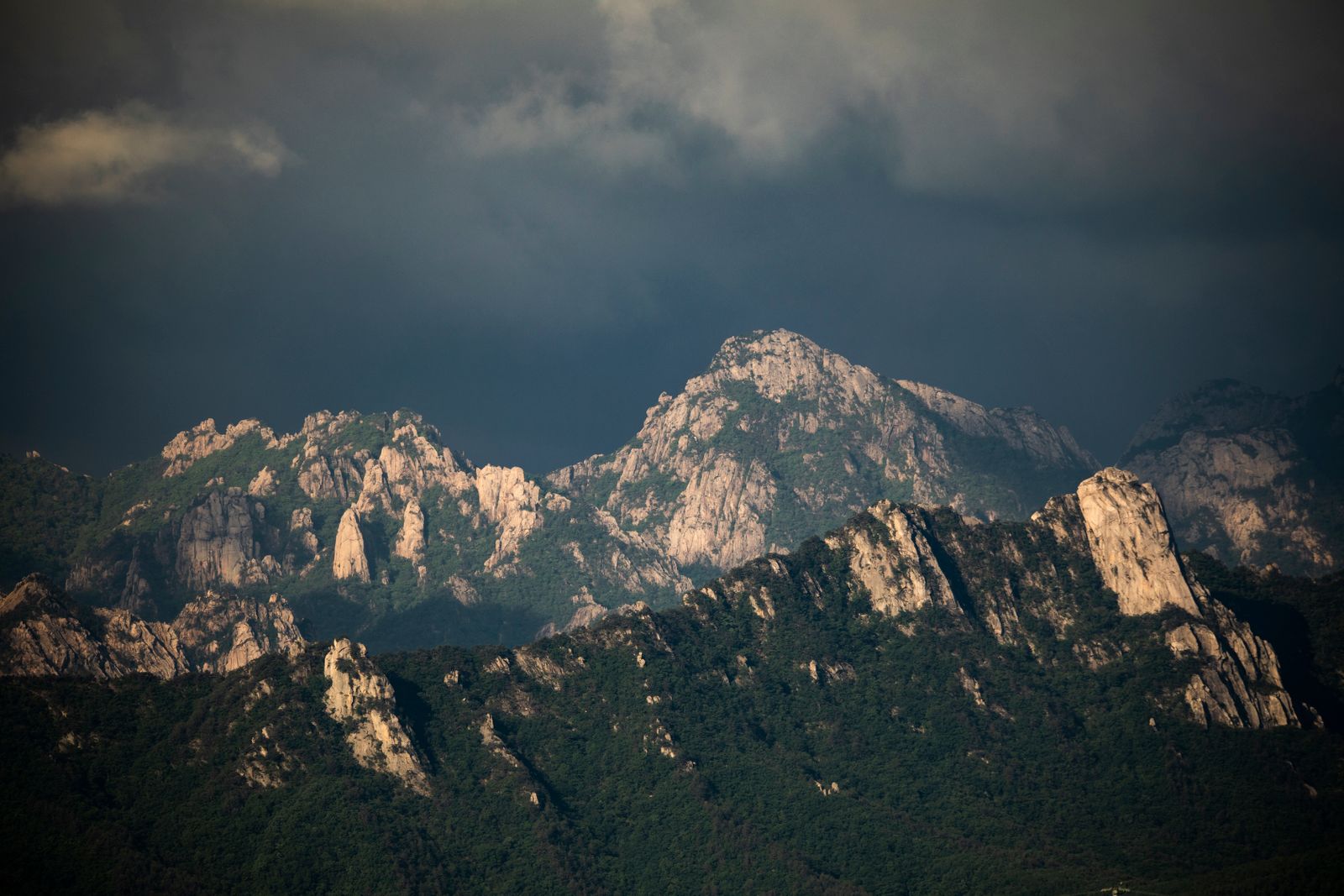
On a clear autumn morning, the ridges of Bukhansan rise above Seoul in layers of granite and canopy. Oaks and pines cover slopes that photographs from the post-war period show as pale, eroded ground, while apartment towers press against the forest boundary below.
Many of the trees visible from the ridge began growing during the first or second rehabilitation plan. They are younger than the war, older than the digital city beneath them, and still adding another ring to a recovery that has not finished changing shape.