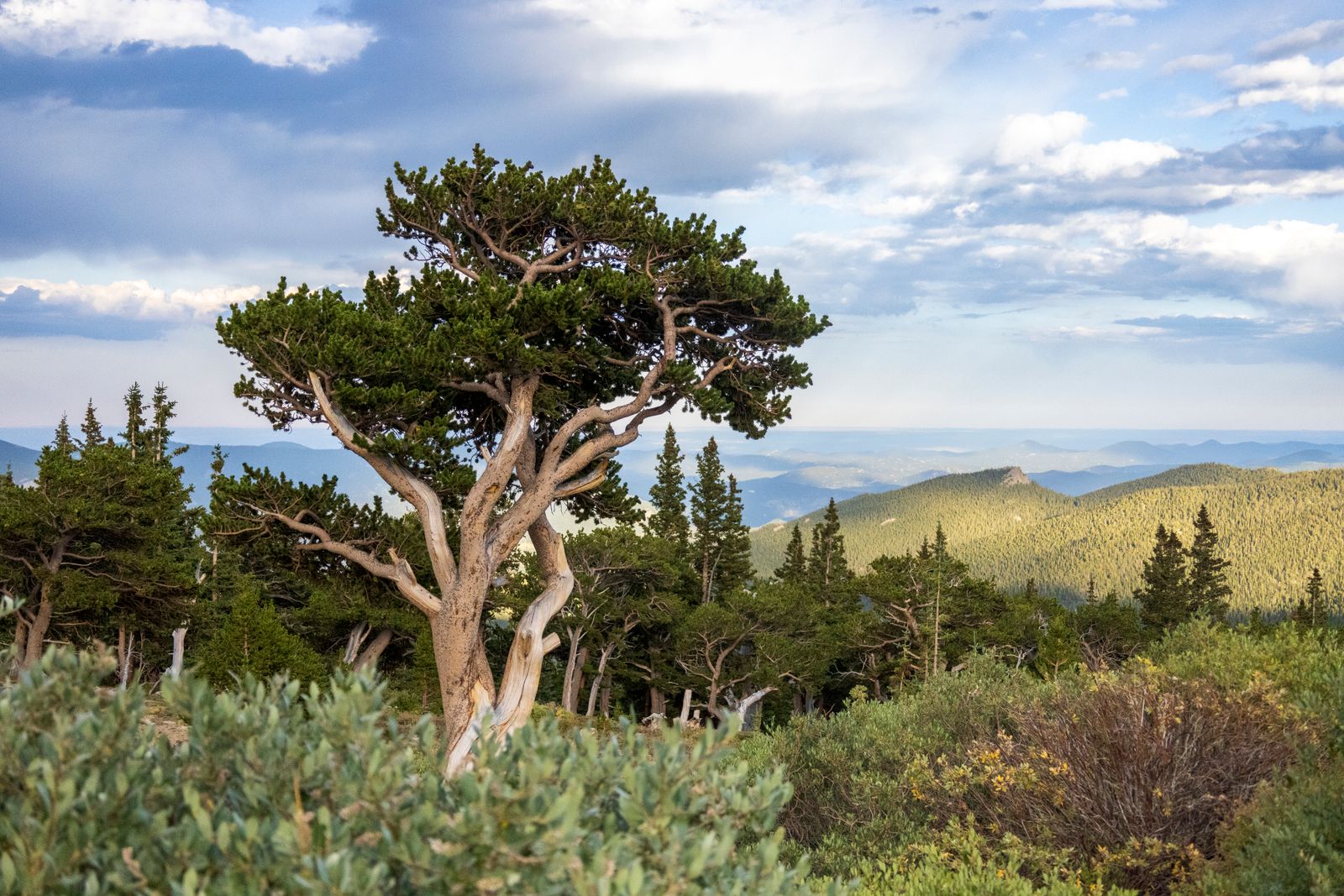
High on a windswept ridge in California’s White Mountains, at an elevation where oxygen thins and the soil is little more than crushed dolomite, a Great Basin bristlecone pine called Methuselah has been alive for roughly 4,800 years. Its first growing season came before the Great Pyramid of Giza was built. When Khufu’s masons were still cutting limestone blocks around 2560 BCE, this tree was already a sapling with more than two centuries of rings behind it.
The tree is not tall. It is not photogenic in the way a sequoia is photogenic. Much of its trunk is dead wood, sandblasted silver by millennia of wind. Only a thin ribbon of living bark connects a few surviving branches to the roots. And yet researchers at UC Davis who sequenced its genome describe Pinus longaeva as the oldest known non-clonal organism on Earth, with some individuals approaching 5,000 years.
Methuselah has watched the Bronze Age begin and end. It was standing when Stonehenge’s sarsens were raised, when the Trojan War was fought, when Rome fell, when the Black Death moved through Europe, when the first radio signal crossed the Atlantic. It is still standing now.
The tree that was ancient before the pharaohs
Dendrochronologist Edmund Schulman had spent more than a decade searching the American West for the oldest living trees. In 1953 he detoured into the White Mountains, and in a subalpine grove near the treeline he pulled a slender core of wood from a battered pine using an increment borer, a hand-cranked tool that extracts a pencil-thin sample without felling the tree.
He counted the rings. There were more than 4,800 of them. Follow-up cores confirmed the estimate, and Methuselah — named for the biblical patriarch said to have lived 969 years — became the oldest documented non-clonal tree on the planet.
To put that number in a human timeline: the tree germinated around 2833 BCE. That is roughly three centuries before construction began on the Great Pyramid. It predates the invention of the wheel in most parts of the world. It predates written Chinese script, the founding of Troy, the birth of Abraham in most biblical chronologies.
The U.S. Forest Service keeps its exact location on the 4.5-mile Methuselah Trail in Inyo National Forest a secret. The agency has never confirmed which pine in the grove is Methuselah, and rangers still decline to say. The caution is not paranoia. Ancient trees have already been lost to human carelessness, and one particular loss haunts the field.
Why extreme scarcity is the trick
Bristlecones do not live long because their environment is kind. They live long because it is brutal. The White Mountains grove sits between 9,500 and 11,800 feet, where the growing season lasts about six weeks, temperatures plunge well below freezing much of the year, and the dolomite soil holds almost no nutrients. Nothing else wants to grow there.
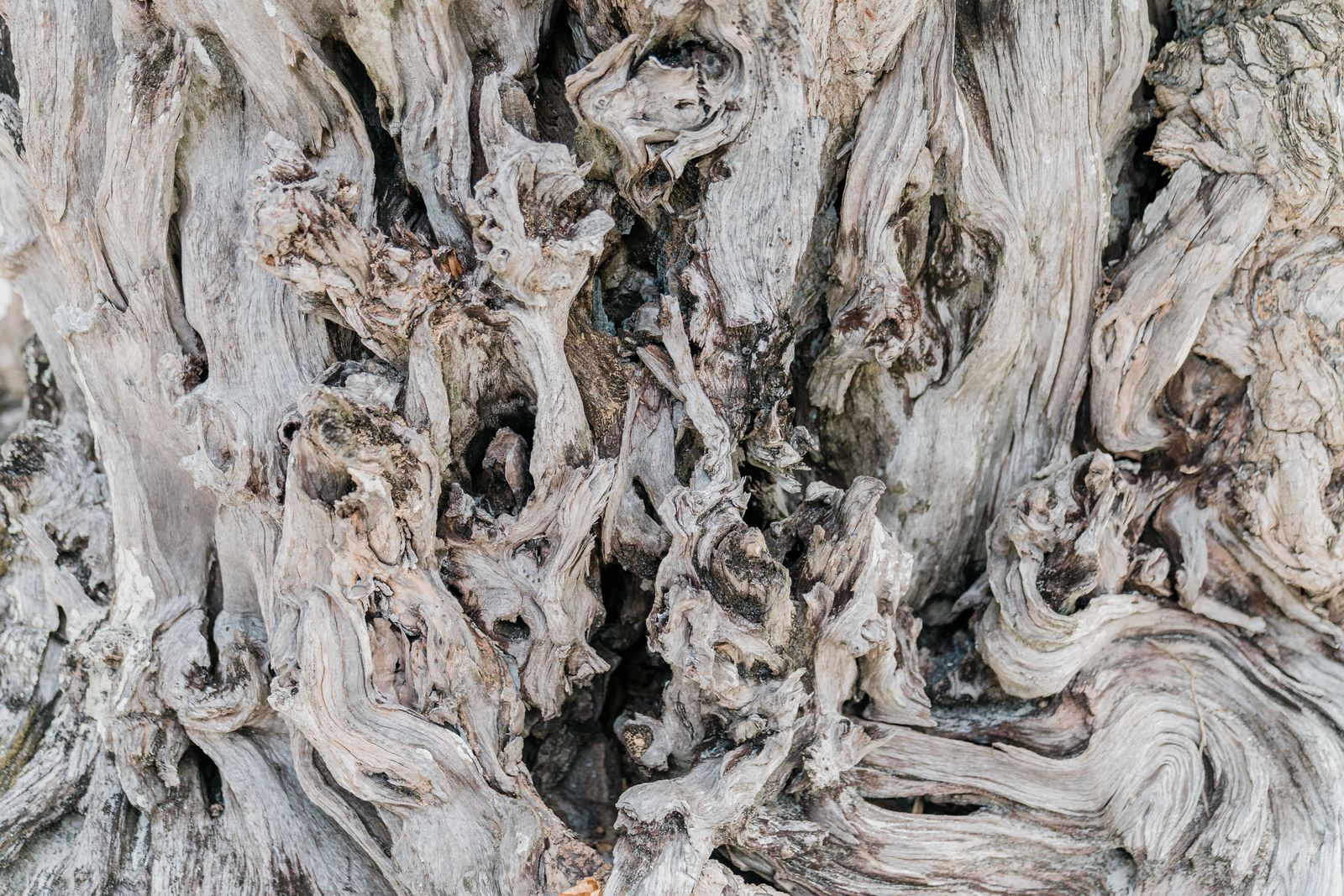
That scarcity is the whole trick. Slow growth produces wood so dense and so saturated with resin that insects and fungi cannot break it down. The tree adds mass at a pace that would kill a faster-growing conifer through simple starvation.
The needles behave the same way. Most pines shed their needles every two to four years. Bristlecone needles, arranged in bundles called fascicles, can stay attached to the branch for decades, a record among conifers. Keeping the same photosynthetic hardware for so long is metabolically cheap. It also means the tree never has to spend a bad year rebuilding what it lost.
Then there is the trunk itself. In an old bristlecone, most of the wood is already dead. Only a narrow strip of cambium — sometimes just a few centimeters wide — carries water and sugars between roots and crown. If lightning kills half the tree, the other half keeps going. The BBC Science Focus survey of the world’s oldest trees describes this partial-death strategy as a defining feature of the species.
The mistake at Wheeler Peak
In 1964, a graduate student named Donald Currey was studying glacial history near Wheeler Peak in eastern Nevada. He wanted a core from an old bristlecone to help date the retreat of local glaciers. His increment borer broke inside the tree. With permission from the U.S. Forest Service, he cut the tree down to retrieve his sample.
Only after it was felled did anyone count the rings. The tree, later known as Prometheus, was at least 4,862 years old. It was older than Methuselah. It had been alive since before the pyramids, and it was killed to answer a question about ice.
Prometheus is why the Forest Service will not tell you which tree on the Methuselah Trail is Methuselah. It is why researchers now use partial cores, statistical models, and satellite data instead of saws. It is also why the story of the world’s oldest tree is always shadowed by a story of the world’s second-oldest, cut short by a borer that jammed at the wrong moment.
What the genome revealed
In 2024, a team coordinated by UC Davis professor emeritus David Neale and geneticist Steven Salzberg at Johns Hopkins published the first complete genome sequence of Pinus longaeva in the journal G3: Genes|Genomes|Genetics. The genome is enormous — 24 billion base pairs, roughly eight times the size of the human genome, containing 21,364 protein-coding genes.
Most of that DNA is repetitive sequence that appears to do nothing. According to a UC Davis release, researchers found that most of the bristlecone pine’s genome consists of repetitive sequences that appear to cause no harm to the organism despite being carried through evolutionary history.
Two findings stood out. The tree carries an unusually large set of disease-resistance genes, which helps explain why fungi and bark beetles have such trouble getting purchase. And its telomeres — the protective caps on the ends of chromosomes that shorten every time a cell divides — are longer than in other conifers. Long telomeres are associated with slow cellular aging.
There is a theory, discussed cautiously by Neale, that bristlecones may not biologically senesce at all. Human cells eventually stop dividing and die. Bristlecone cells appear to keep functioning indefinitely. When one of these trees finally dies, it is almost always from an outside cause — fire, wind, drought, a beetle outbreak, an axe — rather than from anything resembling old age.
Neale suggested that comparing organisms with 5,000-year lifespans to those living 100 years could provide valuable insights into longevity. Neale also acknowledged that the bristlecone pine might be fundamentally unique in its longevity, with no comparable organisms.
The Paiute knew first
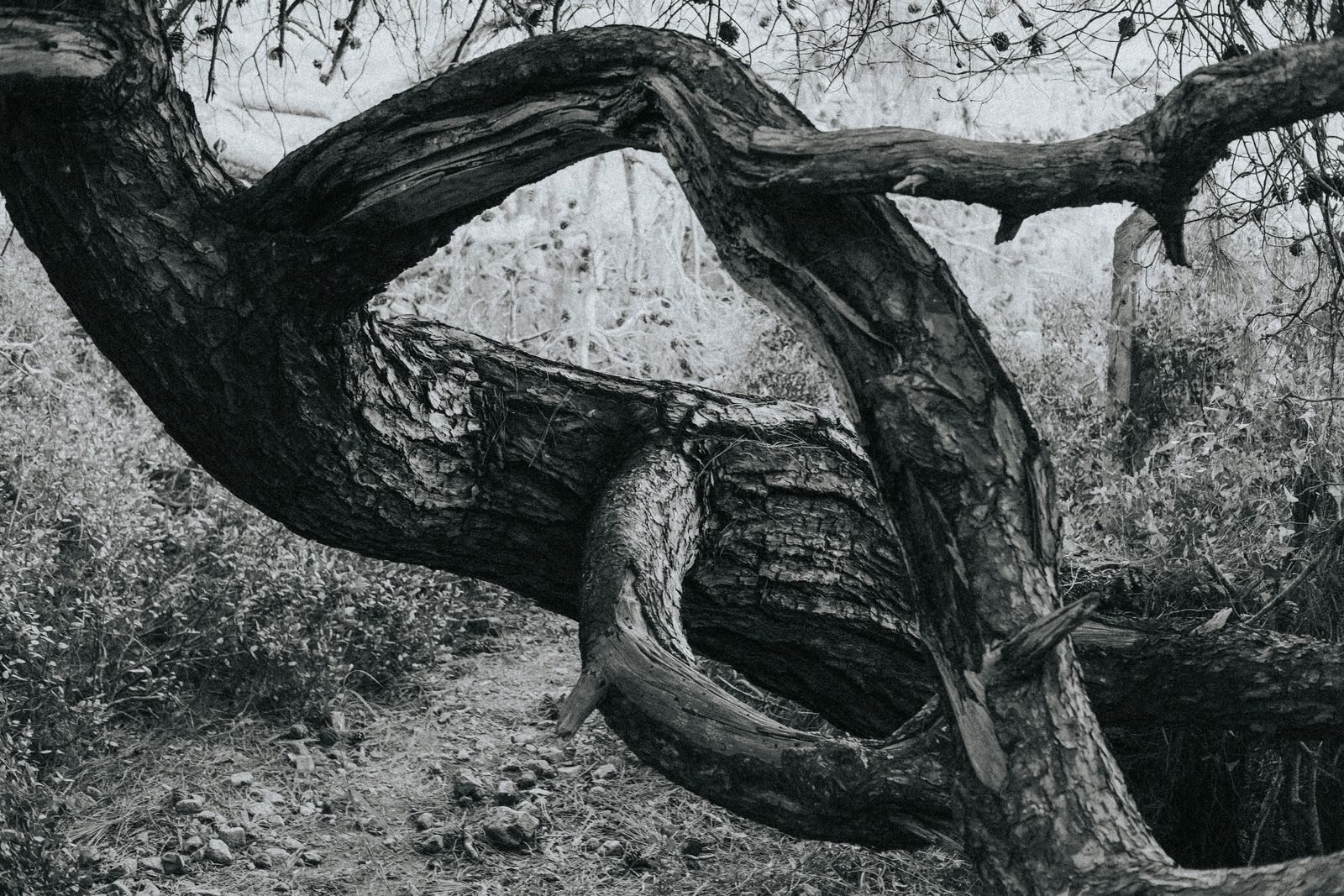
The Paiute people have long inhabited the White Mountains region. They valued the bristlecone for its hard, resin-soaked wood, which was difficult to burn but excellent for building shelter. Indigenous peoples of the region warmed bristlecone resin and applied it to wounds, boils, and skin ailments, treating it as a healing substance.
These traditions recognized the trees as symbols of persistence long before Schulman drove up the mountain with his borer. The scientific vocabulary is newer. The observation is not.
The rivals and the rest of the list
Methuselah’s claim is not entirely unchallenged. In the coastal mountains of Chile, a Fitzroya cupressoides known as Gran Abuelo — Great-Grandfather — has been estimated to be more than 5,000 years old based on a partial core and statistical modeling because the tree’s decayed center makes a full ring count impossible. The estimate has not been independently verified.
Other elders exist across the planet. In Iran, the Sarv-e Abarqu cypress has stood for more than 4,000 years. The Llangernyw Yew in Wales is estimated at 4,000 to 5,000 years old. The Olive Tree of Vouves on Crete has survived more than 2,000 years. Sri Lanka’s sacred Jaya Sri Maha Bodhi fig was planted in 288 BCE and is still tended by monks. The Senator, a 3,500-year-old pond cypress in Florida, was lost to a fire in 2012.
None of those, on the current evidence, is a verified non-clonal individual older than Methuselah. Pando, the Utah aspen colony often cited as the oldest living thing, is genetically one organism but reproduces by sending up new stems from a shared root system. No individual stem is more than a few centuries old. Africa Check’s verification of the 4,800-year figure is one of several fact-checking efforts that have run the numbers and confirmed them.
What could still kill it
The bristlecone survived the 4.2-kiloyear event, a mega-drought that helped collapse the Akkadian empire. It survived the Medieval Warm Period and the Little Ice Age. Constance Millar, an ecologist with the USDA Forest Service, points out that White Mountains bristlecones have persisted through climate extremes for nearly 11,000 years, since the last ice age.
What is happening now is different. The western United States is in the middle of what tree-ring scientists have identified as the worst megadrought in 1,200 years. Temperatures in the White Mountains are climbing. Bark beetles, historically kept in check by the cold, are moving upslope into elevations they could not previously reach. Wildfire is arriving in groves that used to be too high and too dry to burn well.
Nearby pines have already started dying. Methuselah, at nearly 4,800 years, is currently facing a combination of stresses its previous 48 centuries never delivered together.
The rings keep counting
If the tree is alive next summer, it will lay down another ring. It will be almost invisible — a faint dark band a fraction of a millimeter across, wrapped around 4,800 previous ones. Somewhere in that ring will be a chemical record of this year’s temperature, this year’s precipitation, this year’s atmospheric carbon.
The tree does not know any of that. It is just holding onto its needles for decades, moving water up a narrow strip of living cambium, resisting fungi with a genome eight times the size of a human’s. It has been doing this since before writing existed. On a good day, in the thin dolomite soil of a ridge most people will never visit, it is still doing it now.