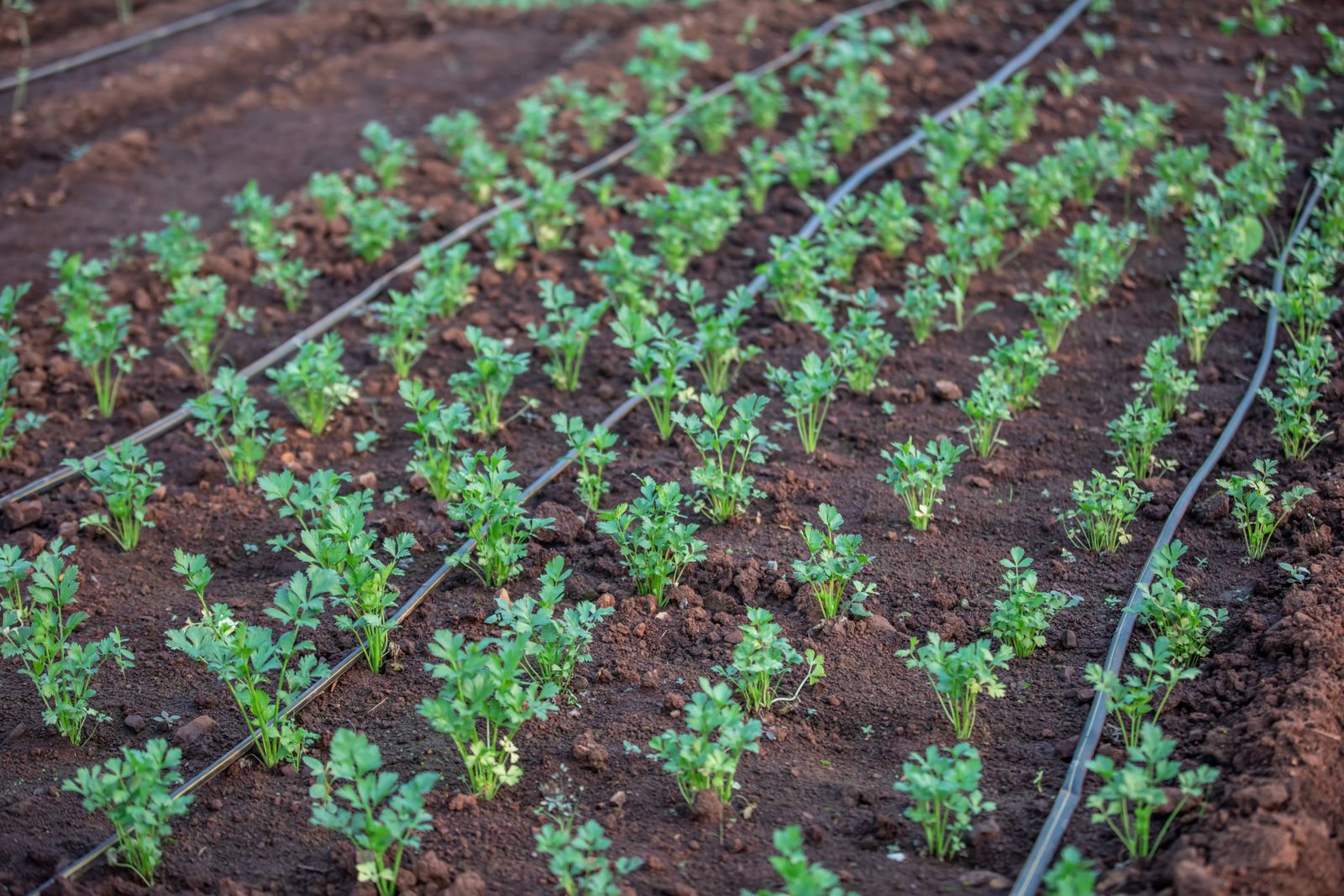
Israel did it with a system, not a single invention. Drip irrigation reduced losses at the field, while national water allocation, wastewater reuse and desalination changed where farm water came from. The Israel Central Bureau of Statistics reports that freshwater supplied to agriculture fell from 729 million cubic metres in 2000 to 468 million in 2021, a decline of about 36 percent. Over the longer span from 1960 to 2021, its quantity index of net agricultural product rose by about 1,690 percent while agricultural water consumption rose only 18 percent.
Those figures are striking, but they do not mean Israel halved the water required for every tomato or doubled every crop yield. They describe a national change in water sources and agricultural productivity over decades. The thin dripline beside a plant is the visible part of that change; sewage-treatment works, coastal desalination plants, meters, prices and allocation rules are the machinery behind it.
The dripper was only the visible part
Modern Israeli drip irrigation emerged in the Negev in the 1960s. An official acquisition notice says Kibbutz Hatzerim founded Netafim in 1965, while Netafim dates its first commercial dripper to 1966. The chronology is independently anchored by the surviving patent record.
A United States patent application filed in December 1966 names Ischajahu and Symcha Blass as the inventors of an irrigation dripper unit. Its design diverted a small portion of the water in a supply pipe through an elongated helical groove, releasing it at a low drip rate while a ridge helped keep grit out of the narrow passage. It was a pressure-control device and a clogging solution, not simply a hole punched in plastic.
The field advantage follows from where that slow flow goes. Surface irrigation wets much of a field at once, and part of the applied water runs off or moves below the root zone. Drip places smaller doses beside the crop. In an indicative comparison, the UN Food and Agriculture Organization lists average field-application efficiencies of about 60 percent for surface irrigation, 75 percent for sprinklers and 90 percent for drip, while warning that maintenance and farmer practice can lower those figures.
A dripline can also carry dissolved nutrients. This practice, called fertigation, lets a grower adjust water and fertilizer together instead of spreading nutrients across the whole field. The wet zone around each root remains comparatively small, which can reduce weed growth between rows and give the farmer tighter control over the crop’s water supply.
None of that guarantees a fixed saving or yield increase. Results change with crop, soil, climate, previous irrigation method, emitter spacing and management. Filters must be cleaned, pressure kept even and salt managed at the edge of the wetted soil. A neglected drip system can distribute water badly while still looking precise from the road.
The larger shift was in the water itself
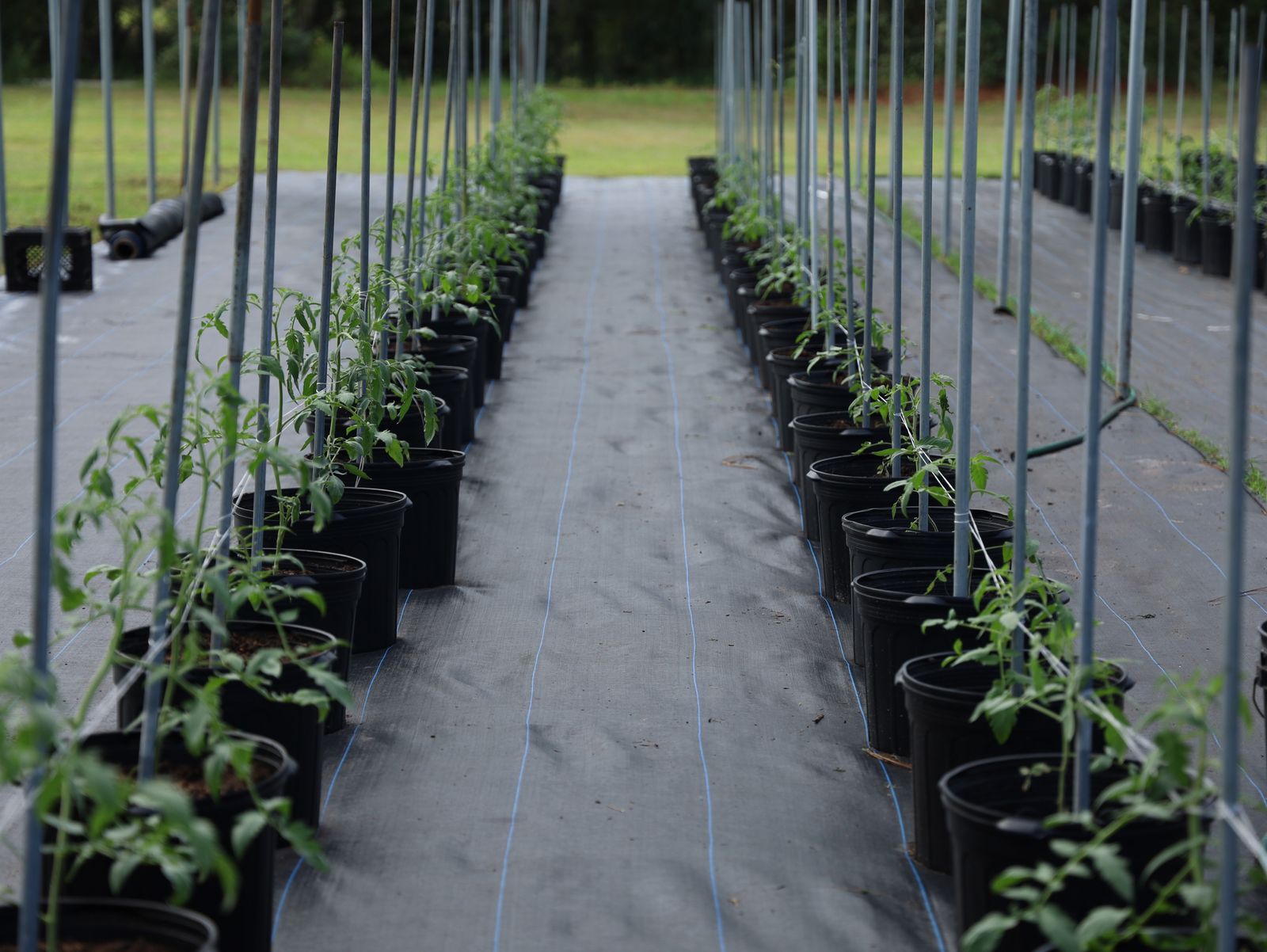
The 36 percent figure becomes clearer beside a second number. From 2000 to 2021, Israeli agriculture’s use of what the statistics office calls marginal water rose from 408 million to 818 million cubic metres. Freshwater use fell as this other supply roughly doubled.
Marginal water is a broader category than recycled sewage. The official definition includes treated effluent, salinized water and floodwater that is not fit for drinking. In other words, the national ledger records a substitution of sources, not a simple collapse in the total volume of water reaching farms.
Treated wastewater is the largest and most distinctive part of that substitution. A 2023 US Environmental Protection Agency report said nearly 90 percent of Israel’s treated wastewater was reused for irrigation. At the Shafdan facility, wastewater receives extensive treatment, including soil-aquifer treatment, before reclaimed water is transmitted as far as southern agricultural land.
The legal architecture came first. Israel’s 1959 Water Law placed water resources under government control and prohibited private ownership of water, including beneath privately owned land. The same EPA report says seawater desalination had come to supply about 90 percent of domestic freshwater by 2022, reducing the need to reserve the country’s limited natural freshwater exclusively for cities.
Desalinated seawater is not simply poured into farm driplines, and it is misleading to call it the remainder of agricultural supply. Its main role is system-wide: it serves domestic demand, while reclaimed water can be directed to irrigation. Conservation, reuse, desalination and central allocation work as connected parts of one water economy.
What the efficiency numbers really mean
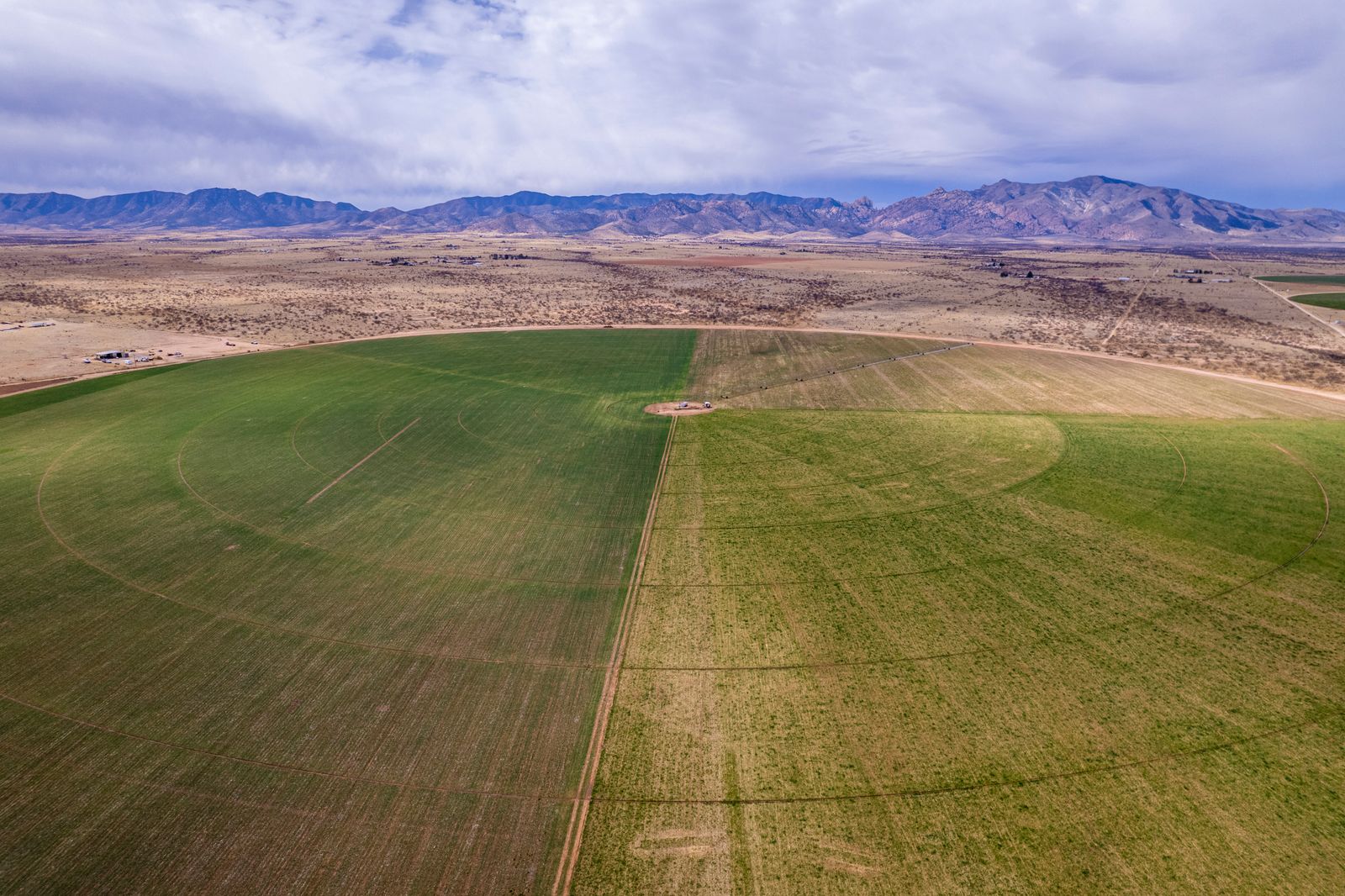
Three measures are easily confused. Field-application efficiency asks how much of the water delivered to a farm reaches the intended root zone. Crop water productivity asks how much crop or economic value is produced per unit of water consumed. Freshwater withdrawal records how much potable-quality water is taken from the national system. Israel improved all three in important ways, but the 36 percent headline refers to the third.
Even the word loss needs care. Water that runs off a field or percolates below the roots is unavailable to that crop, but some of it may return to a river or recharge an aquifer and be used elsewhere. Water consumed through plant transpiration cannot be recovered in the same basin. A more efficient emitter can therefore reduce withdrawals on one farm without creating an equal volume of new water for the country.
The Israeli total makes that distinction unusually plain. The statistics office found no clear trend or significant change in total agricultural water consumption from 2000 to 2021. The country cut freshwater use in farming mainly by replacing it with marginal water, while irrigation technology and other changes helped agriculture produce more value across the longer period.
The output figure also needs its full name. Net agricultural product is an economic quantity indicator, defined as gross domestic agricultural product minus consumption of fixed capital. A 1,690 percent increase since 1960 is not the same as saying the physical tonnage of every crop rose seventeenfold, nor can it be credited to drip irrigation alone.
The practical achievement remains substantial. Farms can schedule small applications, combine irrigation with nutrients and use water that cities have already used once. But the honest national story is about productivity and freshwater substitution, not a universal promise that one device will halve consumption and double yield.
Why the model does not travel intact
A dripline can be exported in a container; a water system cannot. The EPA delegation noted that Israel’s coordinated national governance, proximity of many farms to urban wastewater sources, public acceptance of reuse and subsidies for reclaimed water cannot be copied easily in much of the United States. Treatment plants, storage, separate distribution pipes, monitoring and trusted health standards all have to exist before recycled water reaches an emitter.
The food-security claim also has limits. Israel grows high-value produce under difficult conditions, but it is not a net food exporter. The US International Trade Administration says Israel runs significant food and agricultural trade deficits and imported $10.8 billion in agricultural and related products in 2024. It remains dependent on imports of feed grains, sugar, rice and milling wheat.
The technology itself has travelled widely. In a 2025 anniversary release, Netafim said it had worked with more than 8.5 million farmers in 110 countries and had irrigated more than 10 million hectares over its history. Those are company-reported cumulative figures, not proof that one in three irrigated hectares on Earth now uses the Hatzerim design.
Hatzerim no longer controls Netafim by itself. Orbia’s 2025 annual report lists the Israeli company as an 80 percent-owned subsidiary. The kibbutz remains central to the origin story, but the business is now part of a multinational corporate group.
Knowledge travels through the state as well as the company. Israel’s development agency, MASHAV, says it has worked in 140 countries and directly trained more than 350,000 people since 1958. Agriculture and food security are priority sectors, but the total also includes trainees in medicine, education, community development, emergency planning and other fields.
Moon Daily has followed other long environmental turnarounds, including the terracing of China’s Loess Plateau and Bangladesh’s cyclone-shelter network. In each case, the object visible in the landscape works because institutions keep it funded, maintained and connected.
The field at Hatzerim, sixty years on
At Hatzerim, the enduring image is still a black plastic line against pale ground. Inside it, water moves under pressure; at each emitter, only a fraction leaves. That small, repeatable act changed how farms could irrigate orchards, vegetables and field crops in dry places, and it gave engineers a platform for filters, valves, sensors and fertigation.
Yet the larger transformation is mostly out of sight. It is in the treated water moving south from cities, the desalinated water moving inland from the Mediterranean, and the meter that records what each user takes. The dripper clicks beside the roots, but the answer to Israel’s freshwater puzzle runs through the whole country.