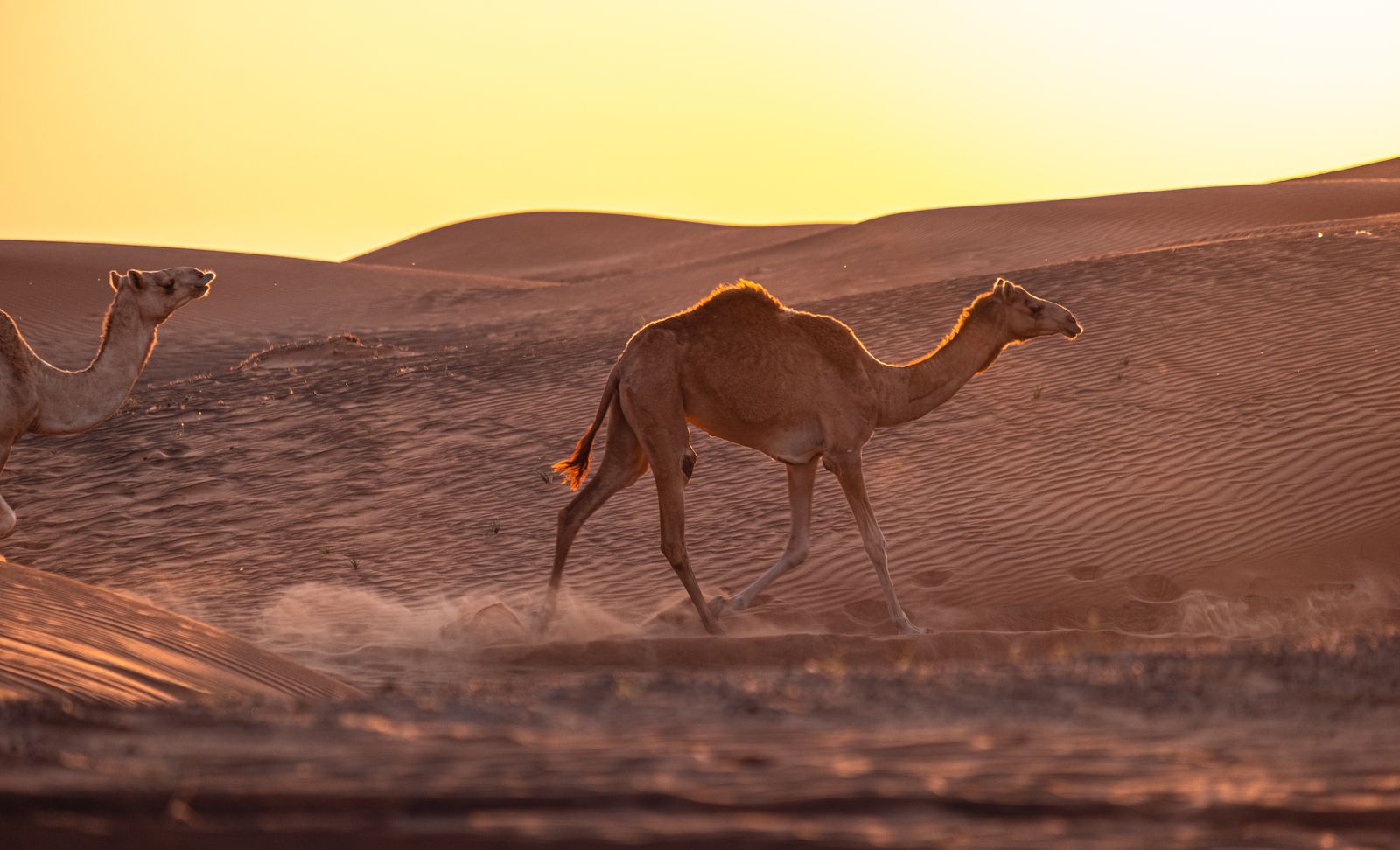
Every year, a river of dirt flows across the Atlantic Ocean. It has no banks and no fish, but it moves roughly 27.7 million tonnes of Saharan dust from West Africa to South America, and about 22,000 tonnes of that cargo is phosphorus — almost exactly the amount the Amazon rainforest loses to its own rivers each year. Without the desert, the jungle would slowly starve.
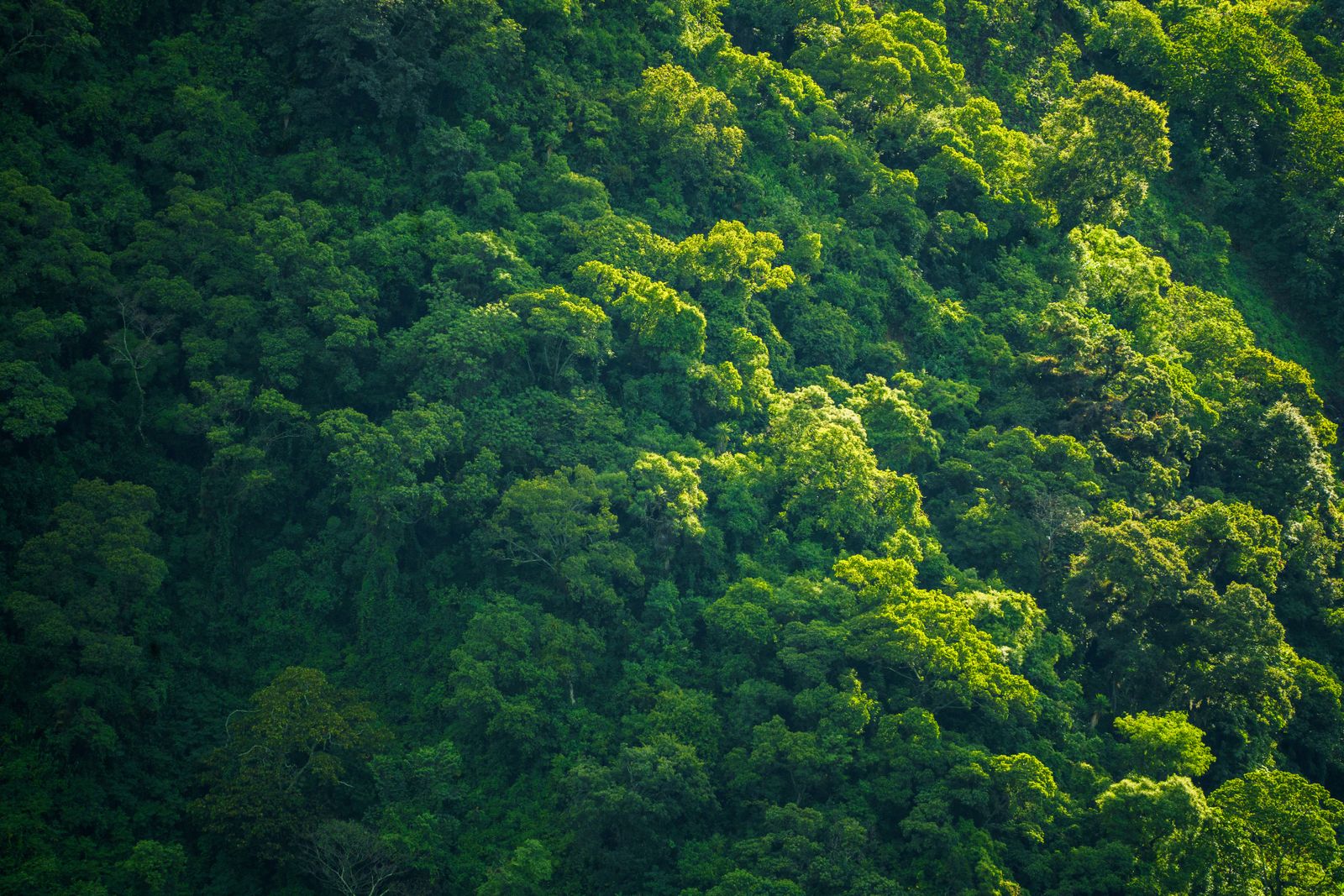
The Amazon looks like the last place on Earth that would need a delivery of dirt. It is the wettest, greenest, most biologically dense forest on the planet. And yet its soils are among the oldest continuously weathered on Earth, drained of the minerals that most ecosystems draw from bedrock.
The paradox of a starving jungle
Amazonian trees survive by hoarding. Mycorrhizal fungi wrap around their roots and strip nutrients from decaying leaves before those leaves ever touch the forest floor. A canopy leaf that falls at breakfast may be picked clean of phosphorus by lunch. The forest is essentially one enormous recycling operation.
But no closed loop is perfectly closed. Every rainy season, the Amazon and its tributaries flush phosphorus out into the Atlantic — an estimated 22,000 tonnes a year in dissolved and particulate form. Without a resupply, the forest would lose mass, then diversity, then structure.
The resupply comes from 5,000 kilometres away, and it comes on the wind.
A dry lake in Chad, filled with skeletons
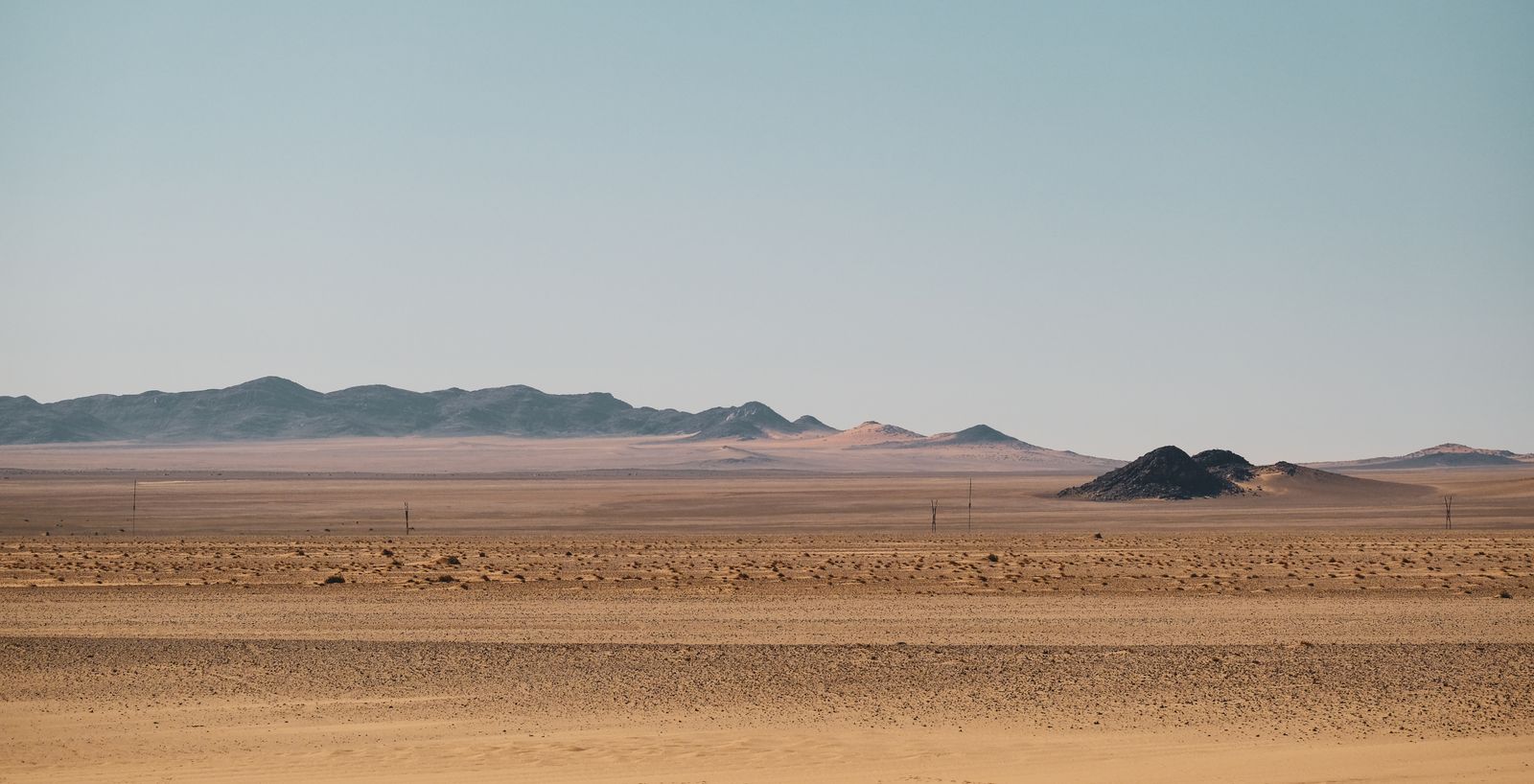
Most of the dust that reaches the Amazon does not come from just anywhere in the Sahara. It comes from a single depression at the bottom of a country most Americans could not point to on a map. The Bodélé Depression, in northern Chad, is the dustiest place on Earth. It sits at the bottom of what was once Lake Mega-Chad, a body of water that during the African Humid Period around 7,000 years ago was slightly larger than the modern Caspian Sea.
When the Sahara dried, the lake evaporated. What it left behind was a floor of diatomite — the fossilised skeletons of microscopic freshwater organisms called diatoms. Diatoms build their cell walls out of silica, and the beds of dead microorganisms they leave behind are loaded with phosphorus. Their remains sit in the basin by the trillion, brittle and white and ready to fly.
Mountains flank the depression on two sides and funnel a low-level jet of wind across it each winter. The jet lifts the diatomite off the ground and pushes it westward. In a literal sense, the Amazon is being fertilised by the skeletons of pond-life that died before the pyramids were built.
How a satellite weighed a river of dust
Sailors reported reddish haze in the mid-Atlantic for centuries. Charles Darwin, aboard the Beagle, collected dust that fell on the ship far from land. Everyone knew the dust was moving. Nobody could weigh it.
The instrument that finally could was called CALIPSO, a joint NASA and French space agency satellite. Onboard was a lidar — a pulsed laser pointed straight down at the atmosphere. It fired roughly 20 shots a second and timed the returning photons. Different particles scatter light in different ways: dust polarises it one way, water droplets another, ice crystals another again. From the returning signal, CALIPSO built a vertical profile of the atmosphere in slices tens of metres thick, from near the surface to about 40 kilometres up.
Between 2007 and 2013, a team led by atmospheric scientist Hongbin Yu, who works at NASA’s Goddard Space Flight Center, watched dust plumes lift out of Bodélé and cross the ocean. The seven-year average, published by NASA, put the numbers in stark relief. About 182 million tonnes of dust leave the Sahara each year. Around 132 million tonnes are still airborne over the mid-Atlantic. About 27.7 million tonnes — some 15 percent of the total — fall on the Amazon basin. The rest sails on to the Caribbean and the southeastern United States.
The phosphorus ledger
Phosphorus is one of the elements life cannot substitute. It anchors DNA. It forms the backbone of ATP, the energy molecule every cell uses. It holds cell membranes together. Plants pull it from soil through their roots, and in most ecosystems the mineral bedrock keeps replenishing what gets used.
Amazonian soils are different. Some of them have been weathering for tens of millions of years, and the phosphorus in them has long since been dissolved and washed out to sea. Around 90 percent of the forest’s soils are low in phosphorus. What is left is a forest running on a very tight budget.
Yu’s team estimated the annual delivery of phosphorus in Saharan dust at roughly 22,000 tonnes. The annual loss from Amazonian rivers: about the same. Within the error bars of the measurement, the two numbers match. The desert’s deposit covers the jungle’s withdrawal, year after year, with the tidy precision of a bookkeeping entry.
The flow is not steady
CALIPSO also revealed that the annual delivery swings hard from one year to the next — by as much as 86 percent across the satellite record. The main driver is conditions in the Sahel, the semi-arid strip along the southern edge of the Sahara. Wetter Sahel years mean more vegetation, less dust lifted, and a leaner delivery to the Amazon. Drier Sahel years send more dust across the Atlantic.
There is a suggestion in the data — still debated — that a warming Atlantic could gradually make the Sahel wetter, choking off the dust at its source. That would leave the Amazon quietly running down its phosphorus reserves, decade by decade, with no way to notice until the accounts stopped balancing. The mechanism is complex and the models are still arguing about magnitude and direction.
Moon Daily has looked before at how small changes in one climate system cascade into another. A piece on the Great Barrier Reef traced how localised ocean currents can spare individual patches of coral while the wider system bleaches. The Amazon–Sahara link is the same kind of connection at planetary scale — one biome’s fate hinging on a wind pattern half an ocean away.
The dust does other work
The Saharan Air Layer, as meteorologists call it, is not just a fertiliser conveyor. It seeds clouds over the Atlantic. It drops iron into surface waters, where it feeds plankton blooms. And, critically for people living on the western side of the ocean, it suppresses hurricanes. A dry, dusty layer riding a mile above the sea starves tropical storms of the humid air they need to spin up. It cools the ocean surface a fraction. It disrupts the vertical heat structure a cyclone depends on.
This is also why the summer plumes are the ones Americans see. From roughly June to September the Intertropical Convergence Zone shifts north and the dust tracks to the Caribbean and the Gulf rather than to South America. Some of those plumes are enormous. In June 2020, a dust cloud nicknamed “Godzilla” darkened skies from Puerto Rico to Texas and was visible from the International Space Station. The 2026 season’s plumes have been smaller but steady. In July 2026, Saharan dust was forecast to reach Mississippi and the Gulf Coast region, hazing sunsets from Louisiana to Florida.
When the fertiliser becomes an irritant
The same dust that keeps the Amazon alive triggers air-quality warnings when it reaches populated coasts. It is fine particulate matter, and it behaves like it: it can worsen asthma, trigger coughing, and inflame sinuses. A late-July plume heading toward Florida raised the same questions Floridians now ask every summer — how dangerous is it, and who should stay indoors.
The health toll of air pollution in the regions where the plumes originate is not trivial, though dust is only part of it. The 2024 State of Global Air report, covered by Health Policy Watch, found that the air-pollution death rate among children under five across East, West, Central and southern Africa runs more than a hundred times the rate in high-income countries — driven largely by household fuels rather than by desert dust. The same wind that feeds a distant forest blows across some of the most burdened air on the planet.
An ecosystem the size of a continent, fed by an accident
What CALIPSO measured was the specificity of the accounting. A specific dry lake in Chad, sitting on a specific bed of fossil diatoms, in the path of a specific low-level jet, feeding a specific rainforest across a specific ocean. Change any one variable and the numbers stop matching.
The Bodélé is small — smaller than West Virginia. It supplies a large share of the phosphorus budget for a rainforest that covers 5.5 million square kilometres. The leverage ratio is absurd. A dust source the size of a small U.S. state helps keep a jungle roughly two-thirds the size of the contiguous United States from slowly losing weight.
Moon Daily’s beat has kept returning to these kinds of leverage points. An explainer on beavers showed how a 20-kilogram rodent can raise a valley’s water table and cool downstream temperatures during drought. A piece on the Loess Plateau traced how a single generation of terraced farming stopped billions of tonnes of soil from washing into the Yellow River. Small physical interventions, big biospheric consequences. The Sahara–Amazon link is the same story written at oceanic scale, and written by nobody in particular.
The forest that is partly African
The tidy diagrams in biology textbooks show ecosystems as self-contained units. The Amazon labelled in green, the Sahara in yellow, an ocean between them like a wall. The satellite data draws a different map. It shows a single system with a wind for a bloodstream.
The 27.7-million-tonne figure remains the standard reference number, though it is not the last word: later analyses drawing on longer satellite records have suggested the total arriving may be lower, and the researchers themselves cautioned that nobody yet knows how much dust the forest actually needs. Ground stations in Barbados and Miami catch what falls out of the sky. Chemical analyses of Bodélé sediment pin down the phosphorus fraction. The account roughly balances.
Right now, as this sentence is read, dust that was lifted off a dry lake bed in Chad three or four days ago is drifting somewhere over the mid-Atlantic. Some of it will reach Miami by the weekend and haze the sunsets. Some will settle on Caribbean rooftops and be washed off by the next rain. And a portion — about 27.7 million tonnes a year, calculated one laser pulse at a time — will fall on a jungle that has no idea where its dinner came from.