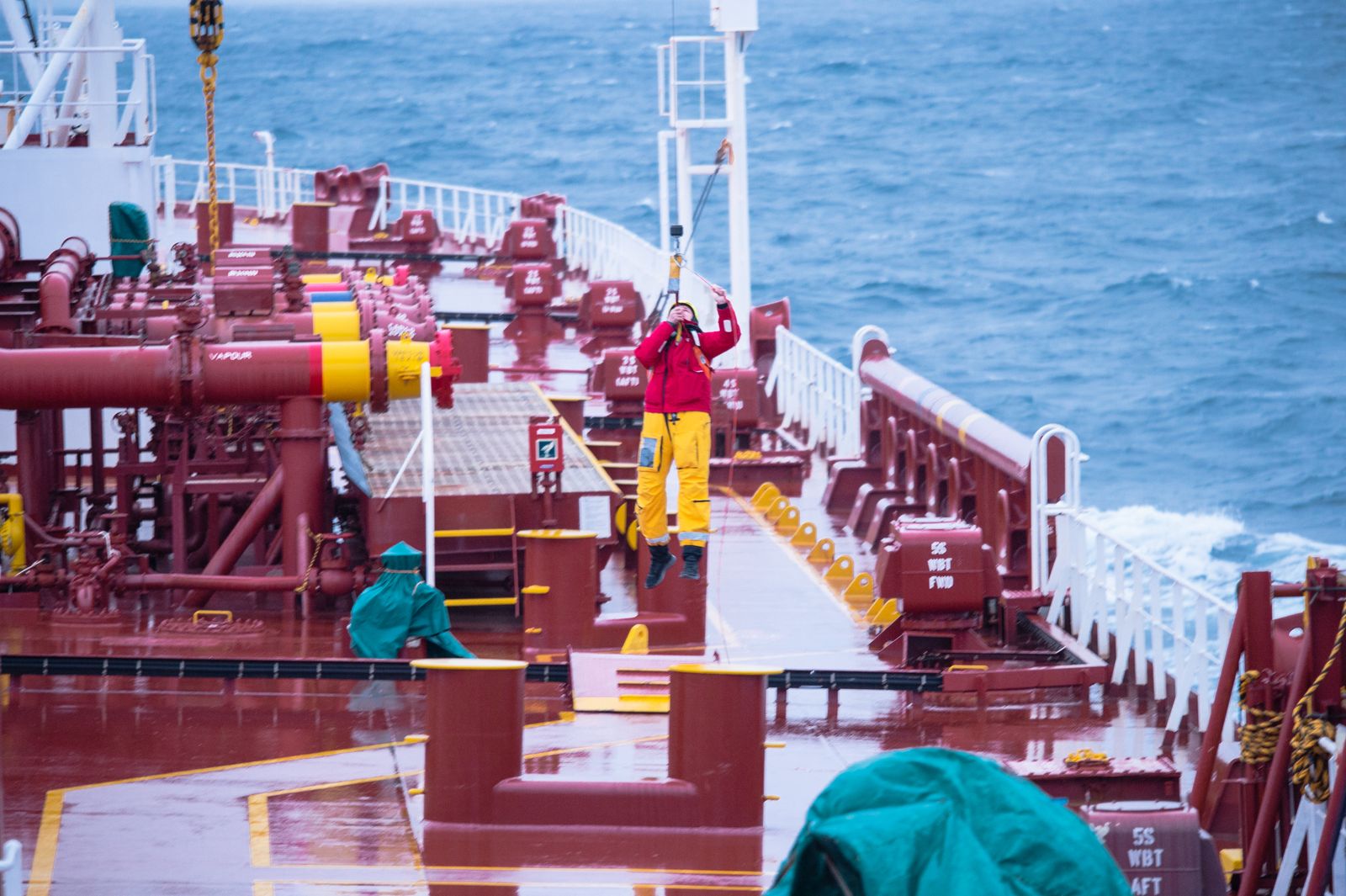
For several days in June 2026, the Ocean Observatories Initiative looked as though it was entering its final chapter. The U.S. National Science Foundation had ordered four of the network’s five arrays recovered from the ocean, and by June 18 the agency said the Endurance Array off Oregon and Washington had already been removed from the water.
Then NSF reversed course. It halted further removals, kept the other arrays operating and began planning to put Endurance equipment back into service. By late July, that redeployment was already underway.
The speed of the reversal matters because OOI is not a small experiment. The network cost about $386 million to build, contains more than 900 ocean sensors and has informed more than 500 scientific publications.
What OOI actually is
OOI is a system of long-term ocean observatories funded by NSF and commissioned in 2016. Its five operating arrays contain roughly 900 instruments measuring more than 200 parameters, with data made available online for researchers, students and the public.
The instruments span very different environments. The Endurance Array observes the continental shelf off Oregon and Washington. The Pioneer Array operates off the U.S. East Coast. The Irminger Sea Array sits in the North Atlantic near Greenland, while Station Papa operates in the Gulf of Alaska. Off Oregon, the Regional Cabled Array uses a seafloor cable to provide power and high-bandwidth communications to instruments including those around Axial Seamount.
Together they measure physical, chemical, biological and geological conditions across the ocean. Moorings, autonomous gliders, profilers and seabed instruments repeatedly sample variables that ships or satellites cannot observe continuously in the same way.

The $386 million investment and the long time horizon
OOI grew out of decades of scientific planning and entered construction in 2009 before becoming fully operational in 2016. The approximately $386 million construction cost covered the platforms, sensors, cables, cyberinfrastructure and initial deployments needed to create the network.
The long operating horizon was central to the scientific concept. OOI’s own description says the project was designed to collect ocean data for up to 25 years or more. A record measured in decades can capture both short-lived events and slower changes that are difficult to distinguish from normal variability when the observation period is short.
The network was also designed around maintenance rather than leaving the same hardware untouched for decades. Instruments are recovered, serviced, calibrated or replaced and then returned to the water, allowing the observing record to continue even as individual components age.
How the 2026 descoping began
In May 2026, NSF initiated what it called a major descoping of OOI. The plan called for removing the Endurance, Pioneer, Irminger Sea and Station Papa arrays while keeping the Regional Cabled Array operating.
The original timetable put Endurance first, followed by Pioneer and then the two global arrays. The move came as the administration’s FY2026 budget request proposed reducing OOI funding from roughly $39 million to $8 million, a cut of nearly 80 percent.
That request did not itself make the shutdown inevitable, because Congress controls appropriations. But NSF moved ahead with the descoping while the spending process was still unresolved.
Congress pushed back
The decision quickly drew opposition from lawmakers in coastal states. House Democrats on the Science, Space and Technology Committee and the Natural Resources Committee argued that NSF had failed to provide the advance congressional notification required for decommissioning high-value federal assets.
Senator Jeff Merkley of Oregon told the Associated Press that he had learned about the dismantling through news reports. He and Senator Lisa Murkowski of Alaska became prominent advocates for keeping the network operating, while lawmakers from several other coastal states joined the effort.
On June 17, the Senate passed the Saving the OOI Act of 2026. The bill would prohibit NSF from using federal funds to descope or decommission OOI instruments until the agency completed a review of the system.
The politics were unusually bipartisan. Murkowski, an Alaska Republican, introduced the Senate measure alongside a group that included Republicans and Democrats from Alaska, Washington, Oregon, Rhode Island, Wisconsin, Maryland and Massachusetts.
NSF stopped the removals on June 18
The following day, the agency changed direction. In a June 18 statement, NSF said it would not proceed with further removal or descoping from the remaining arrays and would continue operations and planned maintenance.
There was one major complication: Endurance had already been removed. NSF said the equipment would be serviced and that plans were being developed for redeployment.
The announcement also promised a broader review of what NSF’s future ocean-observing system should look like, including stakeholder input and an expert panel. That meant the immediate dismantling had stopped, but the longer-term debate about configuration, funding and priorities was not over.
Endurance is already going back into the ocean
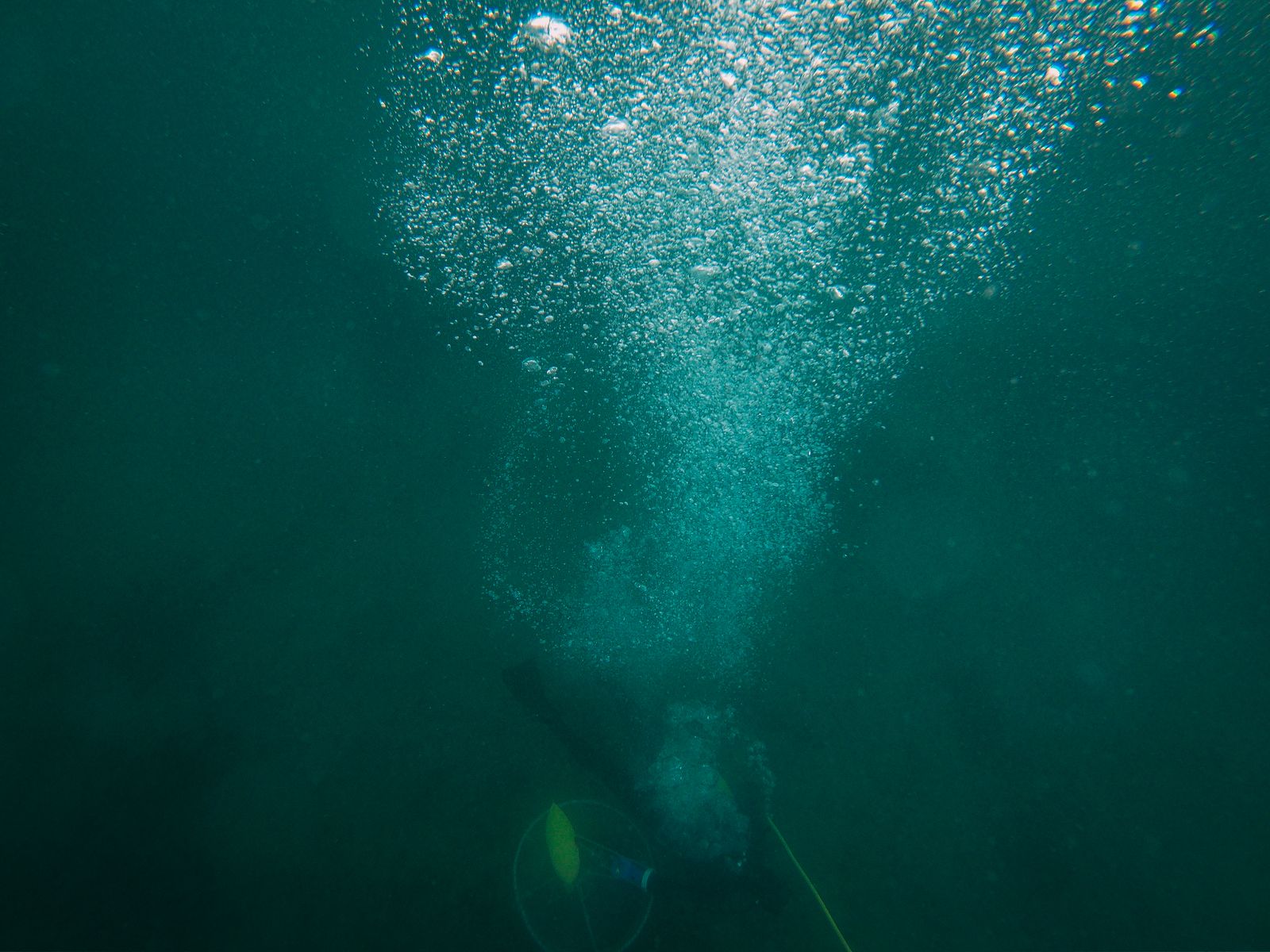
By July 30, the story had moved beyond a promise to consider redeployment. OOI announced that NSF had begun a phased redeployment of the Endurance Array.
Gliders were sent back to restore seasonal observations off Oregon and Washington. Several moorings, including Oregon and Washington Shelf surface moorings and the Washington Offshore Profiler Mooring, were scheduled for redeployment in early October.
OOI also said planning was underway for additional work in spring 2027 that would fully restore mooring and glider operations across Endurance. Pioneer, Irminger Sea and Station Papa, meanwhile, were no longer under an active removal order.
Why continuity matters
The value of a sustained observing system is not simply the number of measurements it collects. It is the ability to make the same kinds of measurements repeatedly enough that unusual events can be compared with a reliable baseline.
OOI instruments monitor variables including temperature, salinity, dissolved oxygen, currents, biological activity and geological processes. Its cabled instruments off Oregon also provide continuous observations of Axial Seamount, an active submarine volcano.
That continuity becomes especially valuable when conditions change quickly. A marine heatwave, a low-oxygen event or an extreme storm can be compared with the years before it rather than studied as an isolated snapshot.
Long records also allow researchers to revisit old data when a new scientific question emerges. Even when a particular measurement did not seem remarkable on the day it was collected, it can become important years later because it sits inside a much longer sequence.
The El Niño argument became even more immediate
When senators objected to the dismantling in June, they specifically pointed to El Niño as one reason not to interrupt ocean observations. They warned that losing the system would make it harder to monitor changing conditions affecting coastal communities, fisheries and weather.
That concern did not disappear after the political fight. Endurance’s July redeployment plans explicitly included restoring observations during the developing El Niño period, giving scientists continuous measurements of winds, waves and water-column conditions through the fall and winter.
What happens now
NSF took the next formal step on August 27. The agency issued a Dear Colleague Letter asking scientists and other users what future NSF ocean-observing systems should preserve, change or add.
The request asks about observation gaps, fixed and mobile assets, emerging technologies, coordination with other programs, operational users and ways of measuring scientific value. Responses are due September 30, 2026.
That makes the situation substantially different from the one NSF announced in May. Four arrays are no longer on a timetable for removal. Endurance is being rebuilt in stages, and the rest of the network continues operating while NSF evaluates what its longer-term ocean-observing strategy should be.
What a recovery operation actually means
Pulling one of these systems from the ocean is not as simple as lifting a single buoy. A mooring can include a surface float, instruments at multiple depths, flotation, cables and an anchor system stretching toward the seafloor.
Recovery crews locate the system, trigger acoustic releases where required and bring the floating portions to the surface. Equipment is then lifted aboard, inspected, serviced and catalogued. In a normal maintenance cycle, the important next step is redeployment.
That distinction is what changed after June 18. Before the reversal, recovery was intended to end observations at four arrays. Under the current plan, recovery and servicing at Endurance are again part of maintaining the observing system rather than dismantling it.
The network’s future is still being decided
OOI is therefore not in the position described by the original May descoping announcement. As of late August 2026, NSF has halted the four-array dismantling, Endurance gliders are being redeployed, more Endurance moorings are scheduled to return to the water, and the agency is seeking public input on what comes next.
None of that guarantees that OOI will remain unchanged for another 15 years. Funding, technology and scientific priorities can still reshape the system, and NSF has explicitly opened a review of its future ocean-observing strategy.
But the immediate question is no longer whether four of five arrays are about to disappear. It is how much of a $386 million, decade-old observing network will be preserved and modernized now that the dismantling order has been stopped and its instruments are beginning to go back to sea.