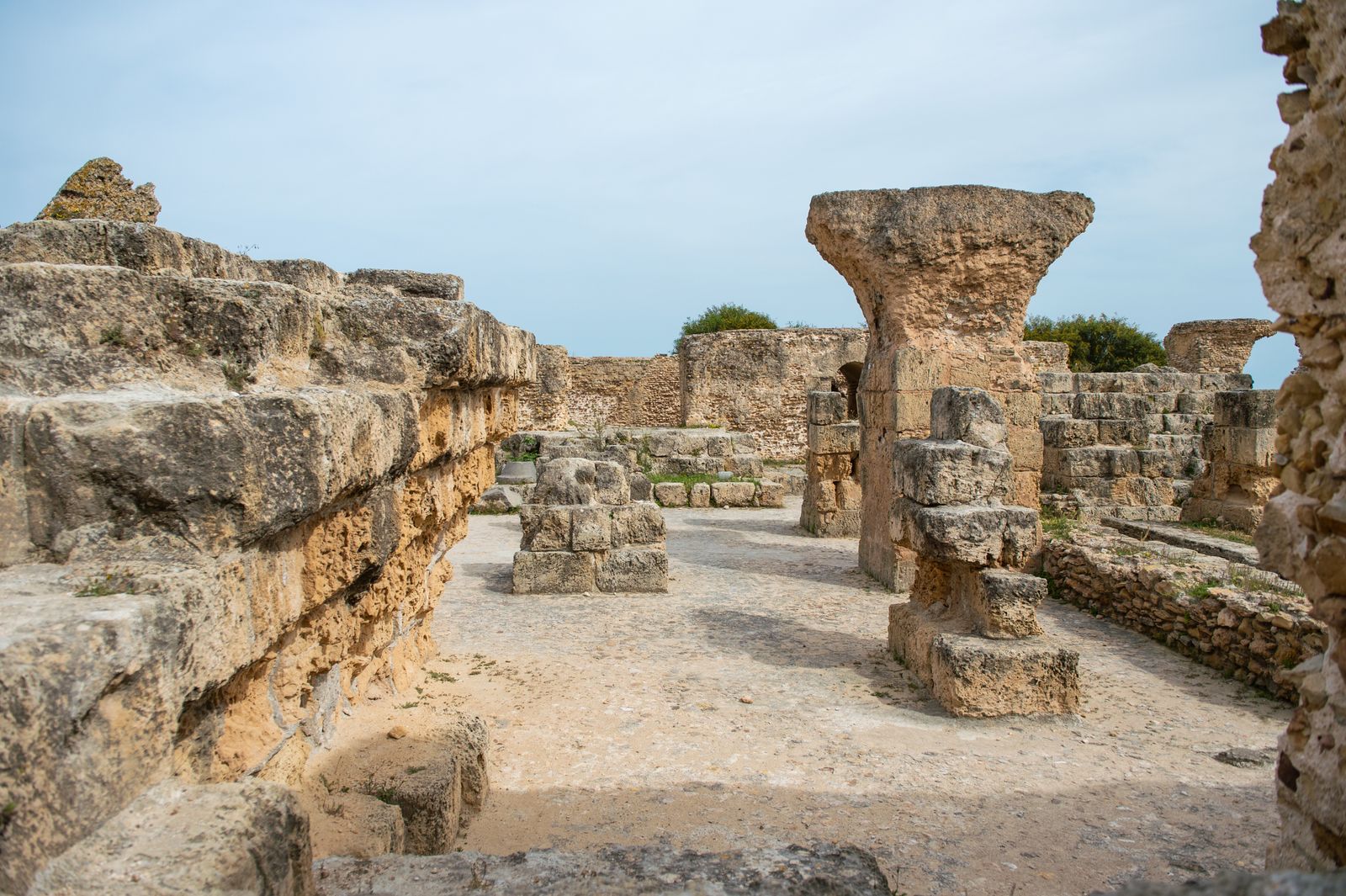
Off the coast of Pozzuoli, in the Bay of Naples, the stubs of Roman piers built in the first century BCE still stand in the sea. Their concrete has been soaking in saltwater for more than 2,000 years. It has not crumbled. It has hardened. Mineral crystals have grown inside the paste over centuries, knitting cracks shut and locking the aggregate tighter than the day it was poured. A modern pier built in the same Bay of Naples in 1975 — using Portland cement and steel reinforcement, the global standard — would likely already be spalling, rust-stained, and scheduled for demolition.
The reason is chemistry, not craftsmanship. Roman marine concrete was made from slaked lime, chunks of unslaked “hot” lime, and volcanic ash from the Phlegraean Fields near Pozzuoli — a material the Romans called pulvis puteolanus. When seawater percolates through it, the water dissolves calcium from the lime clasts, then re-precipitates it inside cracks and pores as new crystalline minerals, mainly calcite and a rare mineral called aluminous tobermorite. The concrete literally grows. Geologists have identified this aluminous tobermorite as central to that process. Modern marine concrete, by contrast, is designed to keep seawater out. When water gets in anyway — and it always does — it rusts the steel rebar inside, and the whole structure cracks itself apart from within, typically within 50 to 100 years.
The harbours that refused to die
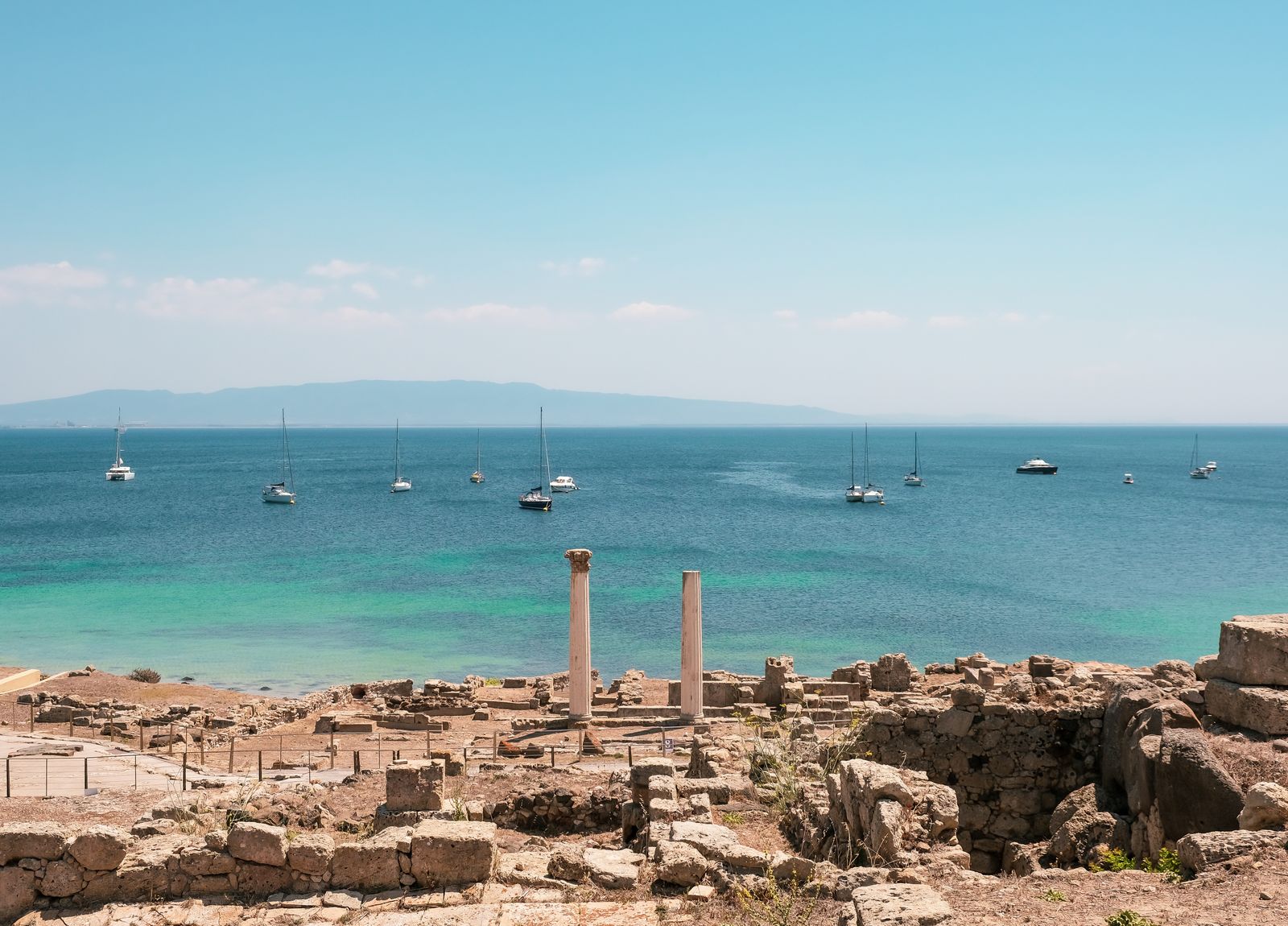
Portus Cosanus, on the Tyrrhenian coast north of Rome, was built around 273 BCE and expanded through the first century BCE. Its concrete piers are still there. Divers can swim through the sunken remains of Portus, the great imperial harbour at the mouth of the Tiber built under Claudius and Trajan. Blocks of Roman marine concrete lie on the seabed off Caesarea Maritima in Israel, poured into wooden forms by Herod’s engineers around 22 BCE and lowered into the Mediterranean. They are still recognisable as blocks.
The scale matters. These were not decorative structures. Caesarea’s harbour enclosed roughly 100,000 square metres of protected water. The moles at Portus stretched hundreds of metres into open sea. Roman engineers were building deepwater infrastructure at a scale Europe would not match again until the nineteenth century, and they were doing it with a material that gets stronger the longer the ocean touches it.
What the recipe actually was
The core recipe is described by Vitruvius in De Architectura, written around 30 BCE. Three parts volcanic ash to one part lime, mixed with seawater and packed around chunks of tuff or broken ceramic. The volcanic ash from around Pozzuoli — pozzolana — is rich in reactive aluminosilicate glass. When lime and water hit it, a pozzolanic reaction begins, producing calcium-aluminium-silicate-hydrate gels that bind the mass together.
That much was understood by the 1800s, and it is why the word “pozzolanic” still appears on cement bags today. What was not understood until recently is what happens next — over decades and centuries, once seawater starts moving through the hardened matrix.
A team led by geologist Marie Jackson at the University of Utah analysed drill cores from the harbour at Portus Cosanus at the Advanced Light Source at Lawrence Berkeley National Laboratory. They found that seawater percolating through the concrete was dissolving components of the volcanic ash and driving the growth of new interlocking crystals of aluminous tobermorite and phillipsite in the pore spaces. The concrete was not resisting the seawater. It was using it.
The self-healing part
The second piece of the puzzle came from inland Roman concrete — the walls of aqueducts, tombs, and villas, where seawater plays no role but the material still lasts. In 2023, a team led by Admir Masic at MIT looked at the bright white lumps scattered through Roman concrete, called lime clasts, which conservators had long treated as evidence of sloppy mixing. Masic’s group argued they were nothing of the sort. The Romans, they proposed, had been “hot mixing” — adding quicklime (calcium oxide) directly to the mix rather than slaking it into a paste first. That leaves reactive calcium reservoirs embedded throughout the concrete. When a crack forms and water seeps in, calcium dissolves out of the nearest clast and recrystallises as calcium carbonate inside the fracture, sealing it shut.
A summary of that hot-mixing paper described lab experiments in which cracked samples of Roman-style concrete resealed themselves within two weeks of water exposure, while modern control samples did not.
The latrine at Hadrian’s Villa
The most recent piece dropped this July. A team led by Xiaohong Zhu of Beijing University of Technology and Paulo J. M. Monteiro at UC Berkeley took a sample of concrete from beneath a bench in a communal latrine at Hadrian’s Villa in Tivoli, about 27 kilometres east of Rome. The villa was built between roughly 117 and 138 CE, and the latrine has never been restored — latrines are simply not the kind of structure anyone bothers to preserve or rebuild. That neglect is exactly what makes the sample valuable. The concrete sat undisturbed for roughly 1,900 years, quietly running a long-term experiment that no living researcher could have started.
Using high-resolution X-ray tomography and electron microscopy, the team mapped the interior of the concrete at scales down to tens of nanometres. What they saw was a dense, weblike network of calcite crystals threading through the pores and cracks of the ancient paste, binding the aggregate together far more thoroughly than the original pozzolanic gels ever could have.
That calcite was not there when the concrete was poured. It grew. Over 19 centuries, atmospheric carbon dioxide had slowly diffused into the material and reacted with calcium-rich compounds — a process called carbonation. In modern concrete, carbonation is a slow-motion catastrophe. In Roman concrete, according to the Smithsonian’s write-up of the Zhu paper, it is a slow-motion cure.
Why modern marine concrete fails
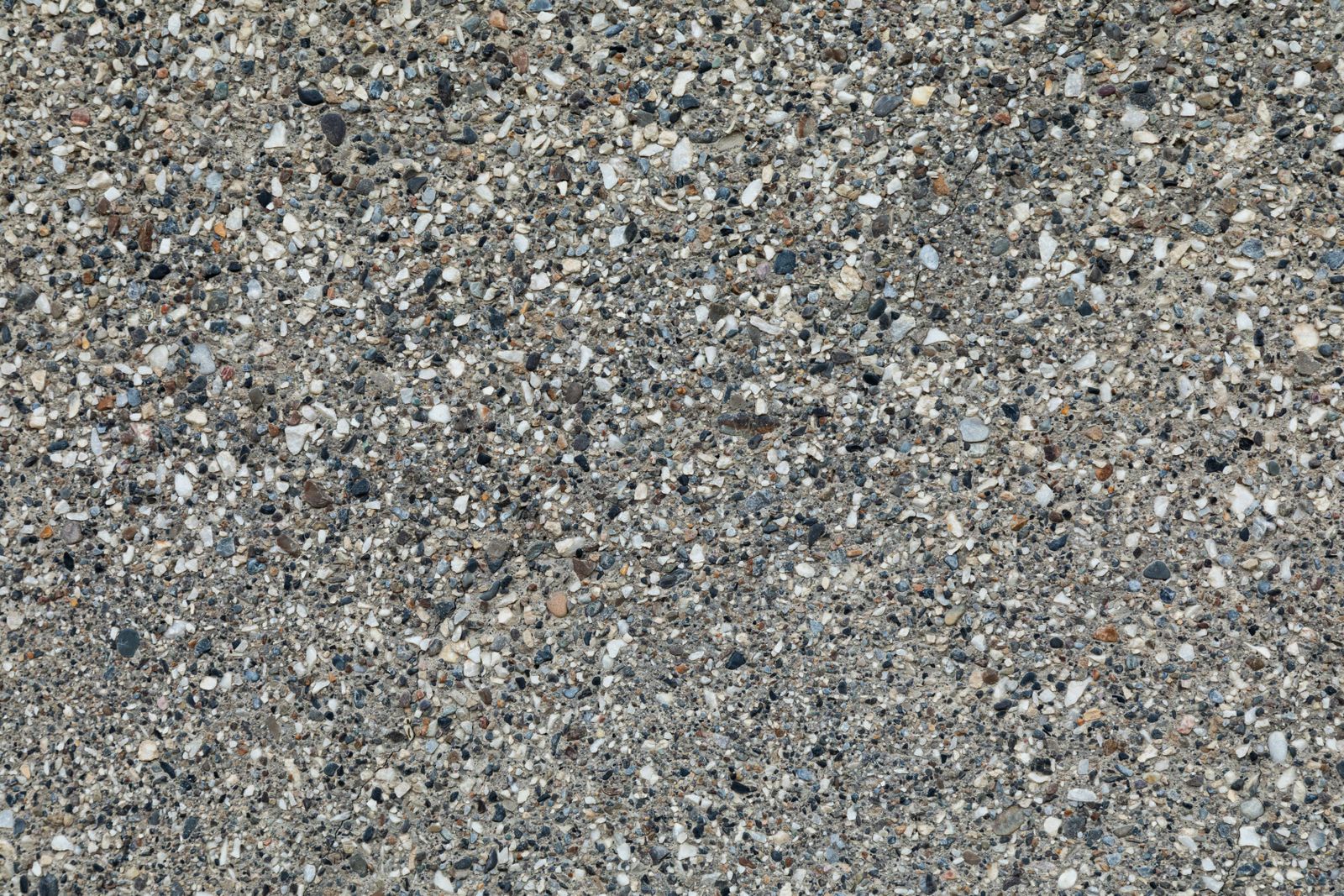
Portland cement, patented in 1824 by Joseph Aspdin, is a completely different material. It is fired at around 1,450 °C in a rotary kiln, ground to a fine powder, and hydrated with fresh water on site. The resulting paste is strong, fast-setting, and cheap. It also has almost no reactive calcium reserves once cured, no volcanic aluminosilicate glass to interact with intruding seawater, and — critically — it is almost always poured around a cage of steel rebar.
Steel reinforcement is what makes modern concrete useful for long spans, cantilevers, and thin marine structures. It is also what kills them. Fresh concrete is highly alkaline, around pH 13, and that alkalinity passivates the steel inside, preventing rust. Over decades, carbonation and chloride ingress from seawater lower the pH near the rebar. Once the passivation layer breaks down, the steel starts to corrode. Rust occupies roughly seven times the volume of the steel it comes from. It pushes outward, cracks the surrounding concrete, and lets in more water. The cycle accelerates.
In tropical marine environments, the process can begin within 20 years of construction. Researchers are now trying to design mixes that tolerate saltwater from the start — a partial return to the Roman approach, minus the volcano.
The two chemistries side by side
Set the two materials next to each other and the contrast is stark.
Roman marine concrete: lime plus volcanic ash plus seawater, no steel, cured at ambient temperature. Water infiltration is a feature. Cracks trigger dissolution and recrystallisation of calcite and tobermorite, which fill and reinforce the fracture. Time strengthens the matrix. The material is chemically alive for centuries.
Modern Portland-based marine concrete: limestone and clay burned at 1,450 °C, ground, hydrated with fresh water, poured around steel. Water infiltration is a failure mode. Cracks admit chloride ions, which attack the steel. Rust expands, splits the concrete, invites more water. Time degrades the matrix. The material is chemically inert until it is chemically doomed.
The Zhu team’s calcite web at Hadrian’s Villa is the visible fingerprint of the first chemistry doing what the second cannot: growing new structure into old damage.
Why we don’t just copy the recipe
The obvious question is why every marine engineer on Earth is not already building with pozzolana and hot lime. Several reasons.
First, the Roman recipe cures slowly. Vitruvius describes structures that were expected to gain strength over years. Modern construction schedules are measured in days. A high-rise pour needs to hold its own weight within 28 days, not 28 decades.
Second, Roman concrete has low tensile strength compared to steel-reinforced Portland concrete. It works in compression — arches, domes, piers, thick walls — but it cannot span a highway bridge without help. The Pantheon’s unreinforced concrete dome, poured around 125 CE and still the largest of its kind in the world at 43.3 metres in diameter, is possible because every load path is compressive.
Third, pozzolana of the specific Bay of Naples composition is a regional resource. Synthetic pozzolanic materials — fly ash from coal plants, ground blast furnace slag, silica fume — are used today as partial cement replacements, but the exact ash chemistry that fed the tobermorite reaction in Portus Cosanus is not available at global industrial scale.
Fourth, and most awkwardly, the cement industry accounts for roughly 8 percent of global carbon dioxide emissions, according to a Chatham House analysis. Any material that took a century to reach full strength is a hard sell for an industry pouring roughly 14 billion cubic metres of concrete a year and being asked to decarbonise now.
What engineers are actually borrowing
The lessons that are transferring are subtler. Researchers are now investigating deliberately engineered self-healing concretes with embedded calcium reservoirs, bacteria that precipitate carbonate, or microencapsulated healing agents that break open when a crack forms. Some of these approaches trace directly back to the 2023 lime clast paper. Others draw on the calcite-web imagery from the 2026 Zhu study, which showed for the first time how the healing mineral is spatially organised inside the paste.
Controlled carbonation is another live area: forcing CO2 into concrete during curing to lock it into mineral form. The Roman latrine’s calcite is, in effect, 19 centuries of ambient carbon capture. Modern versions would compress that timescale into hours, using industrial CO2 streams. Monteiro’s group has been careful to warn that the Roman timescale should not be mistaken for a fast climate fix. As covered in earlier Moon Daily reporting on infrastructure and resilience — including a recent look at Bangladesh’s cyclone shelter network — long-lived concrete matters most where replacement is difficult and stakes are lethal.
The latrine, still curing
In Tivoli, the concrete bench in the communal latrine at Hadrian’s Villa is doing what it has done since the reign of Hadrian: absorbing a little carbon dioxide from the air, dissolving a little calcium from its lime clasts, and depositing a little more calcite into its pores. Its starting conditions were set in the second century CE, and the reactions have run without pause ever since, on a timescale no living researcher could hope to reproduce from scratch. The results are still being read out, at 20-micron resolution, by X-ray beamlines in Berkeley and Beijing.
Meanwhile, on the Bay of Naples, a fisherman tying up at a modern concrete jetty built in the 1970s can look south past the rusted rebar stains to a bump of Roman pier that has been in the water since before Vesuvius buried Pompeii. One structure is being held together by paint and repair crews. The other is being held together by a mineral that only exists because seawater will not leave it alone.