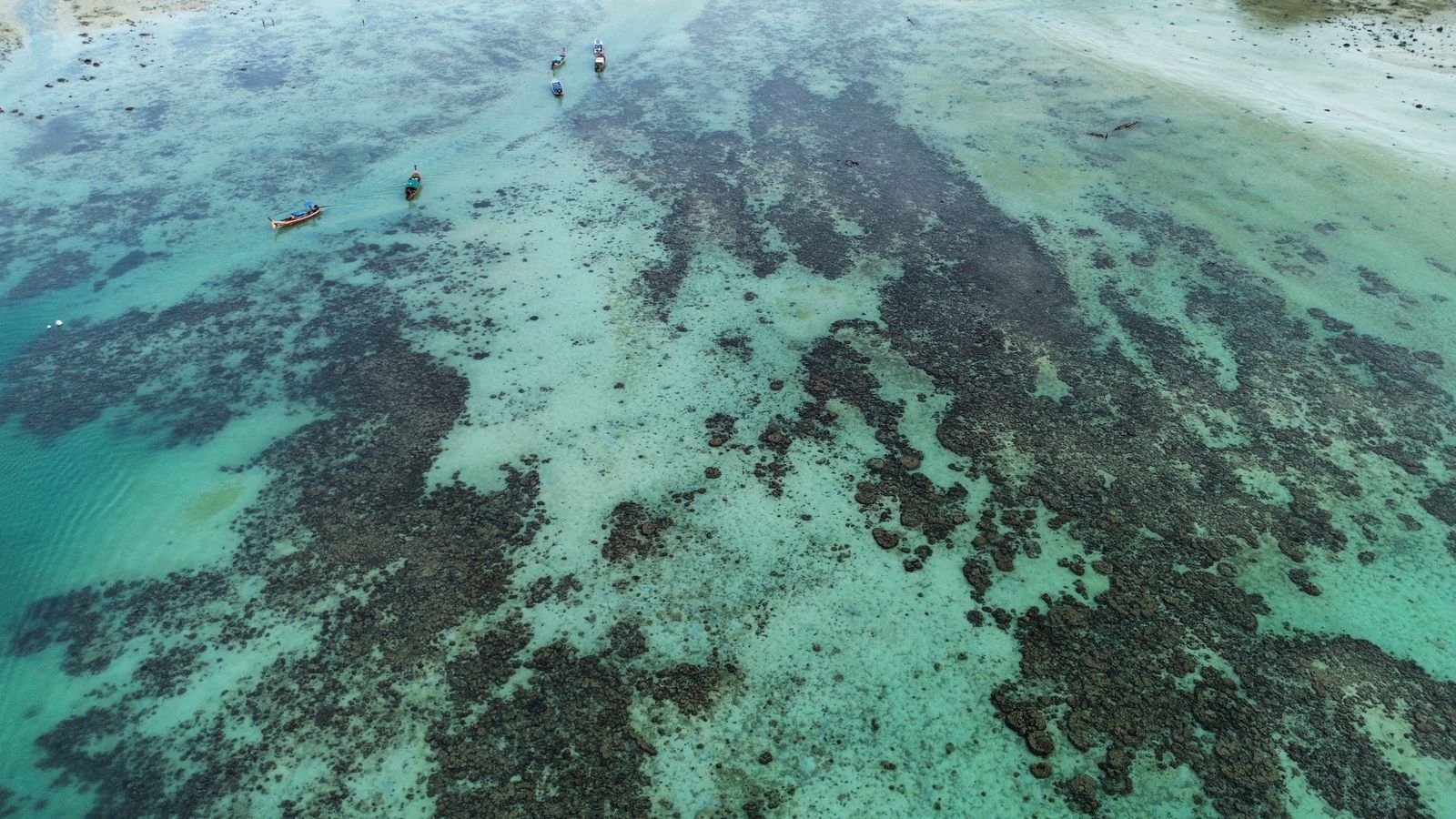
The Great Barrier Reef stretches 2,300 kilometres along Australia’s Queensland coast, and between 2016 and 2022 it bleached en masse four times — in 2016, 2017, 2020, and 2022 — a cadence unprecedented in recent centuries. In 2022, the Great Barrier Reef Marine Park Authority surveyed 719 individual reefs from the air and found that 91 percent showed some degree of bleaching, the fourth mass bleaching event in seven years.
And yet across the same structure — covering hundreds of thousands of square kilometres and thousands of individual reefs — hard coral cover in several regions ended the seven-year run higher than it began. The Australian Institute of Marine Science’s long-term monitoring program reported that by 2024 the northern and central sectors held their highest coral cover in 38 years of surveys, even as a fifth mass bleaching arrived that same year. The answer to why one reef bleached four times while its neighbours barely blinked comes down to water depth, current, cloud cover, which species of coral got there first, and where the heatwave physically sat on the map during the weeks it mattered.
The heat weeks that break the algae
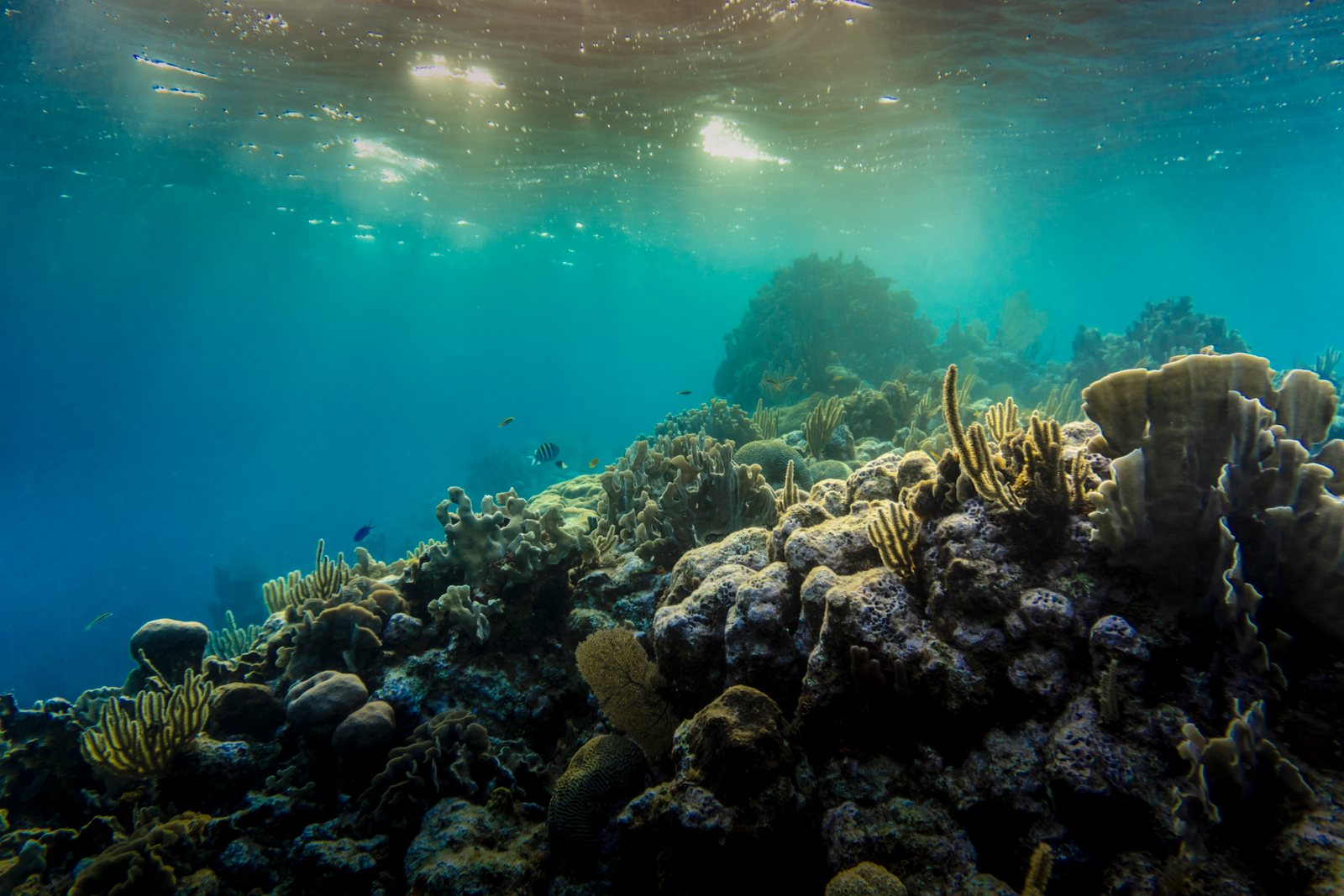
Coral bleaching is a breakdown of a partnership. Inside every polyp on a healthy reef live single-celled algae called zooxanthellae, which photosynthesise sugars and hand up to 90 percent of the coral’s energy across the membrane. When water sits roughly 1 to 2 °C above the local summer average for several weeks, the algae’s photosynthetic machinery starts generating oxygen radicals faster than the coral can scrub them. The coral evicts its tenants, loses the pigment that came with them, and turns bone-white.
NOAA’s Coral Reef Watch program measures the accumulated stress in Degree Heating Weeks, a running tally of how far above the local bleaching threshold the water has climbed and for how long. Several DHW triggers visible bleaching, while higher accumulations bring widespread death. Between 2014 and 2017, the Third Global Coral Bleaching Event pushed reefs across every ocean basin past those thresholds for three unbroken years, and researchers estimate more than half the world’s reefs experienced moderate or worse bleaching, with roughly 15 percent suffering significant mortality.
The Great Barrier Reef caught the tail of that global event in 2016 and 2017, then took direct hits in 2020, 2022 and 2024. Four mass bleachings in seven years. Five in nine.
Why the map matters more than the average
A reef the length of Italy does not warm evenly. The Coral Sea pushes water north to south along the outer shelf. The Hiri Current curls into the Gulf of Papua in the far north. Trade winds stack warm surface water against some coasts and drive cooler water up along others. When a marine heatwave settles over Queensland, the anomaly is patchy — a few degrees hotter over one sector for six weeks, barely elevated a hundred kilometres away.
The heat distribution varied dramatically between events. In 2016, the northern third of the reef experienced the most severe impacts, with major coral mortality in that sector. Subsequent events affected different geographic areas, with 2017 impacting more central areas, 2020 spreading across multiple sectors, and 2022 affecting central and southern regions most severely. Each bleaching drew a different footprint on the same map.
That is why the reef can be both catastrophically bleached and stubbornly full of coral in the same season. Reefs that dodged the 2016 and 2017 heat had five to six uninterrupted years to grow branching Acropora — the fast-building staghorn and tabular corals that dominate healthy reef structure — before their turn came in 2022.
Below about 10 metres, the water is measurably cooler and less light-stressed. Corals on deeper slopes, or on reefs where suspended sediment cuts the light, often escape bleaching that flattens the shallows a few hundred metres away. The same physics work in reverse: shallow lagoon patches trapped behind reef crests heat up like tide pools and cook first.
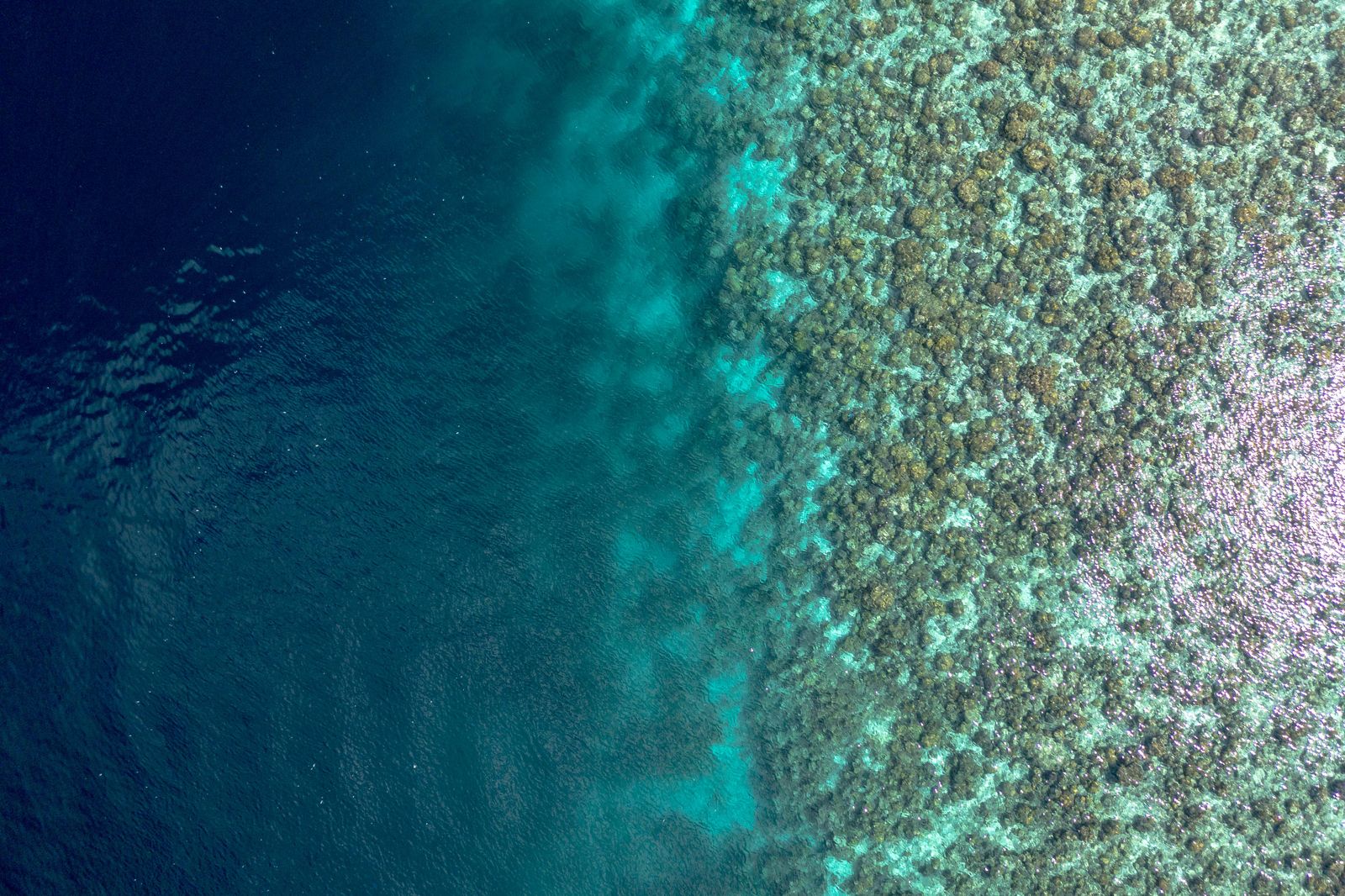
Cloud cover during the peak-heat weeks matters almost as much as water temperature, since bleaching is a joint stress of heat and light — the algae’s photosystems fail faster in bright sun on hot water than in overcast conditions on the same hot water. Ahead of the 2022 event, NOAA scientists were already warning that record-warm sea temperatures through December made a mass bleaching likely, with monsoon cloud and rain the only thing that could still blunt it. The rain came late; the bleaching arrived anyway, for the first time on record during a cooling La Niña year.
The species that live and the species that die
Not all corals bleach at the same threshold. Branching Acropora — the architects of three-dimensional reef structure — are among the most heat-sensitive and were disproportionately killed in 2016 and 2017. Massive Porites, the boulder-shaped corals that can live for centuries, tolerate several more Degree Heating Weeks before expelling their algae, and often keep their colour while everything around them bleaches white.
A reef dominated by Porites before 2016 looked almost unchanged after the heatwave. A reef dominated by Acropora lost most of its cover. And because Acropora also grows back fastest — a broken staghorn fragment can double in size in a year under good conditions — the reefs that lost the most in 2016 were, paradoxically, among the fastest to rebuild coral cover by 2022, just in time for the next event. AIMS’s long-term monitoring has repeatedly shown this whiplash: sharp declines followed by fast Acropora-driven recoveries, followed by sharp declines again.
The problem is that a fast-growing reef is not the same as a resilient reef. Acropora recovery restores the numbers on the coral-cover chart without restoring the age structure, the genetic diversity, or the century-old boulder corals that made the pre-1998 reef what it was.
Local refuges and the accident of geography
Some patches of the Great Barrier Reef sit inside natural buffers. The Swain Reefs, far offshore in the southern sector, sit in cooler open-ocean water, though AIMS surveys have also tracked recurring crown-of-thorns starfish outbreaks there that erode any thermal advantage. Sections of the far northern reef benefit from tidal mixing through narrow channels that drag deeper, cooler water toward the surface every twelve hours. Ribbon reefs along the outer shelf edge sit where the continental slope drops into the Coral Sea, and cold-water upwelling can shave a degree or more off surface temperatures during the exact weeks that matter.
Corals in these physically buffered zones also appear to be more heat-tolerant on average. Populations exposed to naturally variable temperatures — daily swings, seasonal upwelling — often carry symbiont communities and gene expression patterns that handle heat spikes better than corals from thermally stable environments. Researchers have documented similar refuge effects elsewhere in the Coral Triangle, where certain patches retain unusually high cover despite regional warming.
Local pressures compound or relieve the heat. Reefs downstream of sugarcane catchments, dredge spoil, or crown-of-thorns starfish outbreaks recover more slowly. Reefs inside no-take marine zones, with intact herbivore populations to graze the algae that would otherwise smother dead skeletons, recover faster. Mortality patterns varied across the 2022 event, with some areas experiencing less severe impacts than the devastation of 2016 and 2017.
The cumulative arithmetic
The uncomfortable arithmetic is that even reefs holding their coral cover today are running out of recovery interval. A mature branching-coral community needs roughly ten to fifteen years to rebuild after a severe bleaching. The gap between the 2016 and 2020 events was four years. Between 2020 and 2022, two years. Between 2022 and 2024, two years.
The 2024 event showed what that shrinking interval costs. AIMS’s follow-up survey found average hard coral cover on the northern Great Barrier Reef fell from 39.8 percent in 2024 to 30 percent in 2025, a quarter of the region’s coral gone in a single year, with losses near Lizard Island reaching 70 percent on individual reefs — the same northern sector that had just set its 38-year record two years earlier.
A Fourth Global Coral Bleaching Event, confirmed by NOAA and the International Coral Reef Initiative in April 2024, is still being tracked across the Caribbean, the Indian Ocean, and the Pacific; NOAA’s Coral Reef Watch has recorded bleaching-level heat stress on roughly 84 percent of the world’s reef area since the event began in 2023 — surpassing the 68 percent recorded during the 2014–2017 event. The pace of ocean warming outstrips coral generation times by roughly an order of magnitude.
What the uneven damage tells you
The reef’s patchwork of bleached and unbleached zones is not a hopeful sign that corals are adapting. It is a map of where the heat happened to sit, how deep the water was, whether the clouds arrived on time, and which species had been growing there when the alarm went off. Move the heatwave 200 kilometres and the map inverts.
Australian scientists monitoring the reef treat coral-cover figures with visible caution. Much of the high cover reported in 2022 and 2024 came from fast-growing Acropora rebuilding on skeletons of the corals that died in 2016. The Great Barrier Reef Foundation, which works alongside AIMS on reef recovery, has flagged that this Acropora-dominated regrowth leaves the reef more exposed, not less, to the next disturbance — the reef is regrowing the pieces that regrow fastest, and losing the pieces that took centuries to build.
The 2,300 kilometres of the Great Barrier Reef will remain a place of colour and structure for decades. But the reef of 2050 will be a coarser, faster-turnover, less species-diverse version of the reef that 18th-century seafarers feared. The isolated patches that kept their coral cover through the seven-year run did so because the ocean happened to shelter them that time. Whether they stay sheltered depends on where the next heatwave decides to sit.