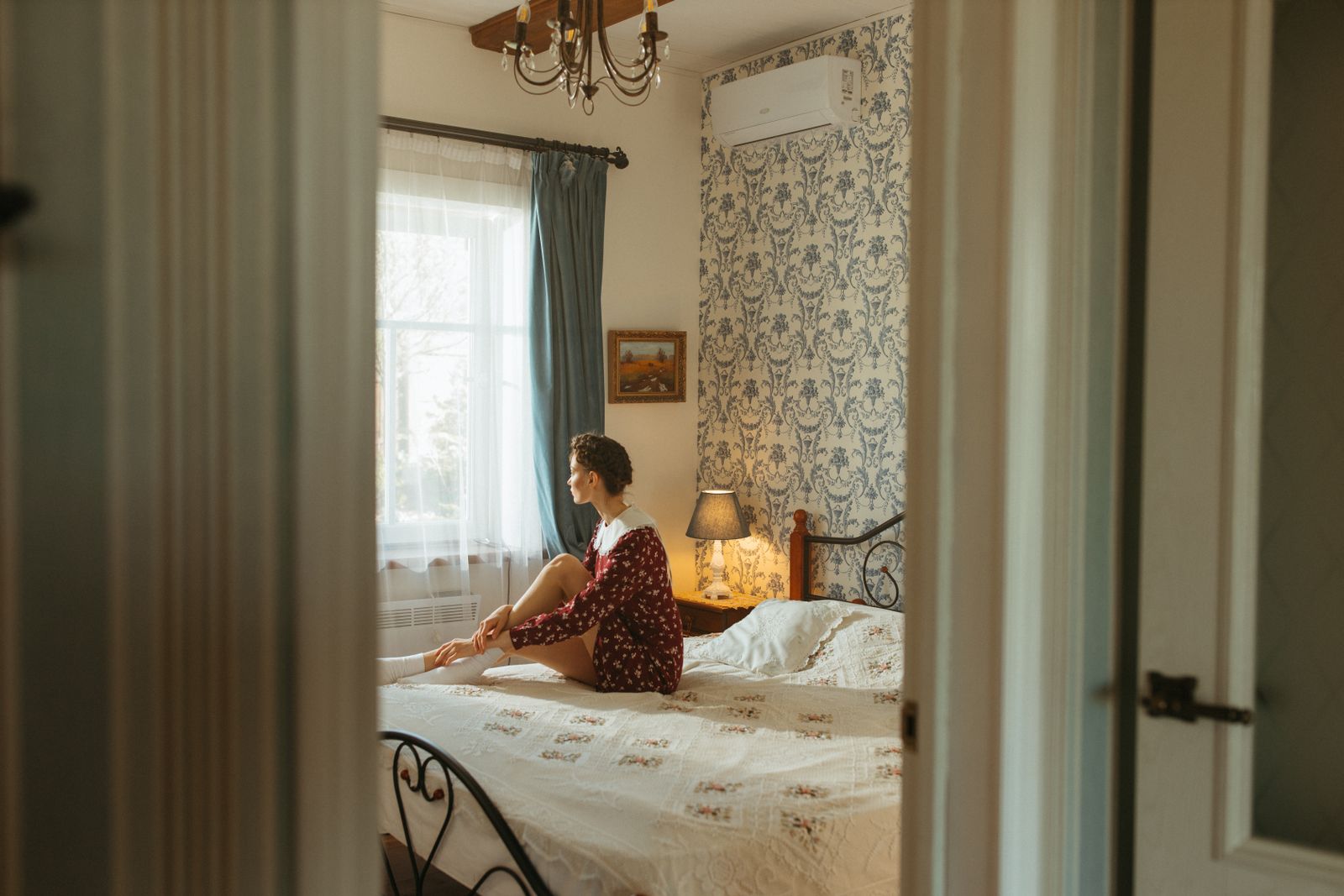
A preserved childhood bedroom can look like evidence that someone has failed to move on. For some adults, it may mean almost the opposite: the room is one of the few places where a version of the self still exists without a title, deadline, family role or professional identity attached.
That does not make every untouched bedroom psychologically significant. Sometimes a room stays the same because nobody redecorated it, a parent likes it that way, or the adult simply never cared enough to change it. But when dismantling the room feels strangely heavy, the pull may be less about nostalgia than about what the space represents.
The more useful question is not always, “Why are they stuck?” It may be, “What does this room let them be that the rest of adult life does not?”
The room before the role
Families often settle into shorthand identities. The responsible one. The funny one. The academic one. The peacekeeper. The one expected to achieve. Those labels can be affectionate and harmless, but they can also become restrictive when approval starts to depend on staying inside them.
Research on parental psychological control helps distinguish ordinary rules from something more intrusive. A 2026 Frontiers in Psychology review describes psychological control as pressure directed at a child’s inner world through practices such as guilt induction, love withdrawal, conditional approval and interference in personal decisions. That differs from behavioral control, which is concerned with rules and supervision.
The research does not show that family roles automatically damage identity, and it says nothing specifically about preserved bedrooms. What it does show is why approval that feels conditional can make questions of autonomy, preference and self-definition unusually important later on.
Why the bedroom becomes the archive
A childhood bedroom can be one of the first places where preferences become visible. Books chosen for no practical reason. Posters that reflect private taste. Objects kept because they mattered to the person keeping them, not because anybody else thought they should.
For someone who grew up under heavy expectations, those details can acquire extra weight. The room may come to represent the part of life that was least organized around performance.
Preserving it years later does not prove that this is what is happening. But it offers one plausible explanation for why a room that looks ordinary to everyone else can feel unusually difficult to dismantle.
The weight of assigned identity
There is evidence that the way parents relate to a young person’s independence can matter for identity development. A Frontiers in Psychology study of young people in Suzhou found that parental rejection and overprotection predicted stronger overcompetitive attitudes, while parental emotional warmth predicted weaker ones. Those overcompetitive attitudes partly mediated the relationship between parenting style and measures of ego identity.
That finding is narrower than saying a controlling parent simply assigns a child an identity. It does, however, fit a broader idea running through this piece: when self-worth becomes heavily tied to comparison, approval or expectation, it can become harder to separate what a person genuinely wants from what they have learned to perform.
Research on university students also complicates the picture. A study of 803 first-year undergraduates found that parental educational involvement positively predicted academic self-efficacy, professional identity and learning engagement. The point is important because parental involvement itself is not the problem. Supportive involvement and controlling involvement are not interchangeable.
By adulthood, people accumulate many identities that come with responsibilities: employee, manager, parent, partner, caregiver. None of those roles is inherently oppressive. But a room filled with objects chosen before those responsibilities arrived can still feel like evidence of a self that did not have to be useful to anybody.
The controlling grip that never lifted
The transition to adulthood does not automatically end conflicts over autonomy. A 2025 Forbes commentary on overcontrolling parents of college students describes excessively restrictive rules as a problem when they limit young adults’ ability to make decisions and participate fully in college life.
Expectations can also outrun reality. A News-Medical report on parental expectations of athletic achievement found that most parents surveyed were realistic, but a substantial minority expected their children to reach unusually high levels of competition. Seventeen percent thought it was somewhat or very likely their child would become a professional or Olympic athlete.
Neither finding proves that adults preserve childhood bedrooms because of parental pressure. What they do show is that the negotiation between a young person’s own direction and a parent’s expectations can continue well beyond childhood.
What the room is actually holding
Ask why an old bedroom matters and the answer may be surprisingly ordinary. The books. The music. The photographs. The fact that nobody has changed it. The explanation can sound smaller than the feeling.
That is because objects can carry more than sentimental value. They can mark continuity. They show what someone liked before a career existed, before a household depended on them, before their days were divided among obligations.
For an adult whose current life is heavily organized around usefulness, that continuity can matter. The room becomes less a shrine to childhood than a reminder that the person inside all those adult roles has a history of preferences, interests and private attachments that belong only to them.
The estrangement variation
Family estrangement adds another layer, although it should not be treated as the default explanation. A 2025 Greater Good article on estranged parents and adult children notes that estrangement often develops gradually through accumulated misunderstandings, hurt feelings, mismatched expectations and unresolved conflicts rather than one dramatic event.
The article also describes how parents and adult children can operate with very different assumptions about love, responsibility and repair. That is a narrower claim than saying estrangement happens because someone was never permitted to be themselves, but it helps explain why the same family history can carry very different meanings for different people.
In that context, a childhood bedroom may feel complicated. It can belong to the family home while also containing objects and memories that feel distinctly personal. The room does not prove anything about the relationship. It may simply become one of the places where belonging and independence overlap.
The bedspread as evidence
There is an easy way to misread all of this: turn the preserved bedroom into a diagnosis. Someone is stuck. Someone refuses to grow up. Someone cannot let go.
The room cannot tell us that. Plenty of adults maintain careers, relationships, homes and responsibilities while still caring deeply about a space from childhood. Plenty of others keep such rooms unchanged for practical or sentimental reasons that have nothing to do with identity.
But when the room carries unusual emotional weight, another interpretation is available. The person may not be trying to return to childhood. They may value one of the few surviving places where their identity is represented through taste and memory rather than through responsibility.
What the room may be asking for
Instead of treating the bedroom as a problem that needs fixing, it can be more revealing to notice what qualities the room represents. Privacy. Choice. Interests that do not need to be productive. Objects that matter for reasons nobody else has to understand.
Those qualities are not exclusive to childhood. An adult can make space for them in a current life too: a shelf chosen purely for pleasure, time spent on an interest with no measurable payoff, a room arranged around personal taste rather than efficiency.
None of that guarantees the old bedroom will suddenly stop mattering, nor does it need to. It simply means the childhood room no longer has to be the only place where the person can recognize parts of themselves that do not come with a job description.
The quiet reading
A preserved childhood bedroom does not prove that someone cannot let go. Sometimes it is logistics. Sometimes it is sentimentality. Sometimes it is a parent’s decision more than the adult child’s.
And sometimes the room may be preserving something less obvious: continuity with a version of the self that existed before work, status, caregiving and other adult roles became so demanding.
Seen that way, the most interesting question is not whether the posters should finally come down. It is whether the adult has somewhere in the life they live now where they can be a person before they are an employee, parent, partner, manager or caregiver.
If they do, the old room can simply be an old room. If they do not, its hold becomes easier to understand.