Correction, September 15, 2026: An earlier headline described the omitted mark as a hyphen and placed the destruct command at 293 seconds. NASA identifies the mark as an overbar and gives the destruct command time as 294.5 seconds. The headline has been corrected.
On July 22, 1962, an Atlas-Agena rocket lifted off from Cape Canaveral carrying the first American spacecraft ever built to visit another planet. It flew for just under five minutes. Then the range safety officer pressed the destruct button, and Mariner 1 — along with the Agena upper stage carrying it — broke apart in a fireball over the Atlantic. NASA’s own account of the failure traces it to two things: a fault in a guidance antenna on the Atlas, and a single mathematical mark left out of the guidance equations on the ground.
Arthur C. Clarke called it the most expensive hyphen in history. It was not, in fact, a hyphen — and that distinction turns out to be the most interesting thing about the story.
A four-minute mission
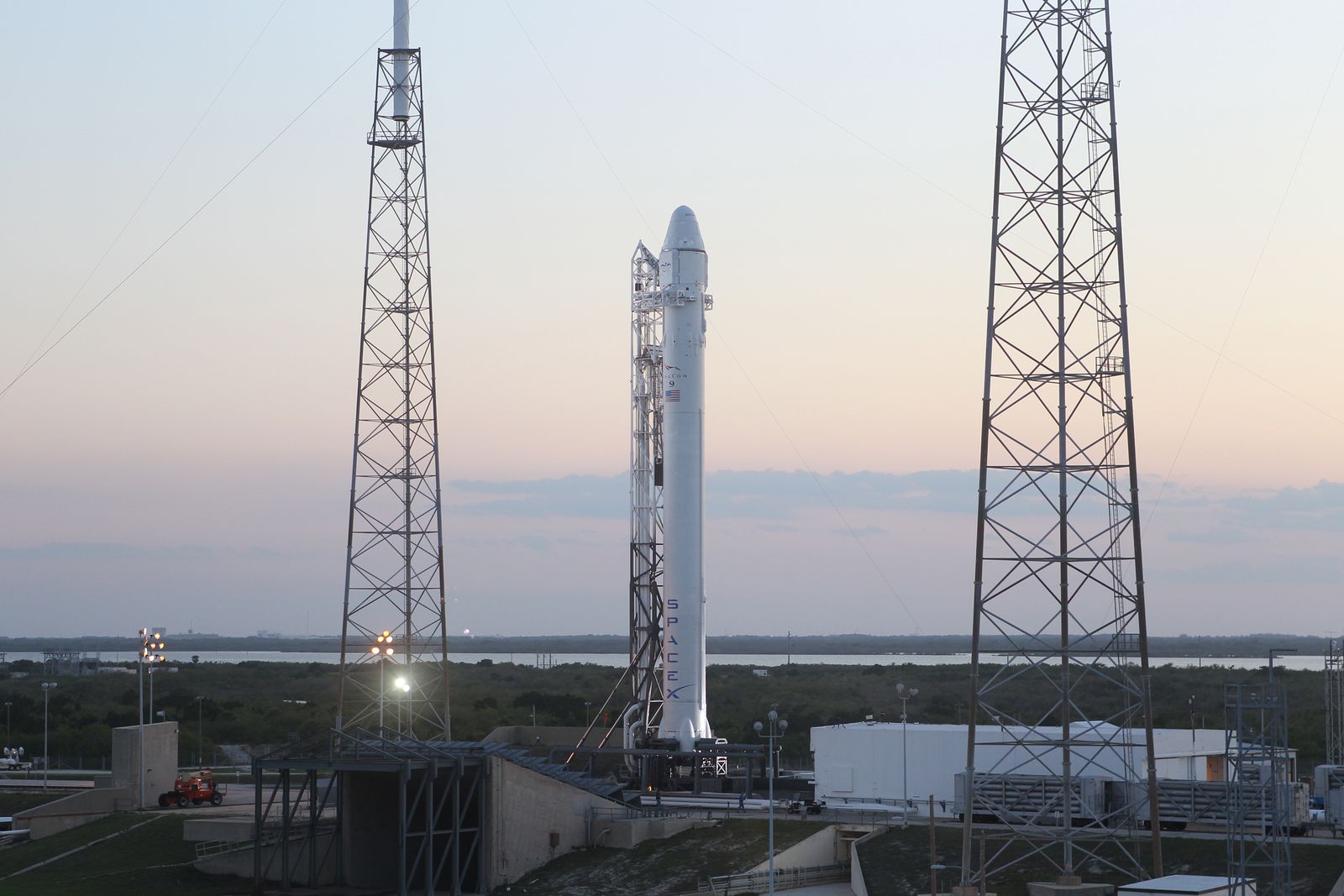
Mariner 1 was supposed to fly past Venus. It was meant to sweep close to the planet, sample its magnetic field and temperature, and radio back the first close measurements of another world. The spacecraft weighed 447 pounds, carried seven instruments and no camera, and sat on top of an Atlas-Agena stack on Launch Complex 12.
The Atlas booster performed cleanly for the first minute. Then the rocket started to nose down and roll. Ground radar showed the vehicle drifting off its planned azimuth, heading toward the North Atlantic shipping lanes. If the Agena stage separated on that trajectory, it could come down on inhabited land or a ship.
At 293 seconds after launch, with roughly six seconds left before the Agena was due to separate, the range safety officer sent the destruct command. NASA’s mission record puts the moment slightly later, at T+294.5 seconds; most published accounts round to 293. The margin mattered more than the discrepancy. Once the spacecraft separated from its launch vehicle, there would have been nothing left to destroy it with — the stage had no destruct mechanism of its own.
The wreckage fell into the sea. The mission was over before it had cleared the top of the atmosphere.
The guidance loop that lost its lock
To understand the missing mark, you have to understand how the Atlas was steered in 1962. The rocket did not carry a full guidance computer of its own. It relied on two ground-based radar systems — one tracking velocity, one tracking distance and angle — feeding a computer at Cape Canaveral that combined the streams and radioed steering corrections back up to the vehicle in near-real time.
The two radars did not report at the same instant. A gap of about 43 milliseconds separated their signals, and the ground program was written to smooth that offset out, ironing small jitters flat before they reached the steering logic. In the handwritten equations, that smoothing was expressed as a bar drawn above a symbol — notation indicating a time-averaged value rather than a raw instantaneous one.
Somewhere in the transcription from handwritten equations to the running program, the bar over the symbol R was omitted.
On its own, that would have been survivable. The failure only became fatal when the velocity radar’s hardware faltered on the climb. That was precisely the situation the smoothing was there to absorb — and it was no longer there. Without the bar, the program treated raw readings as gospel. It saw wild spurious velocities and dutifully commanded the rocket to correct for them. The Atlas obeyed. It pitched, yawed and rolled to chase phantoms.
The failed launch cost roughly $18.5 million in 1962 dollars — well north of $150 million in today’s money.
Not a hyphen — and NASA says so itself
The phrase that made Mariner 1 famous is also the reason the technical record has been misstated for sixty years.
Five days after the launch, the New York Times ran a story reporting the error as the omission of a hyphen in mathematical data. It was a forgivable mistake — a hyphen and an overbar are both short horizontal lines, and one of the two words means something to a general reader. The other does not. The wrong word won, and it kept winning.
NASA now corrects it directly on its Mariner 1 mission page, which specifies the omission of an overbar for the symbol R for radius and states plainly that the missing character was not a hyphen, as is sometimes erroneously reported.
The historian usually credited with untangling the two versions is Paul Ceruzzi, curator emeritus of aerospace electronics and computing at the Smithsonian’s National Air and Space Museum. Ceruzzi examined the Mariner 1 case in Beyond the Limits: Flight Enters the Computer Age (MIT Press, 1989), the volume published to accompany the museum’s exhibition of the same name, and concluded that the celebrated missing hyphen was really a missing bar. His account is the one later writers have leaned on when they bother to make the correction at all.
The tidy version of the story — a punctuation mark killed a spacecraft — is what made it travel. The fuller version is less quotable and more useful. Two independent things had to fail: the radar hardware that fed the guidance computer, and the software safety net that existed to cover exactly that failure. Either one alone would probably have let Mariner 1 reach Venus.
Mariner 2 and the 109-day recovery
Spaceflight in 1962 was risky enough that JPL built everything in pairs. That policy, more than any heroics after the fact, is what saved the program.
Mariner 2 was an identical twin, waiting its turn. NASA’s record is blunt about the pace of the fix: engineers quickly identified and corrected the problems, and the spacecraft was sent on its way. On August 27, 1962 — 36 days after Mariner 1 went into the Atlantic — Mariner 2 lifted off on another Atlas-Agena.
This time the guidance held. Caltech’s account of the mission describes a gently curving flight path 182 million miles long that would take 109 days to fly. According to NASA, Mariner 2 flew past Venus on December 14, 1962, becoming the world’s first successful interplanetary spacecraft.
Its microwave and infrared radiometers were programmed to scan back and forth across the planet’s edge, looking sideways through the atmosphere to see how temperature varied with depth. The Smithsonian’s entry for the spacecraft records a closest approach of about 34,800 kilometres and the finding that mattered: Venus is very hot, with no measurable magnetic field or radiation belts. Decades of speculation that the clouds might hide a temperate ocean world ended that afternoon.
The instrument that made the measurement was remarkably compact, and the pipe it reported through was narrower still. Mariner 2’s telemetry came home at roughly eight bits per second. A single modern text message carries more information than the spacecraft sent in an hour.
Why one character mattered so much
Rockets in 1962 were unforgiving in a way that is hard to appreciate now. Modern launch vehicles carry redundant onboard computers that cross-check one another, inertial measurement units far more precise than anything available then, and flight software put through formal review before it ever sees a launch pad.
The Atlas had no such backup. Its guidance lived on the ground, radioed up as steering commands, and it trusted whatever the code told it. There was no second opinion. When the equation was wrong, the rocket flew wrong. When the rocket flew wrong, the range safety officer had seconds — not minutes — to decide.
The people who wrote that code were inventing software engineering as a discipline while doing it. Formal code review, unit testing and version control did not exist as standard practice. Programs were transcribed by hand from mathematical notation onto coding sheets and punched cards, checked by eye, and run against desk-calculator sanity checks. A dropped mark in a handwritten equation could survive the entire transcription chain and only surface at Mach 4 over the Atlantic.
Mariner 1 is one of the reasons those practices exist now.
The other cost
The Soviet Union was watching. Its Venera program had already launched Venera 1 in February 1961, which fell silent en route. A second Soviet Venus probe failed on launch on August 25, 1962 — two days before Mariner 2 flew.
Mariner 2’s success gave the United States its first clear planetary lead in the space race. Had Mariner 1 been NASA’s only shot, the political weight of the failure would have been considerably heavier. The Kennedy administration was still trading on Alan Shepard’s suborbital flight and John Glenn’s three orbits; a multimillion-dollar fireball on the way to Venus, with nothing to follow it, would have been quoted in every congressional hearing that year.
Instead, the story became the hyphen — a bug rather than a bureaucratic failure — and Mariner 2 became the answer.
What survived, and what didn’t
Nothing of Mariner 1 was recovered. The spacecraft went into the Atlantic and was never searched for. Its sister ship is still out there, in orbit around the Sun. JPL lost contact with Mariner 2 on January 2, 1963, a little over two weeks after the flyby.
Mariner 1 holds an awkward place in the record: the first American planetary mission lost, and one of the earliest cases in which the decisive fault lived in software rather than in metal. The distinction mattered. Engines exploding, tanks rupturing, stages failing to separate — those were the losses everyone expected in 1962. A rocket brought down by a transcription error was something new.
The pattern has repeated since, with the same shape each time. Ariane 5’s maiden flight in June 1996 was destroyed 40 seconds after ignition when a 64-bit floating point value was converted into a 16-bit signed integer that could not hold it. NASA’s Mars Climate Orbiter was lost in 1999 after a mismatch between imperial and metric figures in the navigation chain put the spacecraft into the Martian atmosphere at the wrong altitude. Neither was a hardware failure. Both were something small, written down wrong, that nobody caught in time.
The most expensive hyphen in history
Clarke did not coin his line in the aftermath. He wrote it years later, with the benefit of hindsight and a novelist’s ear. In The Promise of Space, published in 1968, he described the failure as the most expensive hyphen in history — six years after the fact, by which point the wrong word had already hardened into the record.
It is a nearly perfect sentence, which is why it outlived its own accuracy. Programming books quote it without mentioning Venus. Code-review talks quote it without mentioning 1962. The mark it referred to was a bar, not a hyphen, and the failure it described needed a radar fault as well as a typo — and none of that has slowed the line down at all.
Two versions of the same equations existed in the summer of 1962: one with the bar, one without. To anyone unfamiliar with the notation, the two would have looked identical. One of them took a spacecraft to Venus. The other put it in the Atlantic.
The mission it referred to lasted 293 seconds. The lesson has lasted 64 years, and every launch since has been flown by people who know how little it takes.