Following humanity's return to the Moon.
Moon Daily Editorial Team
Editorial Team

Moon Daily Editorial Team

Editorial Team

The Moon Daily Editorial Team produces Moon Daily's coverage of lunar exploration and science. We report on Artemis, landers and the Gateway, commercial lunar payloads, and the science of lunar geology, regolith and water ice. Articles reflect our team's collective editorial process, source verification, drafting, technical review, and editing, rather than a single writer's work. Moon Daily takes editorial responsibility for content under this byline. For more on how we work, see our editorial policy.

Legacy Reports

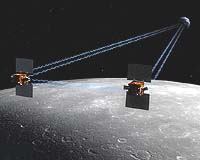
New NASA Mission To Reveal Moon’s Internal Structure And Evolution

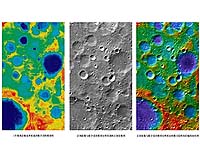
Pasadena CA (JPL) Dec 12, 2007 - At a Monday, Dec. 10 meeting of the American Geophysical Union, NASA's Associate Administrator for Science Alan Stern announced the selection of a new mission that will peer deep inside the moon to reveal its anatomy and history. NASA's Jet Propulsion Laboratory, Pasadena, Calif., will manage the Grail mission. The spacecraft will be built by Lockheed Martin Space Systems, Denver.
Legacy Reports

Moon Race Motives Part 2

Moscow (UPI) Dec 7, 2007 - In order to explore small traps a few kilometers in diameter from the orbit of an artificial lunar satellite, it was necessary to combine the neutron detector with telescopic devices accurate enough to match measurements with crater dimensions. These measurements will yield a map of hydrogen occurrence on the Moon's surface. (Yury Zaitsev is an expert at the Russian Academy of Sciences' Institute of Space Research. This article is reprinted by permission of the RIA Novosti news agency. The opinions expressed in this article are the author's and do not necessarily represent those of RIA Novosti.)

Legacy Reports

Moon Race Motives Part One

Moscow (UPI) Dec 6, 2007 - The Moon theme will continue to dominate in 2008, because space powers now regard it as a priority. The United States, India and Japan will send probes to the Moon. Next: Soil sample plans. (Yury Zaitsev is an expert at the Russian Academy of Sciences' Institute of Space Research. This article is reprinted by permission of the RIA Novosti news agency. The opinions expressed in this article are the author's and do not necessarily represent those of RIA Novosti.)

Legacy Reports

SMART-1 Produces Travel Maps Of The Lunar North Pole

Paris, France (ESA) Dec 06, 2007 - A new map obtained with SMART-1 data shows the geography and illumination of the lunar north pole. Such maps will be of great use for future lunar explorers. The lunar poles are very interesting for future science and exploration of the Moon mainly because of their exposure to sunlight. They display areas of quasi-eternal light, have a stable thermal environment and are close to dark areas that could host water ice - potential future lunar base sites.

Legacy Reports

Data From Chinese Lunar Orbiter Available To All

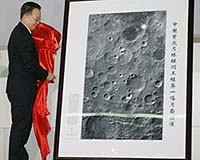
Shanghai (XNA) Dec 04, 2007 - Scientists and astronomy enthusiasts all over the country all have access to data sent back from China's first lunar orbiter Chang'e-I, a leading scientist in the program said here Sunday. Ouyang Ziyuan, academician of the Chinese Academy of Sciences (CAS) and chief scientist of the lunar exploration program, said at present the scientific instruments on board Chang'e-1 have all gone into operation and the satellite is sending back 3 trillion of data per second. The total data volume will reach 28 T (1 T is equivalent to 1,000 G) next year.

Legacy Reports

KAGUYA (SELENE) Composes 3-D Movies With Terrain Camera Images

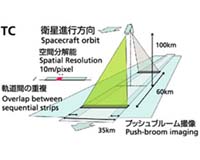
Tokyo, Japan (SPX) Nov 30, 2007 - The Japan Aerospace Exploration Agency (JAXA) successfully demonstrated production of stereo movies (3 dimensional movies) of the Moon surface by using stereoscopic images obtained with the Terrain Camera (TC) onboard KAGUYA on Nov. 3, 2007 (Japan Standard Time, JST). This verification was performed as part of the initial check out of mission instruments onboard KAGUYA (SELENE), which was injected into the Moon's orbit at an altitude of about 100 km.