India to announce lunar mission date this month
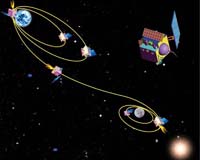
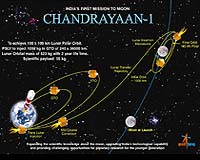
Bangalore, India (AFP) Feb 13, 2008 - India will announce the date of its first lunar mission by the end of this month, the head of the country's space agency said Wednesday.
Editorial Team
The Moon Daily Editorial Team produces Moon Daily's coverage of lunar exploration and science. We report on Artemis, landers and the Gateway, commercial lunar payloads, and the science of lunar geology, regolith and water ice. Articles reflect our team's collective editorial process, source verification, drafting, technical review, and editing, rather than a single writer's work. Moon Daily takes editorial responsibility for content under this byline. For more on how we work, see our editorial policy.

Bangalore, India (AFP) Feb 13, 2008 - India will announce the date of its first lunar mission by the end of this month, the head of the country's space agency said Wednesday.
Feb 13, 2008

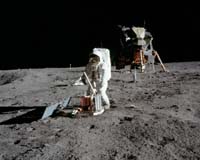
Peterson AFB CO (SPX) Feb 08, 2008 - Only 12 human beings have set foot on the moon. You could be the thirteenth ... if you make the cut. NASA's current recruiting effort for a new class of astronaut candidates specifies that the International Space Station and the return to the moon are part of the agency's goals, and this class will be the first to be trained to achieve them.
Feb 8, 2008

Carpenteria CA (SPX) Jan 23, 2008 - Four specialized antennas built by Northrop Grumman Corporation (NYSE:NOC) for the Japanese Aerospace Exploration Agency (JAXA) are functioning as expected after deploying successfully onboard the SELenological and ENgineering Explorer KAGUYA (SELENE), Japan's first large lunar explorer.
Jan 23, 2008

Washington (UPI) Jan 23, 2008 - A U.S. study of radar images of the moon suggests deposits from early lunar volcanoes might be useful to astronauts at lunar stations.
Jan 23, 2008

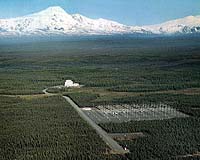
Los Angeles CA (SPX) Jan 18, 2008 - Scientists at the Air Force/Navy High Frequency Active Auroral Research Program (HAARP) in Alaska and the Long Wavelength Array (LWA) in New Mexico back in October, 2007 received what is believed to be the lowest frequency RF echo off the lunar surface.
Jan 18, 2008

Dallas TX (SPX) Jan 17, 2008 - After 43 years, Dr. James L. Carter has retired from teaching and research at the University of Texas at Dallas, but he is not giving up his other job: making fake moon dirt. The geoscientist has parlayed his arcane specialty as an expert on lunar soil into a full-time business, ETSimulants. The company makes and ships tons of lunar regolith stimulant, or fake moon dirt, to the National Aeronautics and Space Administration (NASA) and other researchers.
Jan 17, 2008


Moffett Field, CA (SPX) Jan 15, 2008 - Cameras and sensors that will look for the presence of water on the moon have completed validation tests and been shipped to the manufacturer of NASA's Lunar Crater Observation and Sensing Satellite. The science instruments for the satellite, which is known as LCROSS, departed NASA's Ames Research Center in Moffett Field Calif., for the Northrop Grumman Corporation's facility in Redondo Beach, Calif.
Jan 15, 2008

Paris, France (SPX) Jan 14, 2008 - Excitement is rising as ESA is in the final stages of preparation for the first collaborative space mission with the Indian Space Research Organisation (ISRO). Chandrayaan-1 will study the Moon in great detail and be the first Indian scientific mission leaving the Earth's vicinity.
Jan 14, 2008

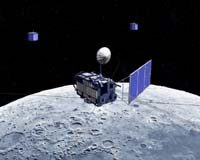
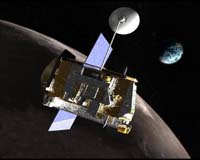
Greenbelt MD (SPX) Jan 11, 2008 - NASA's next mission to Earth's closest astronomical body is in the midst of integration and testing at NASA's Goddard Space Flight Center in Greenbelt, Md. The Lunar Reconnaissance Orbiter, known as LRO, will spend at least a year mapping the surface of the moon. Data from the orbiter will help NASA select safe landing sites for astronauts, identify lunar resources and study how the moon's environment will affect humans.
Jan 11, 2008

Washington DC (SPX) Jan 09, 2008 - A team of scientists from the Naval Research Laboratory, the Air Force Research Laboratory's (AFRL's) Research Vehicles Directorate, Kirtland Air Force Base, N.M., and the University of New Mexico (UNM) has detected the lowest frequency radar echo from the moon ever seen with earth-based receivers.
Jan 9, 2008

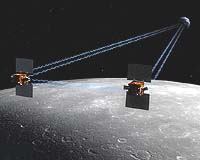
Denver CO (SPX) Jan 02, 2008 - The National Aeronautics and Space Administration's (NASA) newest mission will analyze the internal structure and gravitational forces of the Earth's moon. The Gravity Recovery And Interior Laboratory, or GRAIL, mission is the latest mission under NASA's Discovery Program. Lockheed Martin will design, build and operate the GRAIL spacecraft.
Jan 2, 2008

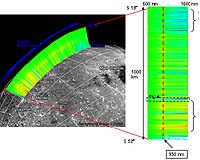
Tokyo, Japan (SPX) Dec 17, 2007 - The Japan Aerospace Exploration Agency (JAXA) verified the Spectral Profiler (SP) onboard the lunar explorer KAGUYA (SELENE) orbiting approximately 100 km above the lunar surface, through initial observations on November 3, 2007, and subsequent data analysis. The obtained data is the world's first continuous reflectance spectra of the far side of the Moon in the visible and near infrared region.
Dec 17, 2007

Moscow (RIA Novosti) Dec 17, 2007 - Russia successfully launched Friday a Soyuz-FG carrier rocket with a Canadian satellite on board from the Baikonur space center in Kazakhstan, a RIA Novosti correspondent reported. The Soyuz carrier rocket with a Fregat booster put a Radarsat-2 earth remote sensing satellite into a solar-synchronized orbit with an altitude of 805 kilometers (about 500 miles) to join the previous Canadian satellite, Radarsat-1, which has been orbiting earth since 1995.
Dec 17, 2007

Bangalore, India (AFP) Dec 16, 2007 - India has installed a pair of giant antennas to monitor a planned robotic mission to the moon next year, making it one of a few nations with deep space tracking ability, officials said.
Dec 16, 2007

Beijing (XNA) Dec 14, 2007 - Chinese scientists have pledged to seize time to start the plan and implementation for the second-phase of China's lunar probe program at a red-carpet ceremony opened on Wednesday morning to mark the country's initial success in deep space exploration.
Dec 14, 2007

Cleveland OH (SPX) Dec 13, 2007 - How do you survive in a remote, mountainous region that has no water or wind and sometimes goes without sunlight for weeks? This is not the premise for a survivalist reality show; it's a question NASA must answer before sending humans to live and work on the moon.
Dec 13, 2007