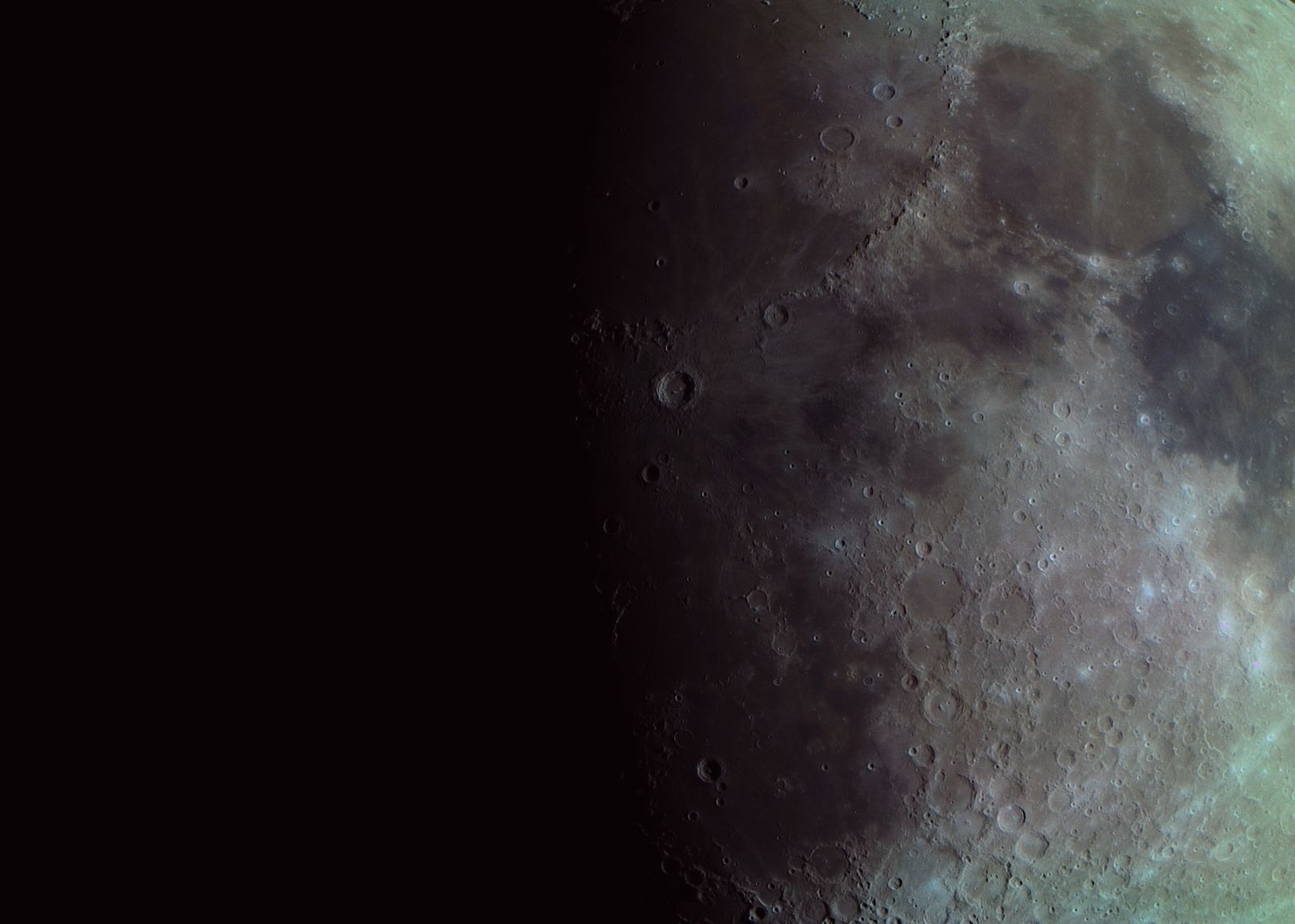
The Moon has no air, no weather and no wind, and nothing at all between its surface and the loose debris of the inner solar system. What arrives, arrives whole. A speck of interplanetary grit meets the regolith at a speed no earthly object survives — no warning, no sound, no burning streak, because there is nothing to burn through. The compression is violent enough to turn solid rock into a glowing plasma for a fraction of a millisecond before it cools into a fresh crater the width of a fingernail.
In April 2026, four people watched it happen. During the Artemis II lunar flyby, the crew reported impact flashes on the darkened face of the Moon, and the news set off “audible screams of delight” among the science team back in Houston, in the words of Artemis II lunar science lead Kelsey Young. The crew logged no fewer than five impacts during a solar eclipse that lasted close to an hour. NASA’s tally for the full flyby was six.
What the Artemis II crew saw
The flyby on 6 April 2026 ran about seven hours and carried the Orion spacecraft, named Integrity, to within 6,545 kilometres (4,067 miles) of the lunar surface. As Astronomy Magazine’s live coverage recorded through the day, this was the first crewed lunar mission since Apollo 17 in 1972 — a gap of more than 53 years.
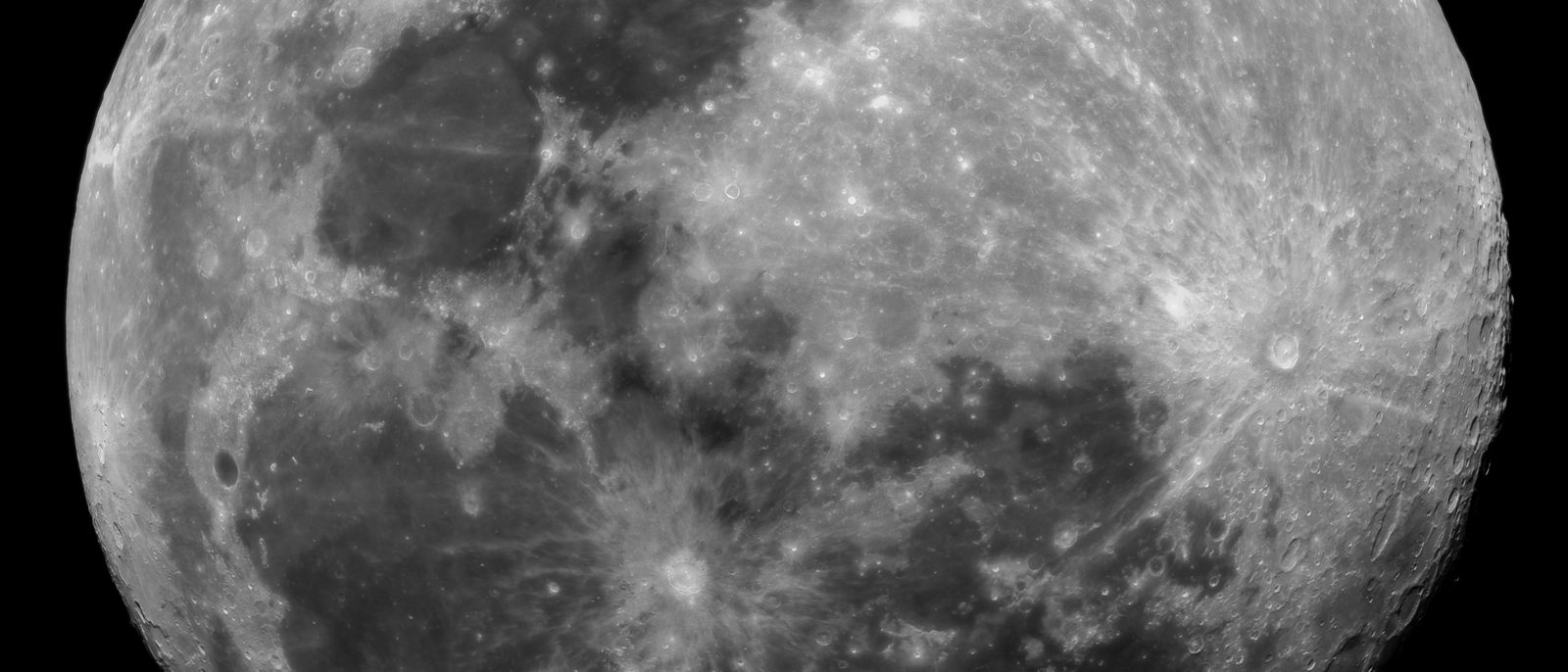
Near the end of the observation window, the Sun slipped behind the lunar disk from Orion’s vantage point and produced a total solar eclipse running from 8:35 to 9:32 p.m. EDT. With the glare gone, the astronauts could see the unlit Moon in a darkness humans have almost never observed directly.
That is when the flashes started.
Commander Reid Wiseman reported them first; Jeremy Hansen picked up another moments later. They were white to bluish-white, and they were fast — less than a tenth of a second, faster than the spacecraft’s camera shutters could resolve. Not one of the six was photographed. The only instrument that caught them was the human eye.
Each flash was a grain of rock dying.
Why they hit so hard
The speed is the whole story. On Earth, the atmosphere acts as a shock absorber a hundred kilometres deep — friction shreds anything smaller than a fist into glowing dust long before it touches the ground. That streak across the summer sky is the deceleration.
The Moon has no such buffer. Its exosphere is so thin it counts as vacuum for practical purposes. A dust grain that would have vaporised twenty kilometres above a cornfield in Iowa arrives at the lunar surface with every last metre of its cosmic velocity intact.
According to NASA figures cited by Live Science, meteoroids strike the lunar surface at 20 to 72 kilometres per second — roughly 45,000 to 160,000 miles per hour, or up to about 260,000 kilometres per hour. At those speeds kinetic energy scales brutally. Bill Cooke, who heads NASA’s Meteoroid Environment Office at Marshall Space Flight Center, has put the arithmetic in domestic terms: a ping-pong-ball-sized meteoroid lands with the force of about seven pounds of dynamite.
The moment of impact
What the Artemis crew actually watched, in physical terms, was a phase change happening faster than the human eye can normally follow. When a hypervelocity grain strikes basalt, the shock wave compresses both projectile and target so severely that solid rock becomes, for a fraction of a millisecond, an ionised gas — a plasma glowing with the heat of its own destruction.
The flash cools within milliseconds. The crater it leaves might be no wider than a coin. Sustain that across four and a half billion years and you get the powdery grey blanket that Neil Armstrong’s boot sank into in July 1969. The regolith is, in effect, the pulverised residue of a bombardment that has never once paused.
How often it really happens
NASA’s Meteoroid Environment Office has been tracking bright lunar impacts from Earth-based telescopes for two decades. Cooke’s team estimates that between 10 and 1,000 tonnes of dust reach the Moon every day, and that roughly 100 ping-pong-ball-sized meteoroids arrive daily — about 33,000 a year. Larger objects, in the two-and-a-half-metre class, turn up once every four years or so.
The flashes bright enough to be seen across 384,000 kilometres of space are only the visible tip of that. Amateur astronomers first recorded one in 1999, during the Leonids, and as Sky & Telescope notes, “well over 400 such impact flashes have been confirmed” since. Everything below that brightness threshold — the overwhelming majority, most of it no bigger than a poppy seed — goes unrecorded.
Which is why the Artemis observation matters. Six visual confirmations from lunar distance, in real time, give researchers a calibration point in a size range that neither crater counts nor Earth-based meteor watching cover well.
The silent threat to a Moon base
For anyone planning to live on the surface, this constant sandblasting is less charming than it sounds. A modelling study led by Daniel Yahalomi, covered by ScienceAlert, ran NASA’s Meteoroid Engineering Model against a hypothetical lunar base roughly the footprint of the International Space Station. The result: between 15,000 and 23,000 impacts a year from particles ranging from a millionth of a gram to ten grams. A single one-microgram particle — invisible to the naked eye — carries enough energy to crater metal and puncture equipment.
The threat is not evenly distributed. The same analysis found the lunar poles take the lightest bombardment, which is convenient, because NASA has targeted the south pole for its first base. Impact rates peak near the sub-Earth longitude, and vary between the two extremes by a factor of about 1.6.
The modelled defence is a Whipple shield — the layered aluminium bumper system already flying on the ISS, which fragments an incoming particle on a sacrificial outer skin and spreads the energy before it reaches anything that matters. Buried and half-buried habitat concepts, using excavated regolith as mass shielding, follow the same logic from the other direction.
Spacesuits are the harder problem, though the odds are better than the imagery suggests. Cooke has estimated the chance of an astronaut being struck by a millimetre-sized object — the smallest that will penetrate a suit — at roughly one in a million per person per hour. Low for a single moonwalk. Less reassuring across a decade of sustained surface operations.
What the impacts teach scientists
Each flash carries information. From brightness and duration, researchers can back-calculate the mass and velocity of the impactor. From location and timing, they can tie individual strikes to meteor showers whose parent comets are already catalogued — the Perseids, the Geminids, the Leonids.
Planetary scientist Benjamin Weiss of MIT told Sky & Telescope that the Artemis 2 dataset is valuable precisely because it lands in a size range nothing else samples cleanly: too small for crater counts, too large for the microscopic pits found in Apollo rock samples. His summary is that the Moon functions as a gigantic photographic plate, permanently recording the impact rate at every scale.
The airless environment produces other strange effects. Scientists think micrometeoroid impacts loft a persistent cloud of dust around the Moon and sputter sodium atoms off the surface — the same tiny explosions the Artemis crew watched, operating continuously and invisibly. During the eclipse, Hansen reported a glow encircling the entire lunar limb, and one candidate explanation is sunlight scattering off exactly that dust.
A shooting gallery seen from orbit
None of this was unprecedented, and that is worth stating plainly, because it has been widely misreported. During the Apollo 17 mission in December 1972, astronaut Harrison Schmitt observed impact flashes on three separate occasions while in lunar orbit, as the Smithsonian’s National Air and Space Museum noted in its Artemis II observation preview, published the morning of the flyby. What made April 2026 notable was not that humans saw impact flashes for the first time, but that a crew trained specifically to look for them saw twice as many in seven hours as Apollo 17 logged across its entire mission.
The astronauts also photographed geographic features on the far side and catalogued surface colours — greens and browns that photographs flatten out. But it was the flashes that had the Science Evaluation Room on its feet.
The scale, made physical
Impact velocities in the tens of kilometres per second are difficult to hold in the head. A grain of dust moving at 20 kilometres per second is travelling faster than a rifle bullet by more than an order of magnitude. When it meets basalt, the rock does not crack. It evaporates.
What the crew saw from 6,545 kilometres away was a piece of the solar system’s leftover construction dust being deleted from existence — converted, in a heartbeat, into light, heat and a puff of ionised silicate blown outward from a crater you could cover with a thumbnail.
Now sustain that for four and a half billion years.
The dust Buzz Aldrin scuffed with his boot in the Sea of Tranquility was, atom by atom, the accumulated residue of exactly that process — a graveyard of vaporised grains, packed metres deep, still deepening while you read this sentence.
Somewhere on the far side, in the minute it took to reach this line, more of it arrived.