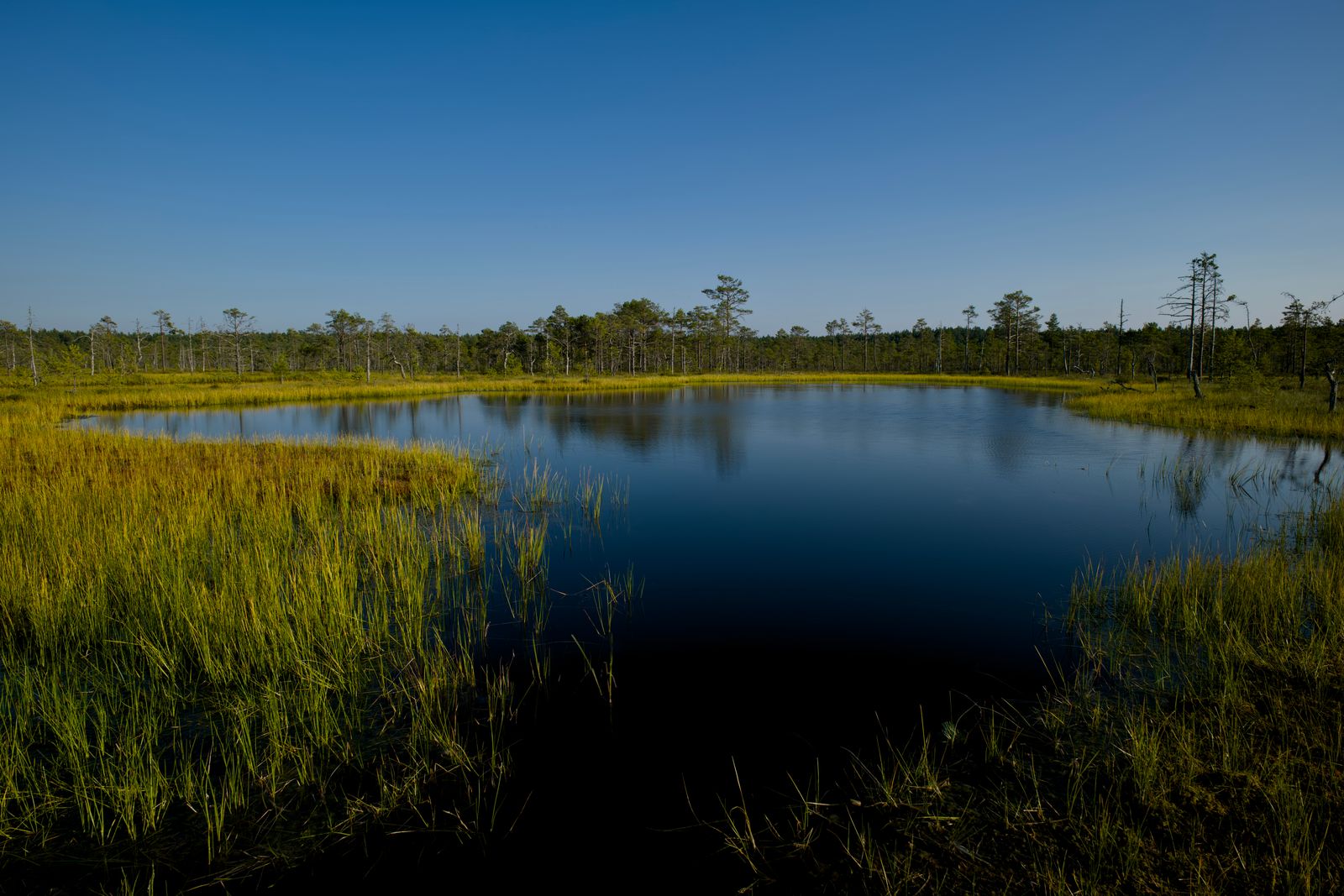
A single hectare of drained tropical peatland can release substantial carbon dioxide over ten years — often more carbon than the rainforest canopy standing on top of it holds in the first place. The trees are the visible loss. The invisible loss is the ground itself, a waterlogged layer of half-decayed plant matter that has been accumulating for thousands of years, and which begins to oxidise the moment a drainage canal cuts through it.
The mechanism is straightforward and slow. In Indonesia, Peru and the Democratic Republic of Congo — the three countries that hold most of the world’s tropical peat — agriculture drives the majority of peatland conversion, according to a 2026 study led by Karimon Nesha of Wageningen University & Research. Drain the water, expose the peat to air, and microbes get to work on carbon that has been chemically locked away since before the pyramids. Block the canal and rewet the surface, and the decomposition stops — but only once the water table climbs back to within about twenty centimetres of the ground. Getting it there takes years. Sometimes decades. And in the wrong hydrological conditions, the fix creates its own problem.
The peat is the forest
A mature lowland tropical rainforest holds substantial carbon per hectare in its trees, roots and litter. Clear that forest and burn it, and you release most of that carbon within a season. It’s a large one-off pulse. The soil underneath, in most of the tropics, is thin and mineral, and the emissions taper off fast.
Peat swamp forest is a different accounting problem. The trees on top might hold similar amounts of carbon per hectare. The peat beneath them holds vastly more, depending on depth. Peatlands cover a small fraction of the world’s land surface but store disproportionate amounts of carbon — about 30% of the carbon locked in the world’s soils sits in these boggy wetlands, roughly twice what the world’s forests hold, on just 3% of its land.
Clear the trees and you lose the canopy. Drain the peat and you begin to lose the ground itself, one millimetre at a time, as carbon that took thousands of years to accumulate is exhaled back into the atmosphere as CO2. A drained peatland in Southeast Asia typically subsides steadily over years, losing centimetres annually in the early phase. That subsidence is carbon leaving.
Why the fire is only the beginning
Most tropical peatland conversion begins with fire. Slash the vegetation, wait for the dry season, and burn. The initial fire pulse releases a large amount of greenhouse gas compared to the decomposing peat that follows — the Nesha team found the first-year fire emissions ran roughly 19 to 20 times higher than the emissions from decaying peat the year after, with fire accounting for about half of the total emissions from conversion.
Because peat continues to decompose for decades after the fire is out. Over a full drainage cycle — the twenty to fifty years a plantation typically operates before the peat is too shallow to farm — the slow oxidation releases substantial total emissions, eventually rivalling the initial burn. In Indonesia, where large-scale agriculture is the leading source of peatland emissions, and in the DRC, where smallholder agriculture alone drove about 93% of conversion, that long tail matters more than any single fire season.
Fire also does something the slow decomposition doesn’t: it can ignite the peat itself. A peat fire smoulders underground for weeks or months, sometimes surviving heavy rain, releasing dense carbon-rich smoke. A University of Cambridge study published in February 2025 found that peatland fires in the UK, which burn a much smaller area than grass or heath fires, nearly doubled the country’s fire-driven carbon emissions. The pattern scales up brutally in the tropics.
Why blocking the canals took twenty years
Rewetting sounds simple. Find the drainage canal, dam it, let the water rise. In practice, rewetting programmes on large-scale peatland drainage schemes have taken years to show measurable carbon results.
The reasons stack up. First, dams built too fast in one section of a canal network simply push water sideways into adjacent drained blocks, or blow out during the first heavy monsoon. Peat is spongy and compressible; a dam anchored in dry, oxidised peat has nothing solid to grip. Engineers had to learn to build compacted-peat dams with clay cores, spaced every few hundred metres, so that no single failure drained a whole system.
Second, the water table doesn’t rise uniformly. Drained peat shrinks and cracks. Water finds the cracks and drains away laterally through the substrate itself, sometimes for kilometres, before the surface starts to wet. Monitoring at rewetted sites has found that even after canal blocking, dry-season water tables often remain deep below the surface for years — deep enough that oxidation continues at close to pre-restoration rates.
Third, and most awkwardly, the vegetation that returns to a rewetted site is not the vegetation that was there before. The original peat swamp forest species regenerate slowly and struggle in the disturbed hydrology. What comes back first is fern, sedge and pioneer woody species, which do not shade the surface enough to keep peat cool and moist through the dry season.
The methane trap
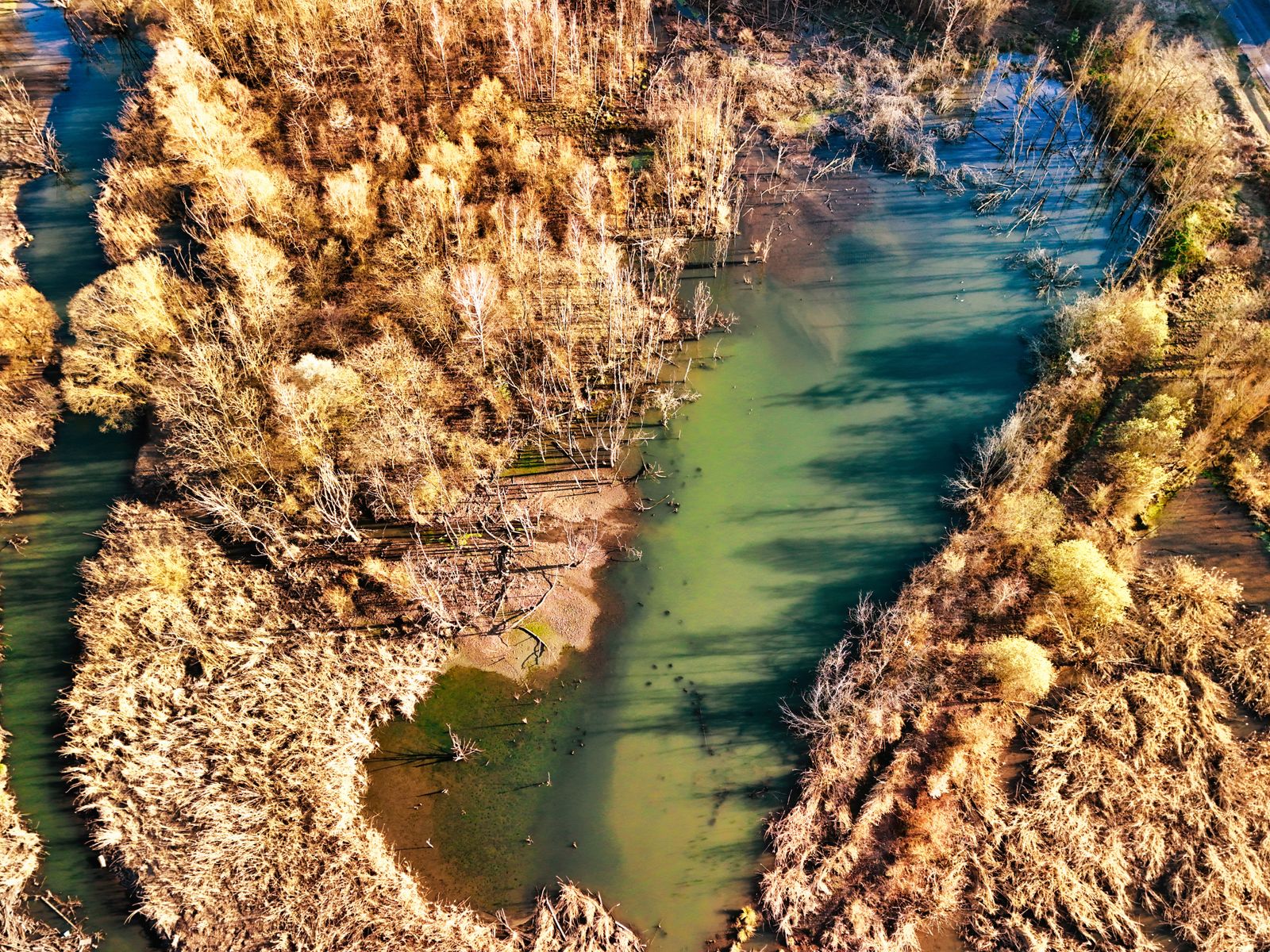
Then there is the trade-off that turned peatland restoration into a genuine climate dilemma. Rewet the peat too aggressively and you swap a carbon dioxide problem for a methane one.
Methane forms when microbes break down organic matter without oxygen — the exact condition you create when you flood a drained peatland. A two-year mesocosm study led by Peduruhewa H. Jeewani and colleagues at a UK fen peatland found that saturated peat with the water table at the surface produced very high methane emissions, and that lowering the water table to 20 centimetres below the surface cut methane by more than 90%. Total greenhouse gas emissions, expressed as CO2 equivalents, dropped by 27 to 35% under moderate drainage compared with full saturation.
Methane traps heat far more effectively than CO2 — roughly 28 times as much over a century, and far more over the two-decade horizon that governs near-term warming. Get the water table wrong by ten centimetres and a well-intentioned restoration project can, in the short term, warm the climate faster than the drained plantation it replaced.
Measurements at abandoned peatlands have captured how uneven methane emissions can be at ground level. Across monitoring sites, drainage ditches overgrown with mosses can emit vastly more methane per hectare per year than drier patches with scattered trees. The same hectare can be a source and a sink depending on which square metre you sample.
Even actively drained plantations leak methane in ways that inventories have largely missed. A study reported by Mongabay in December 2025 found that drainage ditches on oil palm plantations are a significant and overlooked source of methane, because the standing water in them creates exactly the anaerobic conditions methane-producing microbes need. Measuring two Bornean plantations, the researchers found that methane rising from the ditches accounted for as much as 10% of a hectare’s total greenhouse emissions while the ditches covered no more than 4% of the plantation area. The plantations are drained overall, but the canals themselves are wet, and they thread through every plantation like veins.
The implication is that both the drained state and the rewetted state emit methane from open water, and only the intermediate condition — moist peat with a water table around 20 centimetres down — reliably minimises the combined greenhouse footprint. That is a narrow target to hit across landscapes that may cover tens of thousands of square kilometres, with rainfall patterns shifting under climate change.
What is finally starting to work
Two decades of trial and error have converged on a handful of practices that measurably lower emissions from tropical peatlands. Dense networks of canal blocks, spaced closely enough that no failure drains more than a hectare or two. Paludiculture — farming crops adapted to wet peat, such as sago palm or jelutung — instead of trying to force oil palm onto rewetted ground. And, in temperate research, the addition of stable carbon amendments like biochar, which Jeewani’s team found reduced cumulative CO2 emissions from peat by up to 52% over two years.
Satellite monitoring has closed another gap. Radar instruments that can see through cloud cover and canopy now track peatland subsidence and water table depth at plot scale across the tropics, giving governments and buyers of carbon credits something closer to real accounting. The accelerating carbon loss from warming tropical soils reported in 2025 makes that accounting more urgent: a Puerto Rico field experiment published in Nature Communications recorded soil CO2 emissions climbing by 42 to 204% under 4°C of warming, and peat that stayed stable at lower temperatures for millennia may not stay stable as temperatures rise.
The parallel with other high-carbon coastal ecosystems is instructive. Moon Daily has previously examined why mangrove restoration projects fail at similar rates despite the same underlying carbon logic — the answer, in both cases, comes down to hydrology that is easy to break and hard to repair.
A ten-thousand-year exhale
Peat forms slowly in the tropics. A metre of peat represents roughly a thousand years of net carbon accumulation — a thousand years of dead leaves, root fragments and pollen that never fully decomposed because the water table stayed high enough to starve the microbes of oxygen. Several metres of peat represents millennia.
A single dry season on a drained plantation can undo centuries of that accumulation. A single peat fire, in the 1997 or 2015 Indonesian episodes, undid closer to a thousand years across the burn zone. The rewetting programmes that took years to show carbon results are trying to slow an exhale that, once started, runs on a chemistry the plant matter itself dictates.
The map has narrowed. Keep the water within twenty centimetres of the surface. Do not use fire. Block canals in tight networks. Plant crops that tolerate wet feet. And accept that some peat lost in the last fifty years — the metre that took a millennium to form — is not coming back within the lifetime of anyone reading this. What can be saved is the peat still under water: the layers underneath the Cuvette Centrale in the DRC, under the remaining swamp forests of Papua, under the Peruvian Amazon’s Pastaza-Marañón basin. The oldest carbon still gets to stay in the ground, if the ground stays wet.