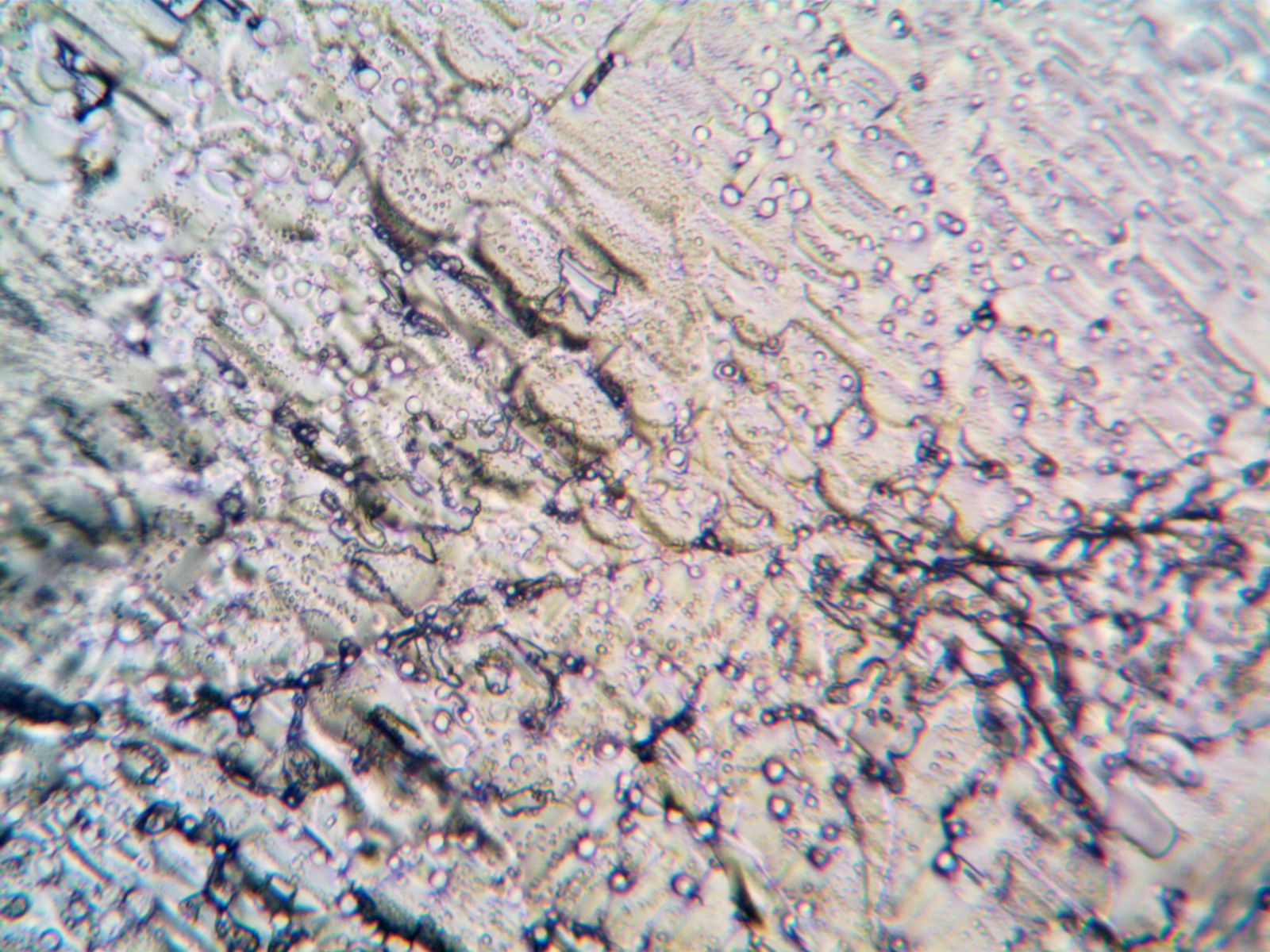
Tardigrades are extraordinarily difficult to kill, but they are not indestructible. The most dramatic records apply to particular species that have dried into a dormant form called a tun, often during brief and carefully controlled laboratory exposures rather than while actively crawling through water.
Even with those qualifications, the numbers are remarkable. The European Space Agency lists reported tardigrade tolerances ranging from minus 272 to plus 150 degrees Celsius, and in 2007 many revived after spending ten days outside a spacecraft in low Earth orbit. The details make the achievement more credible, not less astonishing.
The size of a full stop, with an enormous reputation
Most tardigrades are only a fraction of a millimetre long. They have eight short legs, tiny claws, a digestive system, muscles, nerve tissue and, in many species, simple eyespots.
They live in marine sediments, freshwater habitats, soil, lichens and thin films of water around moss. A damp patch on a wall can support them, but they become vulnerable when that microscopic reservoir disappears.
Their answer is cryptobiosis. During the form associated with drying, known as anhydrobiosis, a tardigrade pulls in its legs, contracts into a barrel-shaped tun and loses most of its body water. Its measurable metabolic activity falls to an extremely low level until favourable conditions return.
That does not mean the animal is literally dead, nor that every chemical process has stopped forever. It is a protected dormant state in which deterioration is slowed and cellular structures are stabilised well enough for recovery to remain possible.
The truth behind the 150-degree survival claim
The temperature records require careful wording. Historical experiments reported that dried tardigrades survived short exposures between roughly 110 and 151 degrees Celsius, but those results do not mean a tardigrade can remain alive indefinitely in an oven or boiling water.
A modern study of Ramazzottius varieornatus measured much lower limits when exposure lasted longer. Among desiccated animals, the estimated temperature causing 50 percent mortality was 82.7 degrees Celsius after one hour, and tolerance declined further during a 24-hour exposure. Active, hydrated tardigrades were considerably more sensitive.
The same distinction applies at the cold end. A dry tun has little free water available to form damaging ice crystals, giving it an advantage that an active animal does not share. Survival still depends on the species, its physical condition, how it was dried, how long the exposure lasted and how it was rehydrated.
What actually happened during the 2007 spaceflight
The experiment that made tardigrades famous in space was called TARDIS, short for Tardigrades in Space. It flew aboard the Russian Foton-M3 capsule in September 2007 and included the species Richtersius coronifer and Milnesium tardigradum.
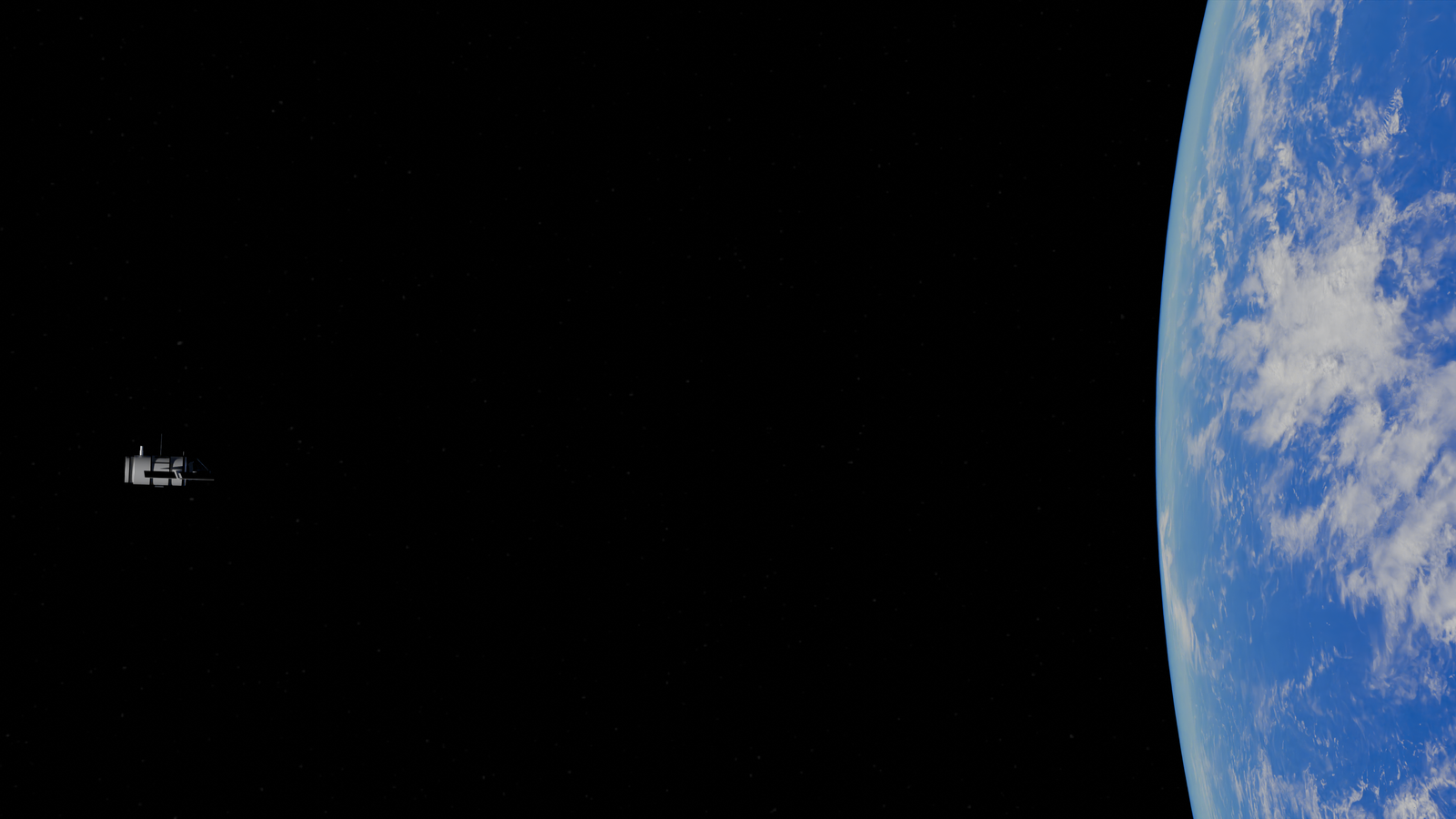
Dried animals were mounted outside the spacecraft and exposed for ten days in low Earth orbit. According to the resulting study in Current Biology, the vacuum-only groups survived at levels similar to protected ground controls. Some survivors also retained the ability to reproduce.
Solar ultraviolet radiation produced a very different result. Animals receiving ultraviolet A and B suffered substantial delayed mortality, while exposure to the complete ultraviolet spectrum killed almost all of them. Only three M. tardigradum specimens were reported to have survived the full solar ultraviolet treatment.
It is therefore misleading to say that most of the tardigrades survived every hazard of raw space. Most of those protected from solar ultraviolet survived the vacuum, while only a tiny minority endured the harshest combined exposure. That was still the first experimental demonstration that an animal could survive direct space vacuum and, in a few cases, unfiltered solar radiation.
Radiation tolerance is real, but the comparison needs care
Tardigrades can also withstand ionising radiation at doses far beyond those tolerated by humans. One study of adult Hypsibius dujardini estimated a 48-hour median lethal dose of approximately 4,200 grays after gamma irradiation.
For comparison, the US Nuclear Regulatory Commission places the typical human whole-body LD50/30 at roughly four to five sieverts. Grays and sieverts measure different aspects of radiation exposure, so they cannot be compared as though they were identical units. For whole-body gamma exposure, however, the figures convey the scale: some tardigrades tolerate doses hundreds of times beyond the range likely to kill a person.
Survival is not the same as emerging without damage. In the H. dujardini study, reproduction and egg hatchability were affected at doses far below the estimated adult lethal dose. Radiation tolerance also differs among species, life stages and experimental conditions.
Dsup protects DNA, but it is not a force field
Part of the explanation involves a tardigrade protein known as Dsup, short for damage suppressor. Researchers studying Ramazzottius varieornatus found that Dsup associates with DNA and chromatin, placing it close to the genetic material it helps protect.
When the researchers expressed Dsup in cultured human cells, those cells experienced fewer DNA strand breaks after X-ray exposure. The 2016 study described a measurable increase in radiotolerance, but it did not turn the cells into the biological equivalent of an intact tardigrade.
Dsup is also unlikely to explain every form of tardigrade resilience. DNA repair systems, antioxidants, protective proteins and the reduced water content of a tun may all contribute. Different tardigrade species do not necessarily possess or use identical protective machinery.
The idea has nevertheless moved beyond cell cultures. A 2025 study delivered temporary Dsup messenger RNA to oral and rectal tissues in mice, reducing radiation-related damage to healthy cells. In an oral cancer model, the treatment was designed to protect surrounding tissue without cancelling the intended effect of radiotherapy on the tumour.
That is an early preclinical result, not an approved cancer treatment. Dsup has not yet been shown to provide the same benefits safely in human patients, and temporary local delivery presents a different challenge from permanently inserting the gene into cells.
The tun is not simply filled with sugar
Trehalose, a protective sugar used by many organisms that survive drying, is often presented as the centre of the tardigrade story. That explanation is too broad because many tardigrades accumulate little or no detectable trehalose.
Instead, much of the attention has shifted to intrinsically disordered proteins, including cytoplasmic abundant heat-soluble proteins known as CAHS proteins. A 2022 study found that small quantities of trehalose can work together with CAHS proteins, even though tardigrades do not normally build up the large sugar reserves seen in some other dry-tolerant organisms.
As water disappears, some of these proteins can form protective networks or glass-like material that reduces molecular movement and helps stabilise membranes and other cellular components. The exact behaviour varies among proteins and experimental systems, so the process should not be imagined as every cell being sealed inside one perfect block of glass.
Damage can still accumulate while a tardigrade is dormant. Successful revival depends not only on preventing damage but also on repairing what remains when water returns, which helps explain why some tuns recover quickly while others move slowly or fail to revive.
Thirty years dormant does not mean thirty years unchanged
One of the strongest demonstrations of long-term survival came from Antarctic tardigrades collected in 1983 and stored at minus 20 degrees Celsius. The National Institute of Polar Research reported their revival after more than 30 years.
The recovery was not instantaneous. Two adult tardigrades and an egg were recovered from the frozen moss, but one adult required roughly two weeks to regain normal movement and feeding. One revived adult and the animal that hatched from the stored egg later reproduced.
The result showed that individual tardigrades can preserve biological function for decades under favourable frozen-storage conditions. It did not establish that every species, every tun or every natural environment offers the same lifespan.
What TARDIS means for life beyond Earth
The 2007 experiment widened the known limits of animal survival, but it did not prove that tardigrades could travel unaided between planets. Ten days in low Earth orbit is very different from years in deep space, where cosmic radiation accumulates and there is no protection from Earth’s magnetic environment.
A hypothetical organism carried inside a rock would also have to survive the impact that launched the rock, the journey itself and another impact or atmospheric entry at its destination. Each stage creates a separate barrier.
Researchers at the University of Kent tested one part of that problem by firing frozen tardigrades into sand at high speed. Some survived impacts of up to about 0.9 kilometres per second under the experimental conditions, while higher speeds proved lethal.
That finding also tempers speculation about the Israeli Beresheet lander, which crashed on the Moon in 2019 while carrying an archive reportedly containing dehydrated tardigrades. Whether any physical specimens remained intact is unknown, and there is no evidence that living tardigrades are now moving around on the lunar surface.
What scientists are trying to use
The practical value of tardigrade research may lie less in sending the animals into space than in understanding their molecular tools. Dsup could inspire temporary methods for protecting healthy tissue from radiation, while CAHS proteins may help researchers stabilise biological material during drying.
Those possibilities remain under development. They are not yet established replacements for clinical radiation protection, refrigerated vaccine transport or conventional preservation technologies.
Tardigrades are impressive precisely because their survival has limits that can be measured. They are vulnerable when active, sensitive to sustained heat, and frequently killed by intense ultraviolet radiation, yet they can still recover from conditions that would destroy almost any familiar animal.
In a drying patch of moss, a tardigrade may pull in its legs and enter a state that looks almost indistinguishable from lifelessness. When water returns, it may unfold and begin feeding again, not because it broke the rules of biology, but because evolution found an extraordinary way to wait.