The Pacific archipelago in question is New Zealand, and the campaign is Predator Free 2050, a government-backed programme launched in 2016 to eradicate rats, stoats and possums from a country the size of the United Kingdom. The mechanism is grid-spaced trapping, aerial 1080 toxin drops, and predator-proof fencing on offshore islands and fenced mainland sanctuaries. The numbers are already startling: on the Miramar Peninsula in Wellington, a 20,000-resident spit of land that launched its offensive in June 2019, tens of thousands of rats were trapped in the first six months and weasels were eliminated entirely.
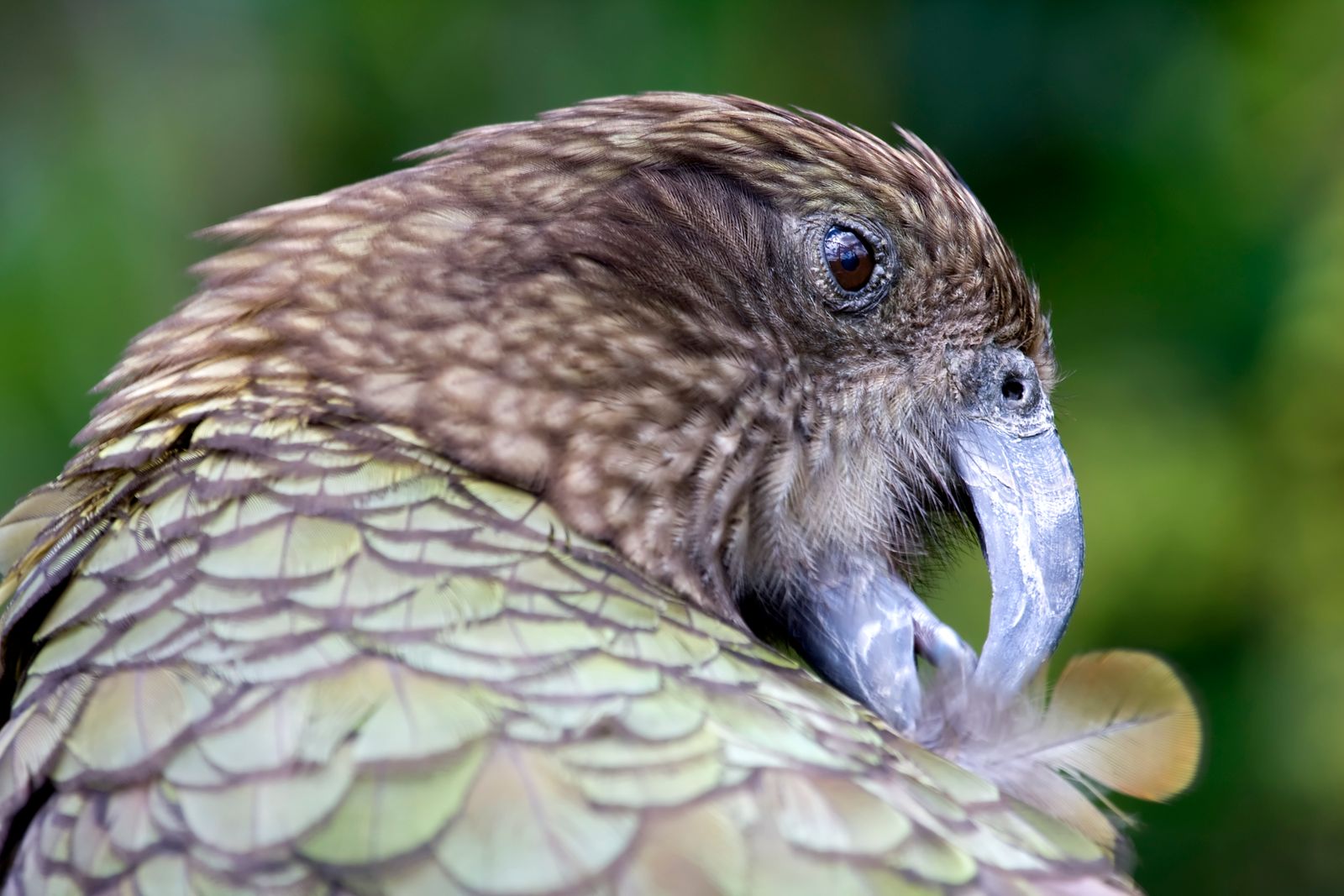
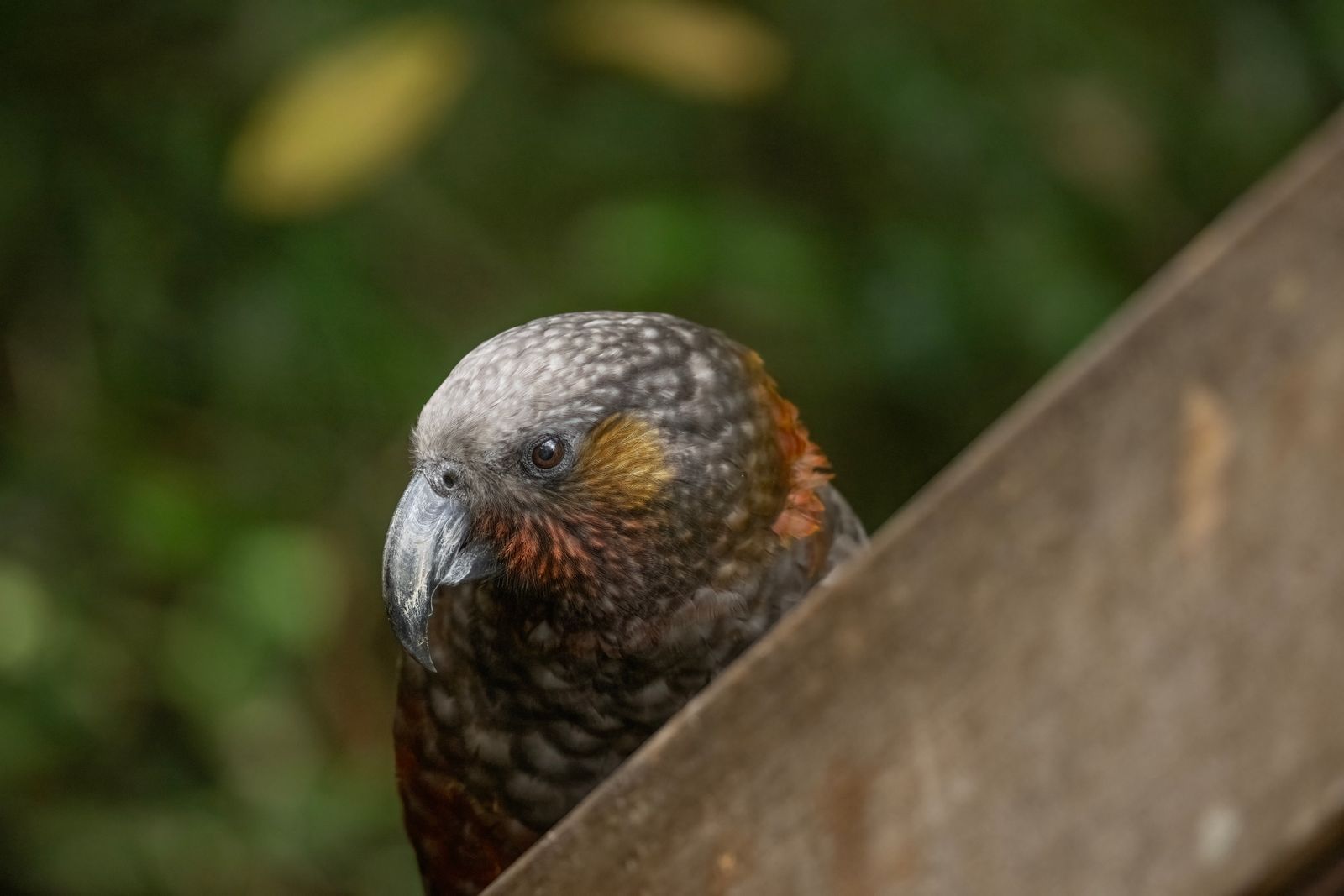
Within a few breeding seasons of the sanctuary work that preceded the national push, birds that had not nested outside fenced reserves for a century began appearing in suburban gardens. Sightings of tui, a blackbird-sized nectar feeder, rose 200 percent across the Wellington region since 2011. Kereru, a heavy forest pigeon, climbed 350 percent. Kakariki, the red-crowned parakeet, went up tenfold, according to reporting in Popular Science. The kaka, a large auburn parrot once effectively extinct across the region, is now nesting inside and outside the fence line.
Why the birds were defenceless in the first place
New Zealand broke off from the ancient supercontinent of Gondwana roughly 85 million years ago, before land mammals had reached that corner of the southern Pacific. The only native terrestrial mammals are two thumb-sized bat species. Everything else in the ecological role of ground mammal — the browser, the burrower, the seed disperser — evolved from birds.
Without predators to flee, many lost the ability to fly. The kakapo became a bulky nocturnal parrot with a booming call audible for miles. The moa, a group of nine species, gave up wings entirely. The kiwi kept a rudimentary pair buried in shaggy feathers and took up a nocturnal life probing the leaf litter with a long beak.
Then came the arrivals. Maori settlers reached the islands 700 to 800 years ago with kuri dogs and the kiore, the Polynesian rat. Within two centuries the moa were hunted out. European settlers in the 1800s brought Norway rats, ship rats, stoats, ferrets, weasels, goats, pigs, cats and, from across the Tasman Sea, brushtail possums. By the time the ecological accounting was done, more than 40 percent of the country’s terrestrial bird species were extinct, and New Zealand held the unwelcome record for the highest proportion of at-risk and threatened native species in the world.
The moonshot framing
In 2012, physicist Sir Paul Callaghan gave a speech at the Zealandia sanctuary in Wellington calling for a predator-free New Zealand as the country’s “moonshot,” describing it as an ambitious vision worth pursuing. Four years later the government made it official policy, with a target date of 2050 and a first tranche of NZ$28 million (about US$17 million) to seed the work.
The scale is what makes the target audacious. The largest island previously cleared of invasive predators is South Georgia in the South Atlantic, which covers 1,450 square miles. New Zealand covers 164,375 square miles. There are still an estimated 30 million possums roaming the country, many in terrain that is nearly impossible to walk into, let alone service with a trap line. The strategy has been to work outward from the easiest wins — small offshore islands, then fenced mainland reserves, then peninsulas, then whole suburbs — while researchers try to invent the tools that will make full eradication possible.
What the offshore islands showed
The offshore islands were the proof of concept. Small, defensible, and reachable only by boat or helicopter, they allowed conservationists to test whether removing every last rat and stoat would actually bring the birds back. The answer, over decades, was yes — often within a handful of breeding seasons.
Zealandia, the 500-acre fenced sanctuary inside Wellington itself, is the urban version of the same experiment. Ringed by a 7-foot-high fence running 5.3 miles around its perimeter, the reserve was declared pest-free in 2000 after an intensive knockdown. In the years since, 18 native species have been released inside, including flightless and ground-nesting birds that had not bred on the mainland in living memory. Because the fence has no overhead netting, the birds spill out. Danielle Shanahan, director of Zealandia’s Centre for People and Nature, told Popular Science that the kaka is now breeding on both sides of the wire.
This is the halo effect: clear a core, and the surplus population walks, flies or hops into the surrounding land — provided the surrounding land is also being kept clear of predators. Miramar’s grid of 1,800 traps, spaced at 328-foot intervals with chew cards every 164 feet, is the machinery designed to hold that halo.
The tools, from peanut butter to thermal cameras
The traps in Miramar are baited with brodifacoum, a low-dose anticoagulant, and a rotating menu of lures. Rabbits shot in council-organised culls supply mustelid bait. Rats get peanut butter donated by a local manufacturer, though John Hambidge, project lead for the Miramar Peninsula programme, told Popular Science that cautious rats are attracted to Nutella baits.
Newer designs are pushing labour costs down. The AT220 possum trap resets itself and can kill up to 100 animals before it needs a new battery or bait refill. Traps built by Zero Invasive Predators connect to the mobile network and ping a manager when they fire, meaning rangers no longer have to walk every trap line every day. Devon McLean of the Next Foundation told Mongabay that remote monitoring has cut 90 percent of the labour cost out of trap servicing.
The Cacophony Project, an open-source collective, is building a device called the Cacophonator that uses thermal cameras, AI and sound lures to identify and dispatch predators automatically. Its free Cacophonometer app lets backyard trappers record the volume of birdsong in a defined patch of garden and watch the curve rise or fall over months. Lincoln Agritech is testing a footprint-reading sensor pad, the PAWS, to flag re-invasions in areas already cleared.
The chemical that everyone agrees is imperfect
The one tool nobody loves but nobody can yet replace is sodium fluoroacetate, better known as 1080. It is dropped from helicopters in cereal pellet baits over rugged bush country where trap grids are impossible. It works, and it is cheap. It also occasionally kills non-target species, including, in rare cases, endangered birds — a fact that has fuelled a long-running domestic controversy over aerial poison drops.
Shaun Ogilvie, an ecologist at the BioHeritage Challenge, has told the Predator Free symposium there is no silver bullet. Bruce Warburton of Manaaki Whenua — Landcare Research has emphasized that while alternatives are needed, the 1080 poison remains essential for current predator control efforts. Researchers are working on toxins with higher species specificity, and James Russell of the University of Auckland has floated gene-editing techniques that would skew invasive-species offspring toward a single sex. The current government has ruled gene editing out, partly because the brushtail possum is a protected species in its native Australia and any escaped edit could hollow out a population on the wrong side of the Tasman.
The birds’ response
The recovery timeline surprised even the ecologists who designed the programme. Flightless and ground-nesting birds do not, on paper, seem like animals that can bounce back quickly. They lay small clutches. They incubate for weeks on exposed ground. They fledge slowly. But once the rats and stoats are gone, the arithmetic flips: nearly every egg becomes a chick, and nearly every chick becomes a breeding adult. Populations that had been running at a fraction of a percent annual recruitment jump to something close to their biological maximum.
Doug Armstrong, a conservation biologist at Massey University, told Popular Science that most New Zealand children today grow up in what is effectively a foreign landscape — surrounded by European songbirds, European trees, and no native lizards or frogs. The halo around Zealandia is the first patch of country in more than a century where that ratio is running the other way. Kereru wingbeats, which sound like a small helicopter overhead, are now a normal weekday sound in Wellington gardens.
The 2019 Current Biology figure that circulated widely — that it would take 50 million years of evolution to recover the bird diversity lost since human colonisation — is a reminder of what the programme cannot do. Species that are gone are gone. The moa are not coming back. But the roughly 30 percent of remaining native birds currently classified as threatened have, for the first time in two centuries, a mechanism that could stop the bleeding.
The uncomfortable classroom conversation
The programme has forced a national conversation that has landed, inevitably, in primary school classrooms. Sally Birdsall, a senior lecturer at the University of Auckland, interviewed teachers, regional council educators and animal welfare specialists about how they teach children to think about killing rats and possums. Her findings, published on RNZ, describe a shift in framing: predators are not villains, they are animals in the wrong place.
At one daycare centre the under-fives caught a rat in a caretaker-set trap and held what Birdsall described as a small burial service, talking about how the rat had been eating the compost and disturbing the garden, but was still a living thing that deserved respect. Another educator taught the whakapapa of the rat — including the temples in India where rats are revered and fed milk and grains — before explaining why the same animal has a different meaning in a New Zealand forest.
The urban-rural divide is narrowing. A decade ago, some rural schools ran dead-possum throwing competitions and dressed the carcasses up for raffles. That is largely gone. Teachers now emphasise the Animal Welfare Act, which legally requires humane treatment even of animals being culled, and give students the option of opting out of trapping in favour of restoration planting.
What the offshore-island precedent means elsewhere
New Zealand is not the only place testing this. Mauritius spent more than 40 years removing rats, cats and goats from its offshore islands to help endangered seabirds return, a decades-long effort chronicled by The Times of India. Australia is running its own programmes against feral cats and foxes, tracked in a Nature Index topic collection on invasive predator management. In 2024, New Zealand’s government confirmed that the 2050 target now formally includes feral cats, a politically fraught addition given how many are kept as pets, as reported by ECOticias. Reporting on native flightless birds and why so many of them ended up in New Zealand can be found via this evolutionary overview.
The pattern from every one of these programmes is the same: the hard part is not the ecology, it is the last one percent. Getting a population from thousands down to dozens is a matter of grid discipline. Getting it from dozens to zero requires community reporting, thermal cameras, dissection tables, and a lot of patience with the smartest surviving individuals. Hambidge’s team in Miramar necropsies every rat it catches, storing them in a chest freezer they call the freezer of death, checking stomachs for old poison and females for signs of lactation. A lactating female means kits nearby. A big solitary male means the perimeter is holding.
The sound coming back
When Captain James Cook’s Endeavour was anchored in Totaranui at the top of the South Island in 1770, the ship’s botanist Joseph Banks reportedly wrote in his journal about being woken by extraordinarily loud and melodious birdsong. Six centuries earlier, before the arrival of the kiore, the noise would have been louder still.
Wellington is not that yet. But on the Miramar Peninsula, where the last dozens of ship rats are being hunted down one reported sighting at a time, residents have started reporting something the neighbourhood has not had in living memory: a dawn chorus loud enough to wake them. The birds that returned within a few breeding seasons were doing what birds without ground predators have always done on these islands. They were nesting on the ground, incubating in the leaf litter, and calling from low branches, as if the last two centuries had been a long, quiet interruption rather than the natural state of the place.