On the morning of January 14, 1966, a man the Soviet public knew only as Glavny Konstruktor — the Chief Designer — died on an operating table in a Moscow hospital during what had been described to him as a routine polyp removal. His name was Sergei Pavlovich Korolev. He had built the rocket that launched Sputnik, the capsule that carried Yuri Gagarin, and the earliest sketches of what would become the Soviet lunar programme. And almost no one outside a small circle of Kremlin officials, cosmonauts, and engineers was allowed to know he existed.
His identity was a state secret. Gagarin, the most famous human being on Earth in 1961, was forbidden from speaking Korolev’s name in public. Newspapers referred to him only by his anonymous title. When he won the Lenin Prize, he collected it in silence. When foreign journalists asked who was behind the Soviet space triumphs, the answer was a shrug.
The man behind the shrug
Korolev was born in 1907 in Zhytomyr, in what is now Ukraine — a birthplace that has become the subject of ongoing historical dispute between Moscow and Kyiv, as Voice of America has documented. He trained as an aircraft designer in the 1920s, gravitated toward rocketry under the influence of Konstantin Tsiolkovsky and Friedrich Zander, and by the mid-1930s was one of the Soviet Union’s most promising young engineers.
Then Stalin’s purges caught him.
In 1938 Korolev was arrested, tortured, sentenced to ten years in the Gulag, and shipped to the gold mines of Kolyma in the Russian Far East — one of the deadliest camps in the system. He lost most of his teeth to scurvy. His jaw was broken by an interrogator and never set properly, leaving him unable to open his mouth fully for the rest of his life. That single anatomical fact would eventually kill him.
He was pulled out of Kolyma in 1940 after intervention from senior aviation figures who understood the country would need him, and spent the rest of the war in a sharashka — a prison design bureau where inmate engineers worked on aircraft and rocket motors under guard. He was formally rehabilitated only in 1957, the same year Sputnik launched.
Why the secrecy
The obsessive concealment of Korolev’s identity had a logic that made sense inside the Kremlin. The Chief Designer knew everything: launch schedules, warhead yields, the state of the R-7 intercontinental ballistic missile that doubled as the world’s first orbital launcher. If the CIA knew his name, they might target him — for recruitment, for kidnapping, or for assassination. The Soviet leadership treated his anonymity as a strategic asset comparable to the missile silos themselves.
There was a second reason, less strategic and more Soviet. A named hero could be celebrated, but a named hero could also be embarrassed, purged, or eclipsed. An anonymous title belonged to the state. The Chief Designer was interchangeable in principle, even if in practice the Chief Designer was one specific man working eighteen-hour days in Podlipki, north of Moscow.
The result was one of the strangest asymmetries of the Cold War. Wernher von Braun, Korolev’s American counterpart, appeared on the cover of Time magazine and hosted Disney television specials. Korolev appeared nowhere. When Gagarin returned from orbit on April 12, 1961, and was paraded through Red Square as the first human in space, the man who had designed his rocket stood in the crowd unrecognised.
Sputnik, Gagarin, and the accident of history
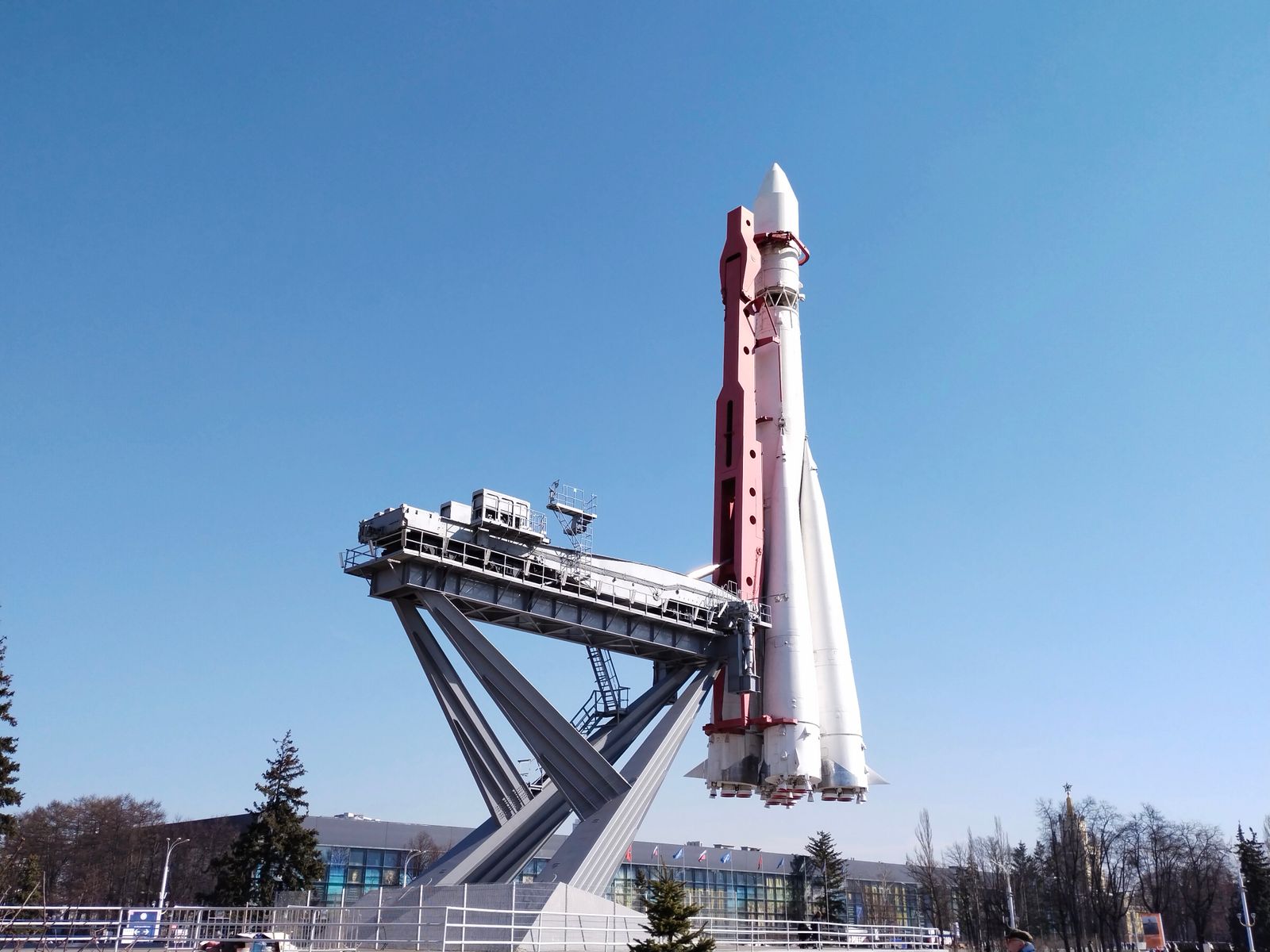
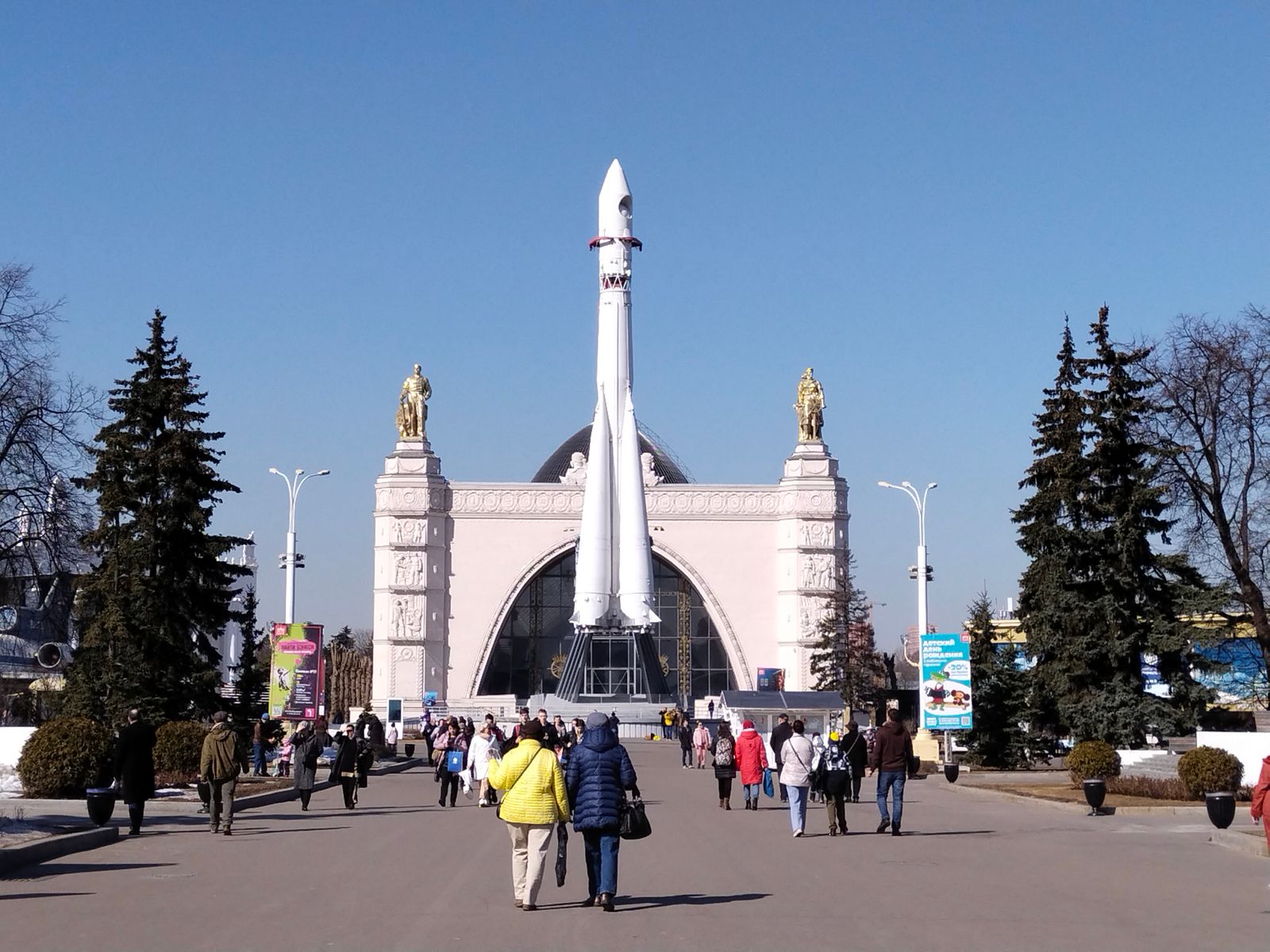
The R-7 rocket Korolev built was designed to loft a thermonuclear warhead to the continental United States. It was overengineered for the job — bigger than it needed to be — because Soviet warhead designers in the early 1950s hadn’t yet miniaturised their bombs. That overcapacity became the accidental foundation of the Space Age.
As Mental Floss has recounted, Korolev pushed the Kremlin to let him use a spare R-7 to launch a small satellite in 1957, arguing it would be a propaganda coup. Nikita Khrushchev, initially indifferent, agreed. Sputnik went up on October 4, 1957, weighing 83.6 kilograms and beeping on two radio frequencies that any shortwave receiver on Earth could pick up. The American reaction — panic, congressional hearings, the founding of NASA the following year — surprised even Korolev.
He followed it with Sputnik 2 and the dog Laika a month later. Then Luna 1, the first spacecraft to escape Earth’s gravity. Then Luna 2, the first human object to reach the Moon. Then Luna 3, which returned the first photographs of the lunar farside in October 1959. Then Vostok 1 with Gagarin. Then Vostok 6 with Valentina Tereshkova, the first woman in space. Then Voskhod 2, from which Alexei Leonov made the first spacewalk in March 1965.
Every one of those firsts was Korolev’s. None of them carried his name.
The house in Ostankino
After Sputnik, the government gave Korolev a house. He chose the plot himself — a green suburb of Moscow near the site where the monument “To Space Conquerors” was being built, a titanium obelisk shaped like a rocket’s exhaust plume rising a hundred metres into the sky. He could see the construction from his window and reportedly visited the site nearly every day.
The house at 1st Ostankinskaya Street is now a museum, and the Moscow City government’s description of the memorial preserves a startlingly intimate portrait of the man. His favourite chair sat under a woodland landscape by Mikhail Klodt. When he wanted to be left alone, he would settle into the chair with a book, reportedly telling his wife he had symbolically gone to the forest.
On the stairway leading up to his library — a collection of roughly 2,500 volumes heavy on science fiction, with Stanislaw Lem, the Strugatsky brothers, and Alexander Belyaev prominently represented — one step was known within the family as a place where Korolev would sit and contemplate. Korolev would sit on it and stare out the window toward the space obelisk for long stretches, planning launches he would not live to see.
In the garden he laid the paths in the shape of an aircraft taking off, wings forking sideways, with a cedar planted at the nose. Cedar was his radio call sign at Baikonur. A horseshoe he had dug up while gardening was nailed above a bench — cosmonauts still touch it before flights.
The operation
By late 1965 Korolev was 58, exhausted, and losing arguments inside the Kremlin about the Soviet lunar programme. He was designing the N1 super-heavy rocket meant to answer Apollo. He was also increasingly ill, with a heart condition he had suffered from for years, likely worsened by his time in Kolyma.
In early January 1966 he was scheduled for what doctors described as a minor operation to remove an intestinal polyp. Nina Ivanovna later recalled that the night before, she came downstairs and found him sitting motionless with music playing, so absorbed in his own thoughts that he didn’t hear her steps or the creak of the parquet. He was, she wrote, afraid the operation would prove more complicated than doctors had promised.
It did. Once surgeons opened him up they discovered a large cancerous tumour. The operation, expected to take under an hour, stretched on. And then came the anatomical detail that turned a complication into a death sentence: because his jaw had been broken in the Lubyanka almost thirty years earlier and had healed badly, the anaesthetists could not get a breathing tube down his throat. His heart, already weak, gave out on the table. He was 59.
His final published article had appeared in Pravda on January 1, 1966. The article reportedly expressed optimism about humanity’s boundless capacity for achievement in space exploration.
The name released
Two days after his death, on January 16, 1966, the Soviet government published his obituary in Pravda under his full name and photograph. It was the first time most Soviet citizens learned that the Chief Designer had ever been a specific human being. He was given a state funeral. His ashes were interred in the Kremlin wall. Gagarin wept openly.
The paradox of a man whose achievements shaped the twentieth century but whose face was unknown even to the cosmonauts’ families until after his death stands as one of the Cold War’s most striking asymmetries. In a striking coincidence, on the second anniversary of Korolev’s death — January 14, 1968 — Gagarin gathered friends at the Ostankino house and used Korolev’s film projector to screen footage from the funeral. It was the last time the projector was ever switched on. Two and a half months later Gagarin himself was dead in a MiG-15 crash outside Moscow.
What died with him
The Soviet lunar programme did not survive its Chief Designer for long. The N1 rocket flew four times between 1969 and 1972. All four launches failed, one of them producing an explosion still considered among the largest non-nuclear detonations in history. Without Korolev arbitrating between rival design bureaus and cajoling the Politburo, the programme fractured. Apollo 11 landed in the Sea of Tranquillity in July 1969, and the race Korolev had started with a beeping aluminium sphere was effectively over.
The secrecy did not survive him either. His widow campaigned for decades to have his role fully acknowledged, and by the 1970s his name was on streets, on a crater on the far side of the Moon (the far side he himself had first photographed), and eventually on the memorial house in Ostankino, which opened in 1975.
The pattern of anonymous engineers whose deaths become public only when they are safely past mattering has repeated itself since, sometimes on the other side. Spaceflight is a field with a long tradition of protecting the men who made it possible, even from the historical record.
What lingers in the Ostankino house
Walk through the museum today and the disproportion is what strikes you. The man who built the rockets that first carried a satellite, a dog, a man, a woman, and a spacewalker into orbit ate breakfast at a small kitchen table by the door, preferred simple food, kept cactuses in the bedroom to which he was reportedly quite attached, listened to Tchaikovsky on a Telefunken record player given by a friend, and watched only one film in the last months of his life — a 1959 French drama about the Resistance.
The rocket monument he chose his house to face is still there, visible from the thoughtful step on the stairs. It rises above the trees of Ostankino, titanium catching the winter light. From 1957 until January 1966 the Chief Designer sat on that step and looked at it. The monument, like his name, was public. The man on the stairs was not.
Sixty years later, the R-7 rocket he built is still flying. Modified, upgraded, renamed Soyuz — but structurally the same vehicle Korolev sketched in the early 1950s to throw a warhead across an ocean. It has now completed more orbital launches than any rocket family in history. Every cosmonaut who has ever reached the International Space Station has ridden a direct descendant of the machine designed by a man the Soviet public was not permitted to know.