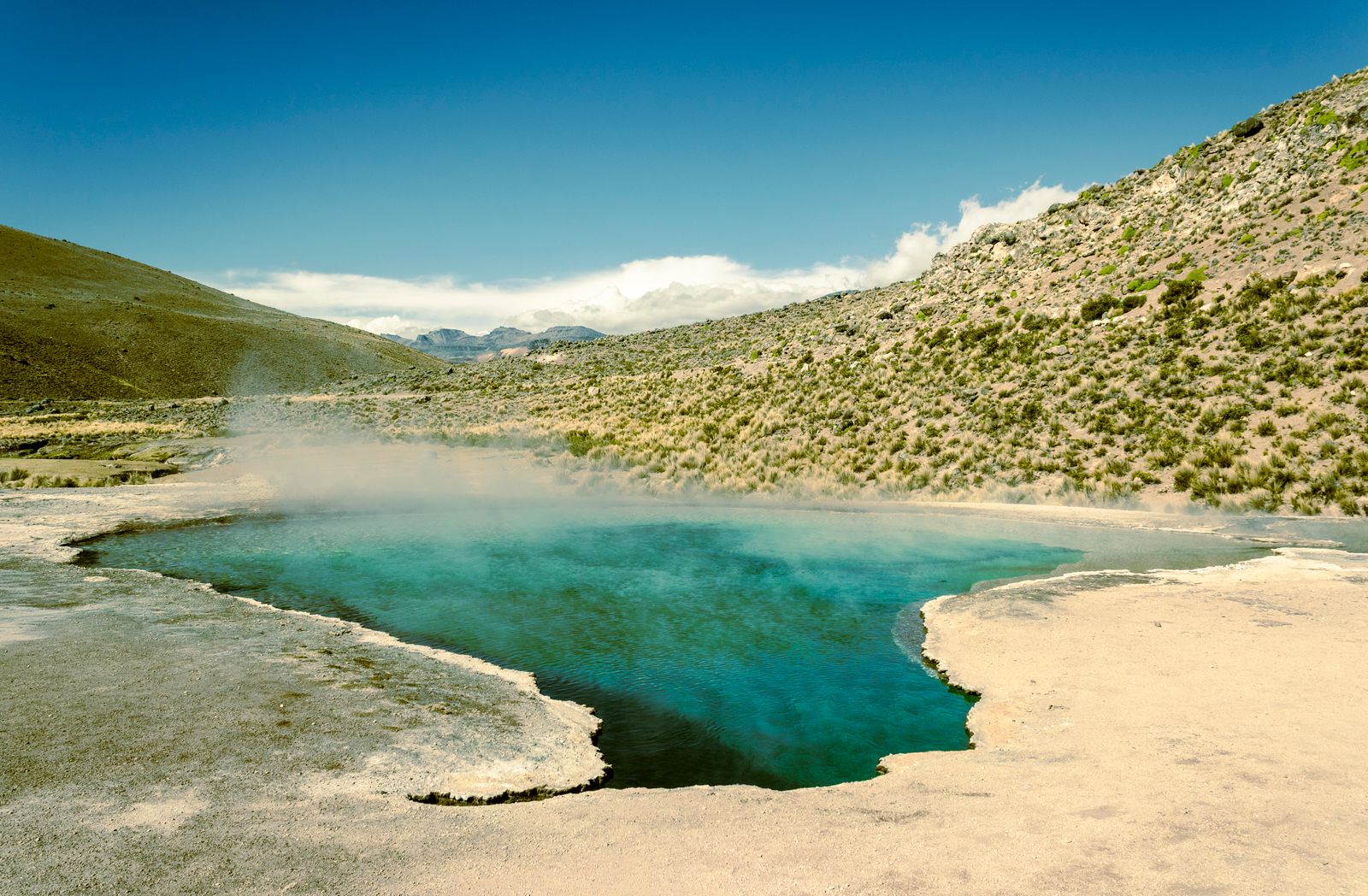
Deep in the Peruvian Amazon, a river runs hot enough to brew coffee. The Shanay-Timpishka — often called simply the Boiling River — winds through the Mayantuyacu region of central Peru for roughly four miles, with water temperatures that have been measured in excess of 90°C (194°F) and, in the steamiest stretches, approaching the boiling point of water at that altitude. Small animals that fall in are cooked. Human skin blisters into second- or third-degree burns within seconds. And the whole strange thing sits more than 400 miles from the nearest active volcano.
That last part is what makes it a genuine geological oddity.
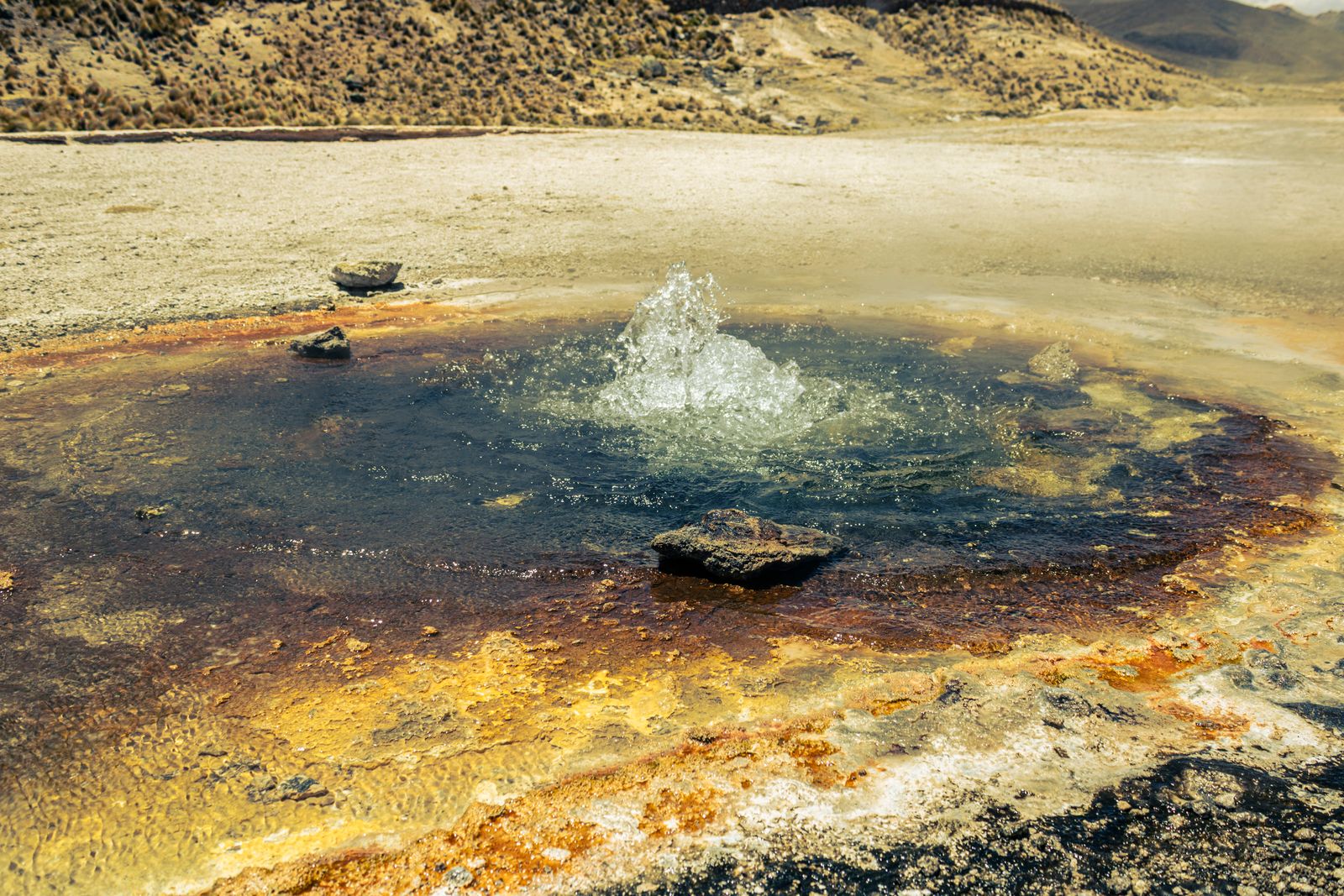
A river that burns
The Shanay-Timpishka is a tributary that eventually feeds into the Amazon. Its name in the local Asháninka language translates roughly to “boiled with the heat of the sun,” a reference to the river’s extreme temperatures. Locals have known about it for generations. Western science took a long time to catch up.
The river is not uniformly scalding along its whole length. Cooler pools sit near the upstream end, and the temperature climbs as you move downstream toward a series of thermal springs feeding into the main channel. In the hottest zones, the water hits around 86°C on average and can spike higher. According to a survey led by researcher Riley Fortier, a graduate student at the University of Miami, the hot stretch of the river runs for roughly four miles, and in its broadest sections it can reach about 25 metres — some 80 feet — across.
Steam rises off the surface in thick white plumes. From a distance, walking through the surrounding jungle, you can see the billows before you see the water.
The problem with the volcano theory
When something boils on Earth’s surface, the intuitive answer is volcanism. Yellowstone’s geysers sit atop a magma chamber. Iceland’s hot springs trace to the Mid-Atlantic Ridge tearing itself open. Japan’s onsen owe their heat to the Pacific Ring of Fire.
The Shanay-Timpishka has none of that. The nearest active volcano is hundreds of miles away, on the other side of the Andes. There is no shallow magma chamber below the Mayantuyacu region. By every rule of thumb geologists apply, this river should not exist where it does.
That is the puzzle that pulled geothermal scientist Andrés Ruzo into a decade of fieldwork. Ruzo, who first measured the river’s peak temperatures after being granted permission to study it in 2011, has documented that its extreme heat can cause severe burns to human tissue within seconds of contact.
How water gets that hot without a volcano
The current explanation is less dramatic than a hidden magma chamber but arguably more interesting. Rainwater falls on the Andes to the west. It percolates down through fractured sedimentary rock, sinking deep enough — potentially several kilometres — that the natural geothermal gradient of the Earth heats it. The deeper you go, the hotter the rock, even in tectonically quiet regions. Roughly 25 to 30°C per kilometre of depth is typical continental crust.
That superheated water then finds a fault — a fracture in the crust — and travels laterally through it. When the fault daylights near the Mayantuyacu region, the water surges up as a chain of hot springs that pour into the streambed. As Ruzo laid out in his geological analysis, the system is essentially a natural hydrothermal plumbing network: cold rainwater in, deep heating, hot water out, no volcano required.
Isotopic analysis of the water backs this up. The chemistry matches meteoric water — rain — not magmatic fluids. The river is drinking Andean rainfall and returning it near boiling.
What it does to the forest around it
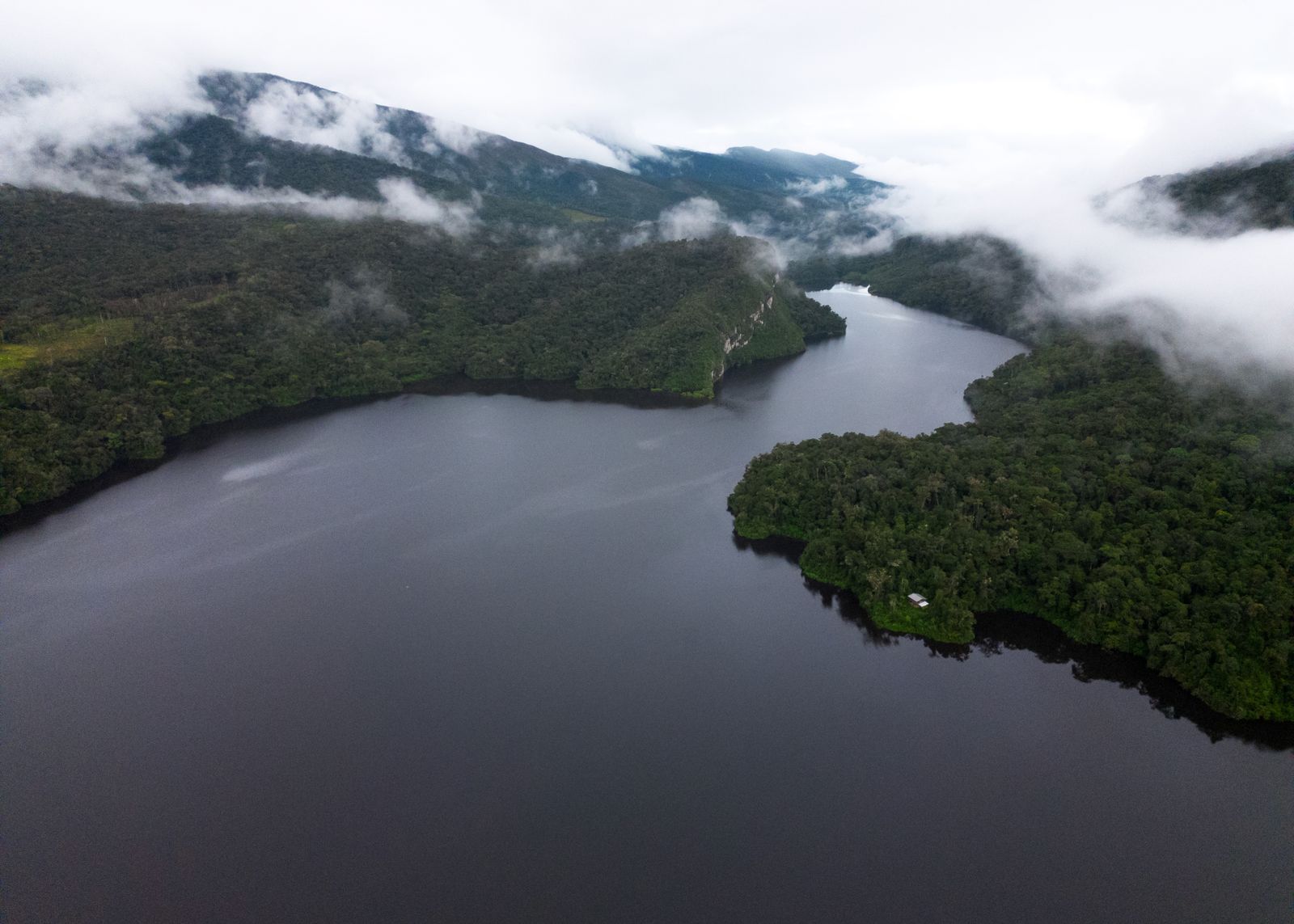
The river’s heat is not only a hazard to careless feet. It reshapes the ecosystem in a tight radius around the water. Fortier and colleagues, working with plant ecologist Alyssa Kullberg, spent a year logging air and soil temperatures and cataloguing the woody plants across a network of 70 inventory plots along the river.
The pattern was stark. Average annual air temperatures ranged from about 24-25°C in the cooler stretches to 28-29°C in the warmest, with maximum air temperatures near the steamiest patches touching around 45°C. Along that gradient, tree diversity collapsed: the researchers recorded roughly 11% fewer tree species for every 1°C rise in mean annual temperature.
The forest near the hottest stretches looked wrong in ways the researchers could feel before they could measure. The canopy thinned. Understorey growth shrank back. Leaf litter went crunchy. Big evergreens like Guarea grandifolia, which normally tower up to 50 metres, struggled visibly. Scrubbier, drought-tolerant plants moved in.
Kullberg documented pronounced changes in the understorey along the gradient, including the paradoxical sight of dry-looking, drought-stressed vegetation growing right beside a river giving off steam.
A natural climate laboratory
That last observation is the reason ecologists have started paying attention to a river most geologists once treated as a curiosity. The Boiling River is a natural experiment nobody had to build. You cannot artificially warm a section of intact rainforest for a year — the ethics, engineering, and cost are prohibitive. But the Shanay-Timpishka has been doing exactly that for centuries, holding a slice of Amazon jungle at temperatures the rest of the basin may reach later this century.
Fortier has described the site as a preview of future conditions in the Amazon as temperatures rise with climate change. The data suggest that even modest sustained temperature increases produce sharp biodiversity losses over remarkably short distances. The entire study transect covered less than two kilometres.
Some species do cope. The giant Ceiba tree (Ceiba lupuna) — another 50-metre giant — appeared resilient near the hottest zones, in part because it can store water in its bulbous trunk to buffer drought stress. Identifying which species tolerate the heat and which do not gives conservationists a rough triage list for a warming basin.
The physics of cooking a rodent
The claim that the river cooks animals is not folklore. At sustained water temperatures above 80°C, protein denaturation happens quickly. A frog or small mammal falling in loses muscular coordination within seconds — heat shock is essentially instant — and the tissue begins to whiten and firm the way an egg does when it hits a pan. Ruzo and other researchers have documented amphibians and rodents recovered from the river with their eyes cooked opaque white, having boiled from the outside in.
For humans, the danger is more about splash and slip than immersion. Serious burns from brief contact are a real risk, and local guides caution visitors constantly. Most injuries happen when someone misjudges their footing on the wet rocks along the bank and goes in to a knee or a hip. That is enough.
Sacred ground and industrial pressure
The river runs through territory managed by the Asháninka and other indigenous communities of the Mayantuyacu region, for whom the site holds spiritual importance. Shamans use the surrounding forest for medicinal plant work, and the river itself figures in local cosmology as a living entity.
That cultural context is now colliding with harder pressures. Illegal logging and cattle ranching have crept closer to the site over the past decade — Fortier’s team has described the surrounding forest as a shrinking haven protected largely because the Asháninka regard it as sacred. The geology that makes the river hot also makes the region attractive to fossil fuel exploration, and changes to the area’s hydrology or forest cover could directly affect the indigenous groups whose lives are woven into these ecosystems.
A place that shouldn’t exist, doing important work
For a long time, the Boiling River lived in the gap between story and science — mentioned in local accounts, dismissed by outsiders, occasionally photographed by adventurers who assumed there had to be a volcano nearby they had somehow missed. It took a geothermal scientist willing to trust his grandfather’s story and the community’s directions to demonstrate that the phenomenon was real and to work out where the heat comes from.
Now the same river is doubling as a rare, unforced glimpse of what a warmer Amazon looks like. It is a small answer to a very large question — what happens to a rainforest when the thermostat gets nudged up a few degrees for long enough to matter — and it has been running the experiment for centuries without any grant funding.
Moon Daily has covered other slow-motion natural clocks running longer than any human institution — from bristlecone pines older than the pyramids to the Moon’s centimetre-a-year retreat from Earth. The Shanay-Timpishka is another. Rainwater that fell on Andean slopes years or decades ago is only now emerging, near boiling, into a stretch of jungle where the trees are already telling scientists what the next century of climate change will feel like.
Stand on its bank and the sound is a soft, continuous hiss. Steam curls up around the ankles of the ceiba trunks. Somewhere far below, in fractured rock nobody has ever seen, cold rain is still soaking down toward the heat.