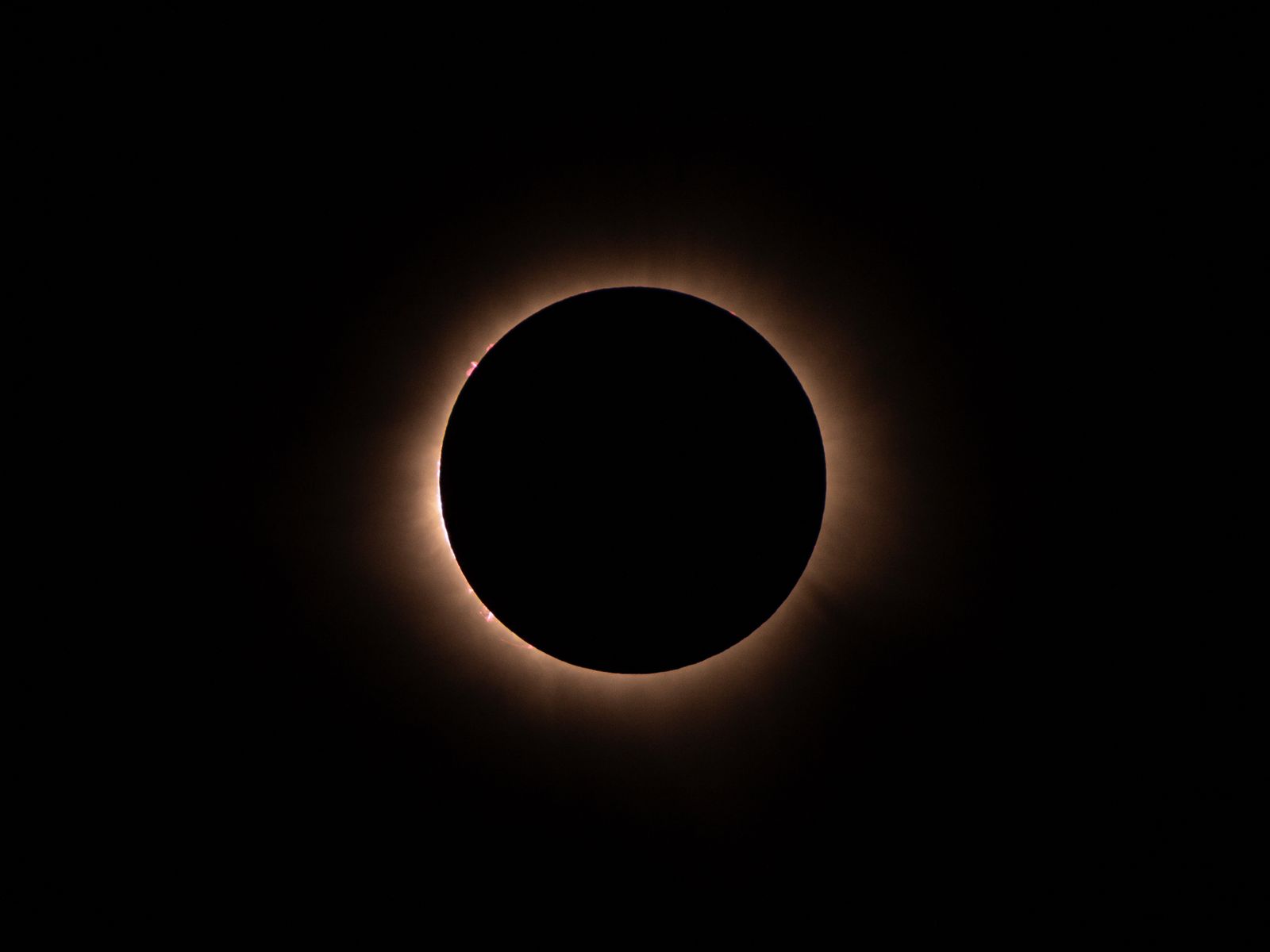
The Moon is drifting away from Earth at roughly 3.8 centimetres per year, about the pace at which a human fingernail grows. That number, measured by bouncing lasers off mirrors left on the lunar surface by Apollo astronauts and Soviet rovers, is quietly winding down one of the most improbable coincidences in the sky. In roughly 600 million years, the Moon will have drifted far enough that its disc, seen from Earth, will no longer be large enough to fully cover the Sun. Total solar eclipses will become geometrically impossible.
Humans happen to be alive during the narrow window in which the two objects appear the same size in the sky. That window is closing.
A fingernail’s pace, measured with lasers
The 3.8-centimetre figure is not a theoretical estimate. It is a direct measurement, repeated for more than five decades through the Lunar Laser Ranging Experiment. Observatories including the Apache Point facility in New Mexico and the Côte d’Azur station in France time the return of laser pulses bounced off retroreflectors placed by the Apollo 11, 14 and 15 crews and by the Soviet Lunokhod rovers.
A pulse leaves the telescope. It travels roughly 384,400 kilometres. It strikes a shoebox-sized panel of corner-cube prisms sitting in the lunar dust. It returns. The whole trip takes about 2.5 seconds. From the timing, physicists can pin down the Earth-Moon distance to within a few millimetres.
Do that year after year and a trend emerges. The Moon is receding, and it has been for as long as it has existed. A recent report syndicated by Yahoo News confirmed the current recession rate at 3.8 centimetres per year, a figure that has held steady across recent decades of ranging data.
Why the Moon leaks outward
The mechanism is tidal friction. Earth’s oceans bulge under the Moon’s gravity, but because Earth rotates faster than the Moon orbits, the bulge is dragged slightly ahead of the line connecting the two bodies. That off-axis mass tugs the Moon forward along its orbit, feeding it a trickle of extra energy. The Moon spirals outward. Earth, in exchange, loses rotational speed.
The books balance. As the BBC has reported, Earth’s day lengthens by roughly 1.7 milliseconds per century as a direct consequence. The Moon’s climb outward and Earth’s slowing spin are the same transaction seen from two ends.
Run the arithmetic backwards and the implications become dizzying. Moon Daily has previously looked at the distance to the Moon and the length of the day 2.46 billion years ago, when Earth spun faster and the Moon hung closer. The Moon has never been stationary. It has been leaving since the moment it formed.
Once it was close enough to fill the sky
The Moon coalesced roughly 4.5 billion years ago, most likely from debris flung into orbit when a Mars-sized body collided with the early Earth. In the immediate aftermath, the separation between Earth and the newborn Moon was on the order of 20,000 to 30,000 kilometres, according to figures cited in the syndicated IFLScience coverage of the recession. That is closer than many communications satellites orbit today.
A Moon at 25,000 kilometres would have loomed enormous in the sky, perhaps fifteen times wider than the disc humans see now. Tides would have been catastrophic. Days would have lasted only a handful of hours. Earth itself was still a molten skin, unrecognisable.
From there, the retreat began. Slow, steady, measured now in fingernail-widths.
The eclipse coincidence
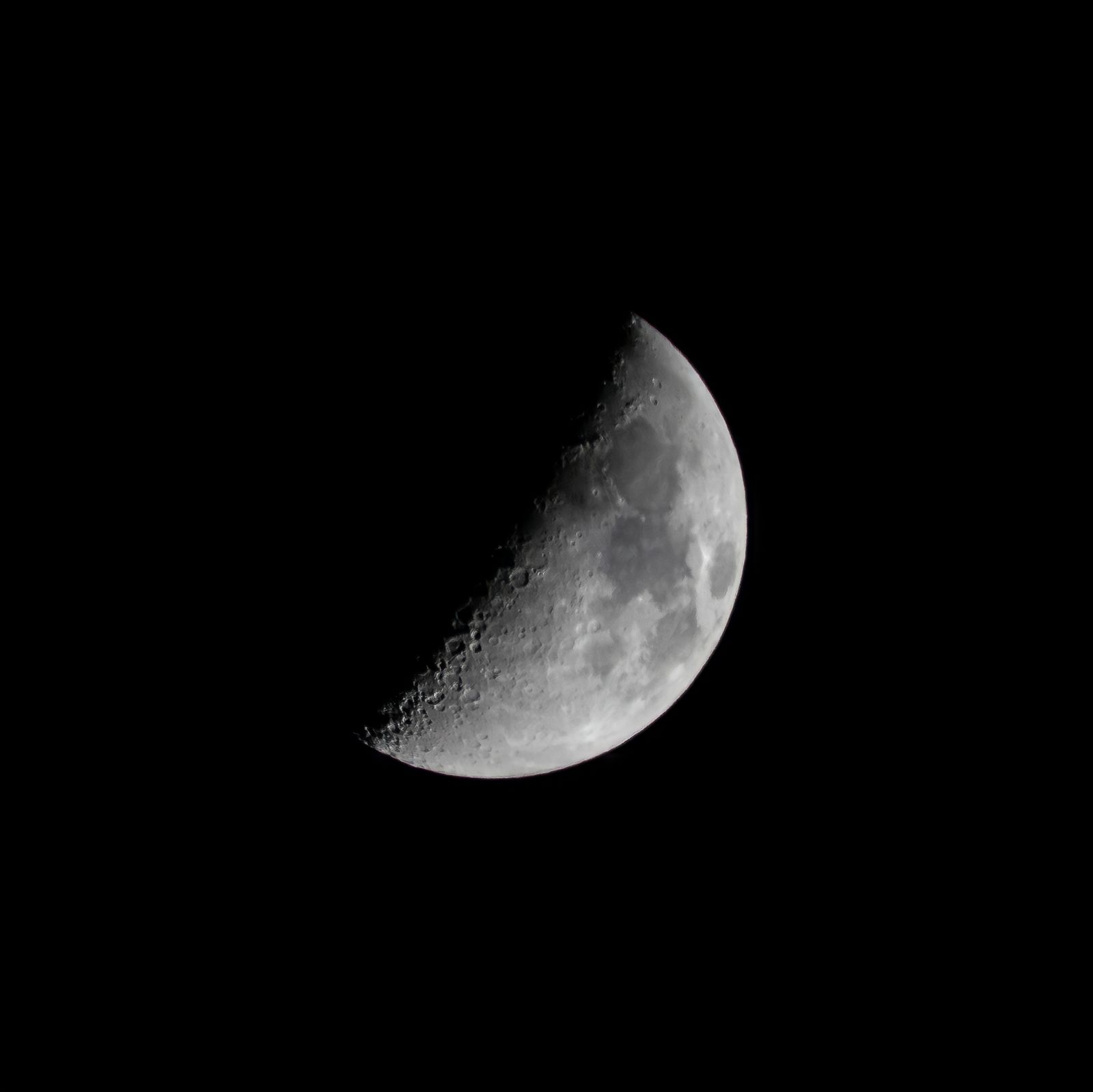
Total solar eclipses require a very particular geometry. The Moon’s disc must be at least as large as the Sun’s disc as seen from Earth. Right now, the Sun is roughly 400 times wider than the Moon, and it also happens to sit roughly 400 times further away. The two discs match almost exactly. When the Moon slides between Earth and the Sun during a total eclipse, its silhouette can just barely cover the solar surface, revealing the pearly corona.
That match is a coincidence. There is no physical reason the numbers should line up. Every other planet with moons in the solar system either has satellites too small or orbits too tilted to produce anything comparable.
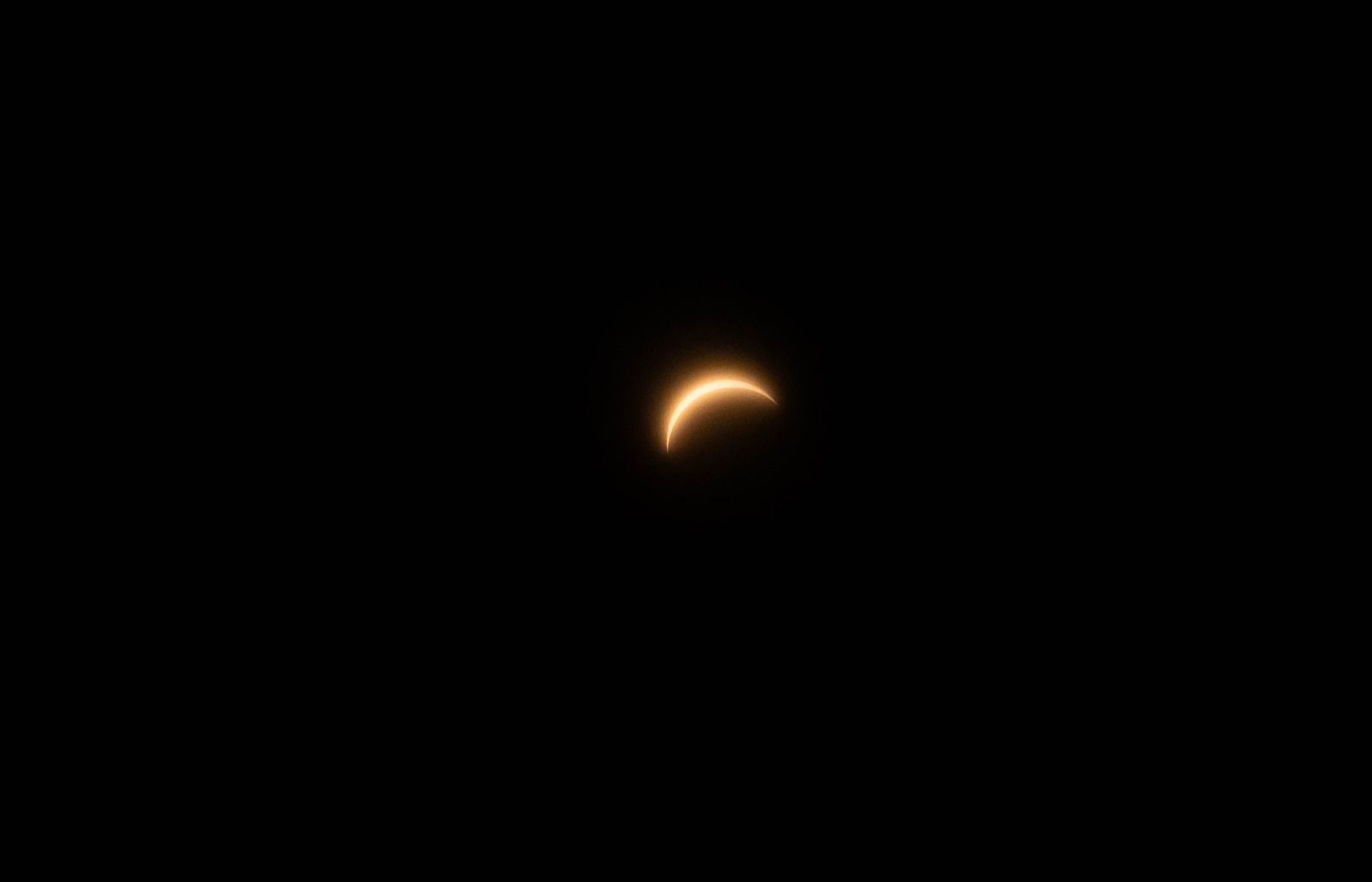
And the match is temporary. As the Moon recedes, its apparent size shrinks. Annular eclipses, where a ring of sunlight remains visible around the Moon’s silhouette, already occur when the Moon is near apogee, the far point of its slightly elliptical orbit. Those annular events are becoming more common relative to totals. Eventually, every solar eclipse will be annular. According to figures cited by Live Science and other outlets tracking the recession, the last total solar eclipse visible from Earth will occur roughly 600 million years from now.
After that, the Moon’s disc will simply be too small to blot out the Sun. The corona, which is only visible during totality because the photosphere is fully occluded, will disappear from Earth’s sky. No creature standing on Earth’s surface will ever see it again without leaving the planet.
What 600 million years looks like
The number is difficult to feel. Six hundred million years ago, complex animal life had barely begun. The Cambrian explosion was still ahead. The land was bare rock and microbial mats. Continents were arranged in configurations no map today would recognise.
Project the same span forward and Earth becomes speculative. The Sun will be measurably brighter. Plate tectonics may have reshuffled every ocean basin. Whatever species happens to look up at the sky in that era, if any is looking, will see a Moon that appears slightly smaller than the Sun. The alignment that produced totality across all of human history will be gone.
The recession will continue past that point. Tidal friction will keep pushing the Moon outward until the system reaches equilibrium, at which point Earth’s rotation will have slowed to match the Moon’s orbital period. That equilibrium lies tens of billions of years away, longer than the Sun will remain a main-sequence star.
How the mirrors made it possible to know
The precision of the recession figure depends on hardware left on the Moon in the late 1960s and early 1970s. Apollo 11 deployed the first retroreflector array in the Sea of Tranquillity on 21 July 1969. Apollo 14 and Apollo 15 added more. The Soviet Lunokhod 1 and Lunokhod 2 rovers carried French-built reflectors.
Those panels have no batteries, no electronics, no moving parts. They are passive optics: prisms cut so that any light striking them bounces back the way it came. Five decades of solar-wind bombardment and micrometeorite dust have degraded their efficiency, but they still work. Every clear night, somewhere on Earth, an observatory is firing pulses at them.
The tidal locking that keeps the same face of the Moon turned toward Earth, described in a NASA Science overview of tidal locking, is itself a product of the same friction now driving the Moon away. The Moon’s own rotation was slowed billions of years ago until it matched its orbital period. Earth is on the same trajectory, only far slower.
A closing window, and what humans do inside it
The recession does not affect daily life. Tides will remain roughly the tides. Lunar months will lengthen imperceptibly. The change per human generation is about the width of a credit card.
What does close, on human timescales, is the accessibility of the Moon as a scientific object. Nations are increasingly treating the lunar surface as terrain to be occupied rather than merely observed. Moon Daily has covered the UAE’s lunar ambitions, the European lunar life simulator running in Cologne, and the way discoveries of water ice are complicating plans for facilities like China’s proposed lunar telescope. New retroreflectors are on the manifests of several upcoming missions, which will give the next generation of ranging experiments millimetre-scale certainty on the recession rate.
The number, held up to the light
3.8 centimetres per year. About the length of a paperclip. Roughly the growth of a thumbnail from one solstice to the next. Multiplied across 4.5 billion years, it accounts for the difference between a Moon that filled a molten sky and a Moon that today balances almost perfectly against the Sun.
Sometime this century, an eclipse chaser will fly halfway around the world to stand in the path of totality. The corona will bloom for two or three minutes, temperature dropping, birds falling silent, the horizon glowing sunset-orange in every direction. The Moon overhead will be, at that instant, a few metres further from Earth than it was during the last total eclipse. A few metres more after that. A fingernail at a time, until the geometry runs out.