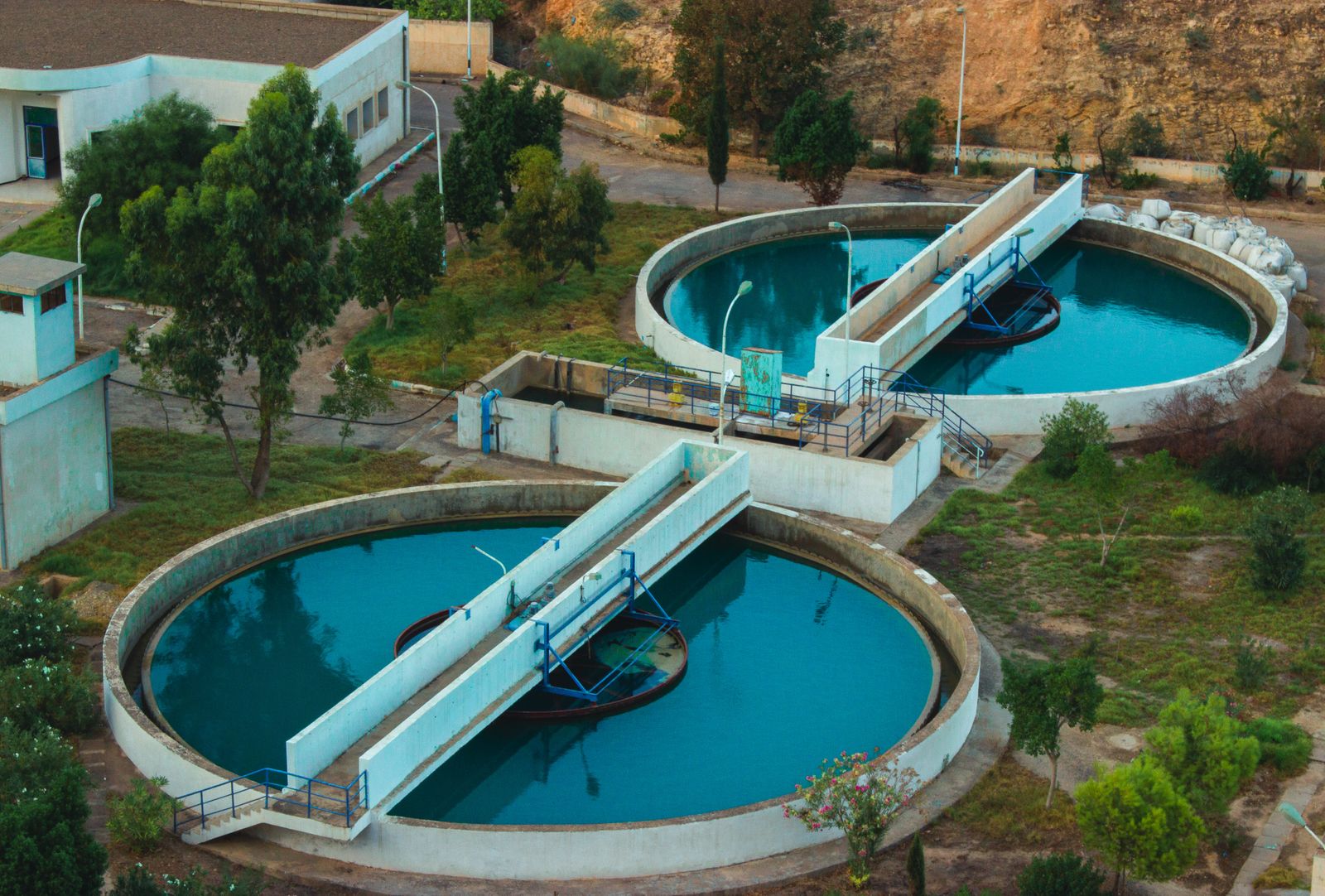
Singapore, an island nation in Southeast Asia of roughly six million people with no rivers of any consequence and no natural aquifer to draw from, now meets close to 40 percent of its national water demand with sewage that has been cleaned to a standard cleaner than most bottled water. The system is called NEWater, and the pumps that drive it run 24 hours a day beneath the eastern edge of the island, at a facility called Changi that processes large volumes of wastewater daily.
The mechanism is a three-step purification chain — microfiltration, reverse osmosis, and ultraviolet disinfection — run at industrial scale through a network of deep tunnels that carry raw sewage from homes and factories to reclamation plants on the coast. What emerges at the far end of that chain is water so pure it has to be re-mineralised before it tastes like anything at all. Most of it goes to semiconductor fabs and cooling towers. A smaller fraction is blended back into the reservoirs that feed household taps.
A city that ran out of options
Singapore sits one degree north of the equator on a low island of granite and sedimentary rock. It gets around 2,300 millimetres of rain a year, which sounds generous until you divide it by the population density, which is among the highest on Earth. There is nowhere for the rain to sit. There are no mountains to feed rivers, no deep aquifer to tap. For most of the twentieth century the country solved this by piping water across the Johor Strait from Malaysia under long-term agreements.
That dependency was uncomfortable from the start. When Singapore separated from Malaysia in 1965, water was already a lever in the relationship. Malaysian officials have periodically threatened to renegotiate, and the price of the raw water has been a subject of open political feuding for decades. Self-sufficiency was not a slogan. It was a strategic requirement.
So the Public Utilities Board, the state water agency, began engineering its way out. The programme it built has four legs, which Singaporeans now call the Four National Taps: imported water from Malaysia, water from local catchments, desalinated seawater, and NEWater. The last of these is the one that changed everything.
How the plants actually work
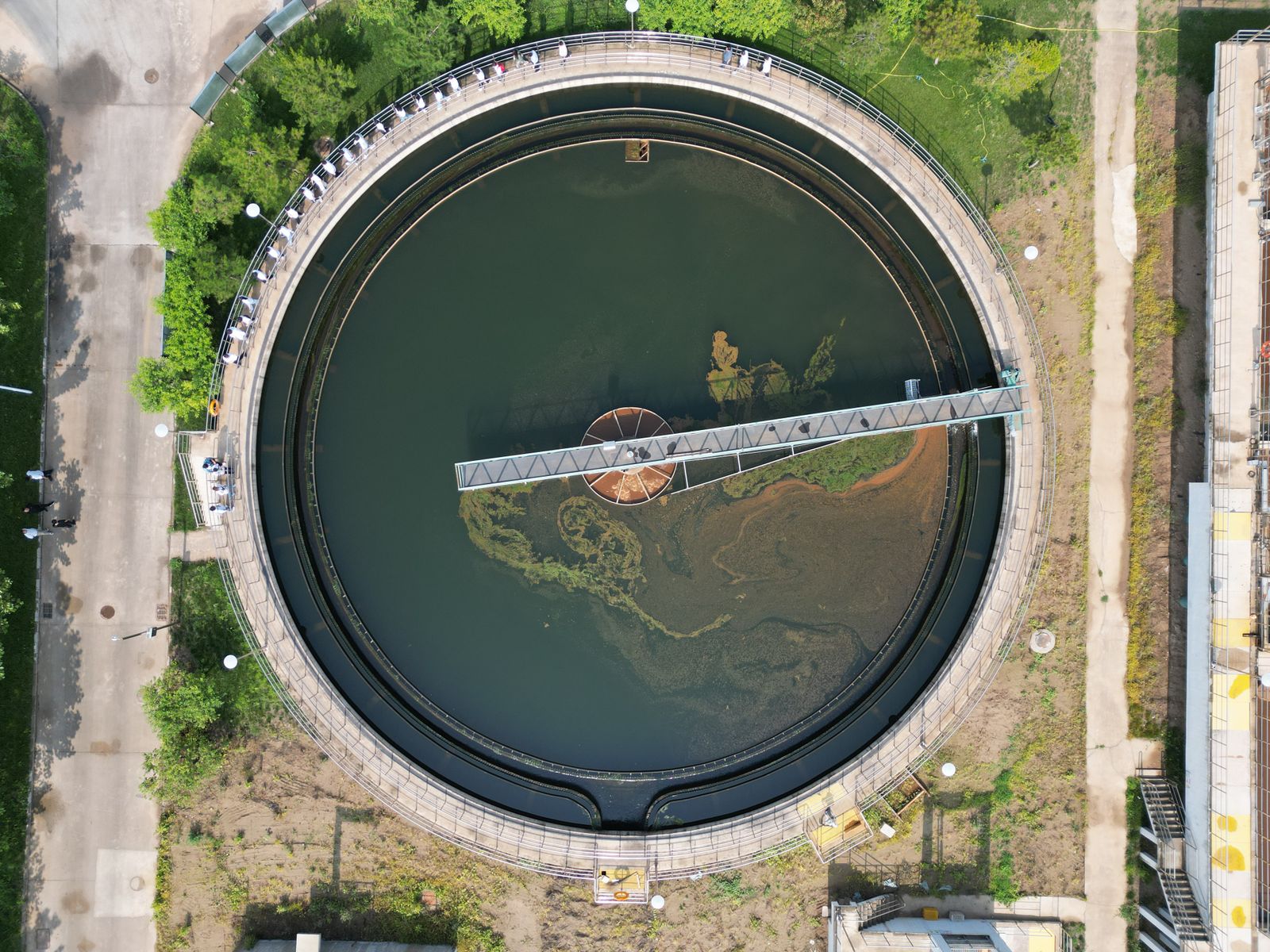
Raw sewage arrives at the reclamation plants through a system called the Deep Tunnel Sewerage System, a network of tunnels buried deep beneath the island that uses gravity to move waste from the population centres to the coastal treatment works. The tunnels remove the need for hundreds of intermediate pumping stations. Gravity is free. Pumps are not.
At the plant, the wastewater is first put through conventional secondary treatment — the sort of biological digestion that any large city runs. What makes NEWater different starts after that. The already-treated effluent is pushed through microfiltration membranes fine enough to strain out bacteria, protozoa, and suspended solids. What passes through then hits reverse osmosis membranes, the same technology used in desalination, which reject dissolved salts, viruses, and organic molecules down to the scale of a few hundred daltons.
The final step is ultraviolet light at wavelengths that break apart any genetic material that might have survived the first two stages. The output is water with a total dissolved solids reading in the single digits of parts per million. Tap water in most cities runs at several hundred.
The bulk of that output goes to industry. Wafer fabrication plants making chips need water so clean that municipal supply is inadequate for their process; NEWater is often cleaner than what they would otherwise buy. Cooling towers in commercial buildings take another large share. The rest is pumped back into surface reservoirs, where it mixes with rainwater, sits, and is treated again before entering the drinking supply. This is called indirect potable reuse, and it is the same category of system that southern California utilities have been studying and copying for over a decade.
The politics of drinking treated sewage
The technology was ready by the late 1990s. The public was not. Every water agency that has tried direct potable reuse has run into the same wall — a phrase, usually deployed by opponents at the first public hearing, that reduces the whole project to two words: toilet to tap.
Singapore’s answer was theatre. At the National Day Parade on 9 August 2002, Prime Minister Goh Chok Tong led a crowd of 60,000 in a mass toast with bottles of NEWater, and in the months that followed PUB handed out roughly 1.5 million bottles to the public. The first two NEWater plants, at Bedok and Kranji, opened the following year, in 2003, alongside a visitor centre where school groups could watch the reverse osmosis membranes at work through glass panels and take home a small souvenir bottle.
The messaging campaign was relentless and it worked. Independent polling in the months after the debut showed acceptance rates that water utilities elsewhere would envy. By contrast, the same idea has faced public resistance in multiple jurisdictions including parts of California, Queensland, and Texas.
What it cost, and why other cities have not copied it
The five NEWater plants together represented a state investment measured in billions of Singapore dollars, spread across two decades. The unit cost of NEWater is higher than the imported Malaysian water it partly replaces, but lower than the desalinated seawater that fills in the rest of the gap. Desalination on Singapore’s scale runs roughly three to four kilowatt-hours per cubic metre. Reverse osmosis on already-treated sewage runs closer to one.
The environmental accounting matters too. Before the reclamation programme, Singapore discharged nearly all of its treated sewage into the Strait of Singapore. That discharge is now a small fraction of what it was, and the nutrients that used to feed algal blooms offshore are instead being cycled back through industry. The pollution angle is exactly what environmentalists in California have argued for, pointing to the millions of gallons of treated wastewater still dumped into the Pacific each day from plants in the region.
The obvious question, once you understand how NEWater works, is why every coastal city with a water problem has not built one. Los Angeles is trying. Orange County already runs one of the largest indirect potable reuse plants in the world. San Diego has been debating its own version, called Pure Water, for years — a project that has faced debates over costs and scope.
The obstacle is rarely engineering. It is political economy. Water in most cities is sold by an agency that also owns the pipes bringing in the raw supply. Recycling on the Singapore scale threatens that agency’s business model. In San Diego, the county Water Authority sells the city its imported water and desalinated water; if the city recycles more, the Water Authority sells less. The fight over Pure Water’s second phase is, in essence, a fight over which municipal balance sheet takes the hit.
Singapore does not have that problem. The Public Utilities Board owns the sewers, the reclamation plants, the reservoirs, the desalination facilities, and the retail taps. There is one water utility. It has no incentive to protect a legacy supply against a cheaper alternative because the legacy supply and the alternative are on the same balance sheet.
The scale in comparison
To picture what 40 percent means at a national level: Singapore consumes substantial volumes of water daily. NEWater supplies up to about 40 percent of that — enough to fill more than 250 Olympic swimming pools every 24 hours. The country has committed to raising the share to 55 percent by 2060, alongside a desalination target of 30 percent, which would leave rainfall catchment and any residual Malaysian imports to make up the balance.
By contrast, when the San Francisco Public Utilities Commission’s headquarters installed a blackwater treatment system in its own building, the wetland-based Living Machine cut the building’s water use by roughly 60 percent. It is a striking figure at the scale of a single 13-storey building — and a measure of how much harder the same trick becomes when the unit is not one office block but a nation of six million people.
The pipes underneath, and the water at the tap
The Deep Tunnel Sewerage System is worth pausing on. The first phase, running under the eastern half of the island, was completed in 2008. The second phase, extending the network to the west and connecting to a new reclamation plant at Tuas, has been under construction for most of the 2020s and is being commissioned in stages. When complete, it will be one of the longest deep sewage tunnels in the world, running roughly 200 kilometres in total length across both phases.
The tunnels replace an older surface network of pumping stations and treatment plants that were sited across the island in the 1970s and 1980s. As Singapore’s population grew and land became scarce, those older plants sat on real estate the state wanted for housing. Consolidating everything at the coast, at Changi and Tuas, freed up more than a hundred hectares of urban land.
The gravity-flow design also drops the energy budget of the whole system. Sewage that used to be lifted through dozens of intermediate pumps now falls, slowly and continuously, from the middle of the island toward the sea. The electricity that would have run those pumps instead runs the reverse osmosis membranes at the far end of the tunnel.
A Singaporean household running a shower does not know which of the four taps the water came from. It could be rain that fell on the MacRitchie catchment last week. It could be seawater from the Strait of Johor that was desalinated overnight. It could be Malaysian water that arrived through a pipe crossing the causeway from Johor Bahru. It could be, indirectly, the wastewater from the household next door, having gone down the tunnel to Changi and come back through a reservoir.
Blind taste tests conducted by the Public Utilities Board and covered in local press have consistently shown that consumers cannot distinguish NEWater from the other sources. The molecule is the molecule. Water that has been through a reverse osmosis membrane and a UV reactor is chemically indistinguishable from water that has fallen from a cloud, minus the trace minerals that get added back at the end for taste.
The next NEWater plant, at Tuas, is being co-located with the second phase of the deep tunnel system and a waste-to-energy facility that will burn incinerated sludge to generate the electricity that runs the water treatment. The Public Utilities Board calls this the water-energy-waste nexus. In practice it means that the same building takes in sewage at one end, produces drinking-grade water in the middle, and exports electricity to the grid from what it burns along the way. The plant is scheduled to reach full capacity in the second half of this decade, and when it does, Singapore will be closer to the state that its planners have been chasing since the 1960s — a country that drinks its own rain, its own sea, and its own waste, and owes nothing across the strait for any of it.