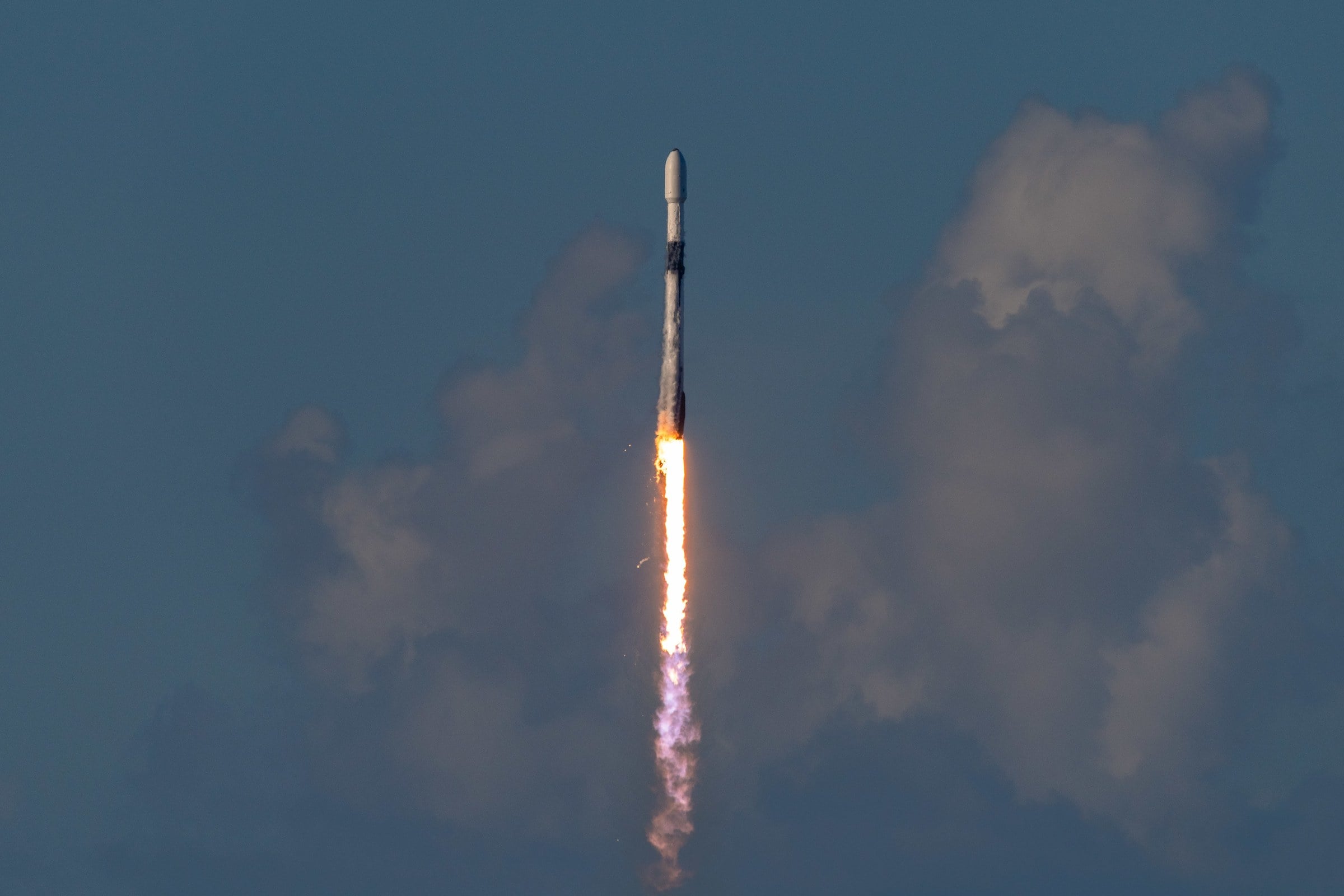
Korea Aerospace Industries (KAI) has signed a contract worth about 15 billion won with the Korea Aerospace Research Institute (KARI) to develop the main structural system of South Korea’s lunar lander, and plans to deliver four units by December 2030.
KAI announced the agreement on Wednesday 25 November, DongA Science reported. The contract was signed two days earlier, on 23 November.
The DongA Science report, by Byeongku Lee, was published on 25 November 2026. Aju Press followed on 26 November with a report by Kim Hee-su.
The won figure is approximate. Aju Press gave the dollar equivalent as $11 million. The sum applies to this contract and is not a cost figure for the lander programme as a whole.
DongA Science described the main structural system as “a key component that supports and protects the payloads and major equipment carried by the lander”.
The structure has to withstand the loads, vibrations and shocks generated at every stage of the flight. That sequence runs from launch through insertion into lunar orbit, then descent and, finally, landing on the surface.
Under the contract, KAI plans to develop and deliver four units. Two are intended for testing. The other two are for flight verification.
Lander targeted for launch on KSLV-III in 2032
The contract forms part of Lunar Exploration Phase 2, a programme promoted by the Korea AeroSpace Administration (KASA). Its stated goals are to develop a lunar lander independently, to demonstrate a soft landing on the Moon and to carry out scientific and technological missions there.
KARI signed the contract with KAI. KASA promotes the wider programme.
The programme has a target launch date of 2032. The December 2030 planned delivery date for the structural units falls before that target. Aju Press reported that the lander is planned to fly on KSLV-III, the country’s next-generation rocket. That launcher is being developed using technologies gained from the Nuri rocket.
The mission is uncrewed. Aju Press said it aims to demonstrate a soft landing and to conduct scientific experiments on the lunar surface.
Phase 2 builds on Danuri, Korea’s first lunar orbiter. Danuri was launched in 2022 and entered lunar orbit. The new phase aims to go a step further, from orbit to the surface.
KAI also worked on that spacecraft. The company took part in localising Danuri’s structure and electrical components, and in the design, assembly and testing of its main body and subsystems.
The new award is not KAI’s first role on the lander. In November 2025 the company joined a project to develop the qualification model (QM) of the lander’s landing gear. The structural system contract extends its scope from the landing gear to the main structure of the spacecraft.
KAI says it will apply experience gained on satellite programmes, including Arirang, Cheollian and the Next-Generation Medium Satellite.
The company established a space centre in 2020. In 2025 it built a 4-ton-class thermal vacuum chamber, according to the DongA Science report.
“Following Danuri, it is very meaningful for us to take part in the lunar lander program,” a KAI representative said, according to DongA Science.
Earlier Moon Daily coverage includes Korean lunar space environment payload ships to US for 2024 launch, Korea simulates Moon’s electrostatic surface conditions on Earth and ShadowCam images Lunar south polar region.