Following humanity's return to the Moon.
Moon Daily Editorial Team
Editorial Team

Moon Daily Editorial Team

Editorial Team

The Moon Daily Editorial Team produces Moon Daily's coverage of lunar exploration and science. We report on Artemis, landers and the Gateway, commercial lunar payloads, and the science of lunar geology, regolith and water ice. Articles reflect our team's collective editorial process, source verification, drafting, technical review, and editing, rather than a single writer's work. Moon Daily takes editorial responsibility for content under this byline. For more on how we work, see our editorial policy.

Legacy Reports

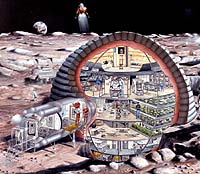
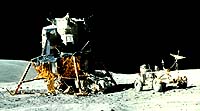
Lunar Convoys As An Option For A Return To The Moon

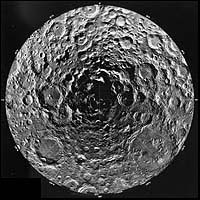
Madison - Mar 02, 2004 - The scientific community now believes there is water on the Moon. To some, this suggests a grand opportunity, and so it can be. However, the Moon's water, if there, is thought to be located near the poles, in deep, permanently-shadowed craters, as ice that is possibly buried, or at least mixed with lunar regolith. Special equipment will be needed to mine this enabling resource. A practical way to go after the lunar water is with the resources of a lunar colony.

Legacy Reports

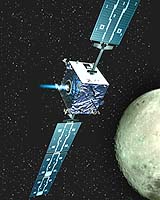
SMART-1 Ion Engine Switched Off and Commissioning Begins

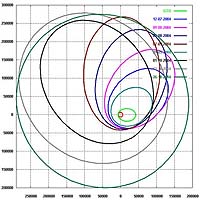
Paris (ESA) Feb 09, 2004 - The spacecraft is now in its 207th orbit, in good status and with all functions performing nominally. As in previous weeks, the ion drive has only generated thrust around the perigee point to fine-tune the altitude of the apogee point. This strategy has produced a noticeable increase in apogee height, see plot below, which is necessary to minimize the duration of eclipse periods that will occur during March.

Legacy Reports

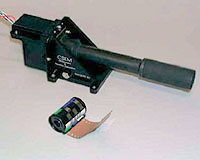
Smart-1 Ready For Payload Commissioning

Paris - Jan 27, 2004 - The spacecraft is now in its 194th orbit, in good status and with all functions performing nominally. As in previous weeks, the ion drive has only generated thrust around the perigee point to fine-tune the altitude of the apogee point. This strategy has produced a noticeable increase in apogee height, see plot below, which is necessary to minimize the duration of eclipse periods that will occur during March.