Following humanity's return to the Moon.
Moon Daily Editorial Team
Editorial Team

Moon Daily Editorial Team

Editorial Team

The Moon Daily Editorial Team produces Moon Daily's coverage of lunar exploration and science. We report on Artemis, landers and the Gateway, commercial lunar payloads, and the science of lunar geology, regolith and water ice. Articles reflect our team's collective editorial process, source verification, drafting, technical review, and editing, rather than a single writer's work. Moon Daily takes editorial responsibility for content under this byline. For more on how we work, see our editorial policy.

Legacy Reports

Deliver Your Message to the Moon In The Selene Wish Upon The Moon Campaign

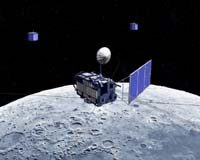
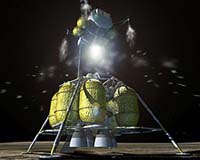
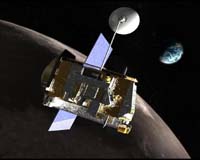
Tokyo, Japan (SPX) Dec 04, 2006 - The Japan Aerospace Exploration Agency (JAXA) is scheduled to launch the Selenological and Engineering Explorer (or Moon explorer) SELENE by an H-IIA Launch Vehicle in the summer of 2007. The major objective of the SELENE mission is to acquire scientific data to answer key questions on the Moon's origin and evolution. It is the first fully-fledged lunar exploration project since the Apollo program.
Legacy Reports

Lunar Exploration Themes And Objectives Development Process

Washington DC (SPX) Dec 04, 2006 - To develop the lunar exploration themes and lunar exploration objectives, NASA initiated and coordinated an international effort to gain input from many different stakeholder groups. This process began in April 2006 with the Global Exploration Strategy workshop held at the Ronald Reagan Center in Washington, D.C., and the simultaneous release of an associated Request for Information (RFI). The workshop proceedings and RFI response were used to generate a first draft of the themes and objectives.

Legacy Reports

Lunar Leonid Strikes

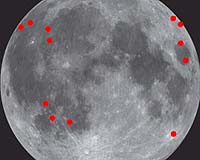
Washington DC (SPX) Dec 04, 2006 - Meteoroids are smashing into the Moon a lot more often than anyone expected. That's the tentative conclusion of Bill Cooke, head of NASA's Meteoroid Environment Office, after his team observed two Leonids hitting the Moon on Nov. 17, 2006. We've now seen 11 and possibly 12 lunar impacts since we started monitoring the Moon one year ago, says Cooke. That's about four times more hits than our computer models predicted.

Legacy Reports

Genesis Findings Solve Apollo Lunar Soil Mystery

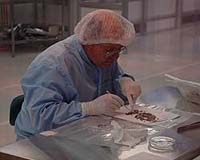
Pasadena CA (SPX) Nov 22, 2006 - Ever since astronauts returned from another world, scientists have been mystified by some of the moon rocks they brought back. Now one of the mysteries has been solved. We learned a great deal about the sun by going to the moon, said Don Burnett, Genesis principal investigator at California Institute of Technology, Pasadena, Calif. Now, with our Genesis data, we are turning the tables, using the solar wind to better understand lunar processes.

Legacy Reports

China And Russia Discuss Lunar Project

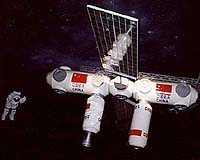
Beijing (XNA) Nov 12, 2006 - China and Russia are discussing lunar exploration co-operation in the next three years, the deputy head of the Russian Federal Space Agency said Thursday. Russia regards China as a partner in space exploration, Youriy Nosenko told a press conference in Beijing, adding that the two sides have shown interest on a lunar project. He did not elaborate. The two countries have different strengths that can supplement and benefit each other, he said.

Legacy Reports

Escaping Gasses From Moon Expose Fresh Surface

Providence RI (SPX) Nov 10, 2006 - Conventional wisdom suggests that the Earth's moon has seen no widespread volcanic activity for at least the last 3 billion years. Now, a fresh look at existing data points to much more recent release of lunar gasses. The study, published in the journal Nature by geologists Peter Schulz and Carle Pieters of Brown University and Matthew Staid of the Planetary Science Institute, uses three distinct lines of evidence to support the assertion that volcanic gas has been released from the moon's surface within the last 1 to 10 million years.

Legacy Reports

The Moon Not As Dead Cold As Believed

Providence RI (UPI) Nov 09, 2006 - U.S. scientists say a study of Apollo-era and recent spectral data suggests the moon may have produced interior gas eruptions more recently than thought. Brown University geological science Professors Peter Schulz and Carle Pieters note conventional wisdom suggests the Earth's moon has seen no widespread volcanic activity for at least 3 billion years. But now they say the data point to much more recent events.

Legacy Reports

Bizarre Lunar Orbits

Pasadena CA (SPX) Nov 07, 2006 - Near the end of the mission of Apollo 16, on April 24, 1972, just before returning back home to Earth, the three astronauts released one last scientific experiment: a small subsatellite called PFS-2 to orbit the Moon about every 2 hours. The intention? Joining an earlier subsatellite PFS-1, released by Apollo 15 astronauts eight months earlier, PFS-2 was to measure charged particles and magnetic fields all around the Moon as the Moon orbited Earth.

Legacy Reports

No Lunar Polar Ice Sheets Found In High Resolution Radar Images

Ithaca NY (SPX) Oct 19, 2006 - Using the highest resolution radar-signal images ever made of the moon - images from the National Science Foundation's (NSF) Arecibo Telescope in Arecibo, P.R., and the NSF's Robert C. Byrd Telescope in Green Bank, W.Va. - planetary astronomers have found no evidence for ice in craters at the lunar south pole. Cornell University, Smithsonian Institution and Australian scientists report the findings in the latest Nature (Oct. 19, 2006).