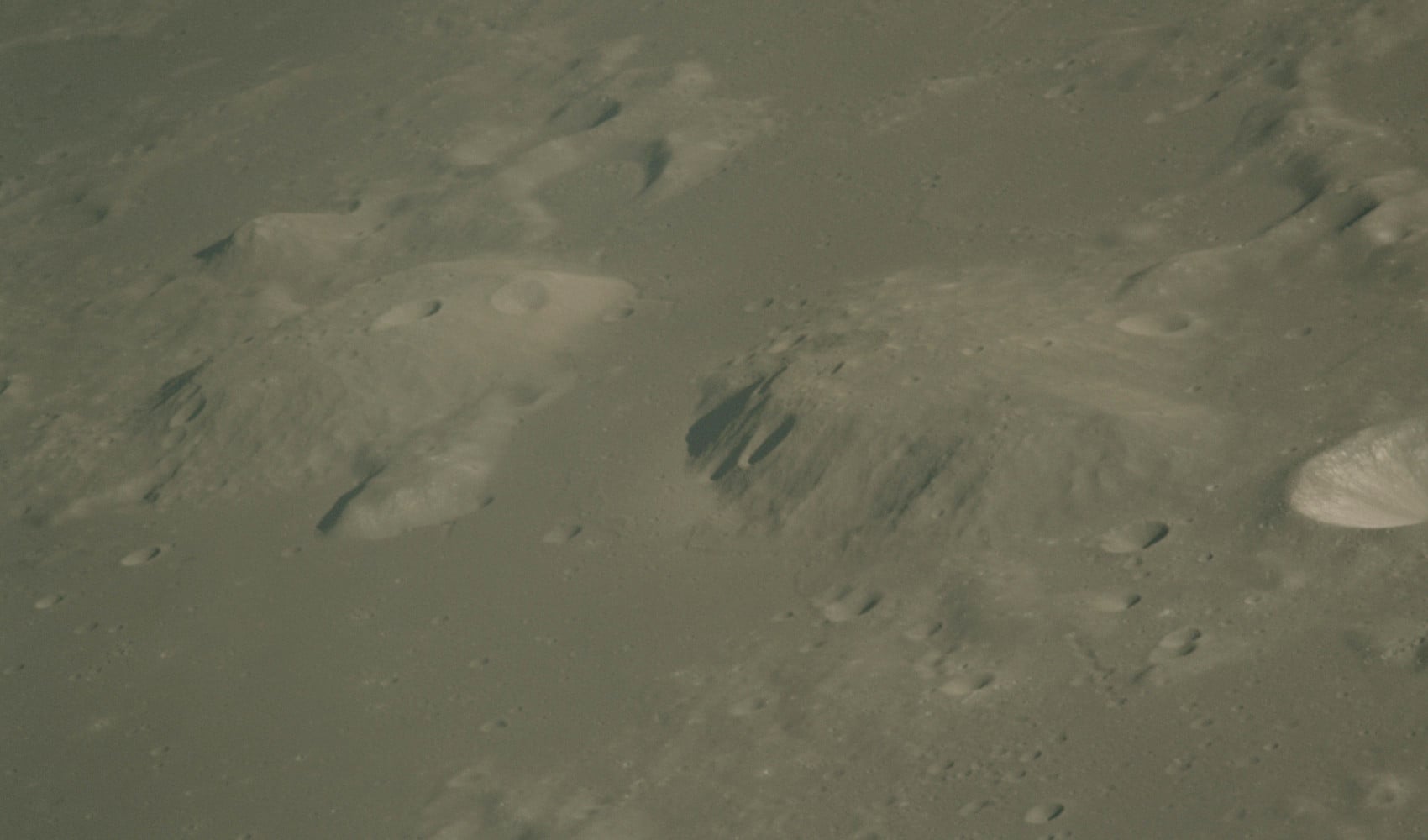
CEDAR PARK, Texas: Firefly Aerospace announced on 17 November 2026 that QASCOM’s COLLINS navigation payload is to fly on its Elytra Dark orbiter and operate in lunar orbit during a Blue Ghost mission to the Moon’s Gruithuisen Domes.
COLLINS stands for the Cislunar Orbiting L-band and LunaNet Integrated Navigation System. QASCOM develops it on behalf of the Italian Space Agency (ASI), according to Firefly’s announcement of the commercial payload agreement.
The mission is targeted to launch no earlier than 2028. With COLLINS added, the mission now has eight payloads in total. Six of them fly through NASA’s Commercial Lunar Payload Services (CLPS) initiative.
The payload is meant to demonstrate high-accuracy, robust navigation for future spacecraft. It is designed to draw on signals from the Global Navigation Satellite System (GNSS) and from future LunaNet position, navigation and timing (PNT) services. Firefly’s release names the European Space Agency’s Moonlight Lunar Communications and Navigation Services among those future services.
ASI set out its side of the arrangement in a news item dated 13 November, reporting that it had signed a contract with QASCOM for COLLINS. The agency describes the project as carrying the first interoperable GNSS/LunaNet payload into lunar orbit, hosted on Elytra Dark within what it calls the Blue Ghost 3 mission.
In ASI’s description, the receiver aims to show integrated use of the GPS and Galileo satellite navigation systems with new lunar infrastructure, including ESA’s Moonlight programme, inside the LunaNet architecture.
From LuGRE to COLLINS
COLLINS follows LuGRE, a joint ASI and NASA payload developed by QASCOM that flew on Blue Ghost Mission 1. Firefly says LuGRE tracked GNSS signals on the Moon’s surface for the first time.
ASI gives more detail. It reports that LuGRE acquired GPS and Galileo signals up to about 410,000 km from Earth. After Blue Ghost 1 landed on 2 March 2025, LuGRE showed that those signals could be acquired and used on the lunar surface, and it operated for about 14 Earth days, the agency says.
The two payloads took different contractual routes. LuGRE was contracted through NASA CLPS. COLLINS is a commercial contract with Firefly, part of a public-private co-investment initiative between ASI and QASCOM.
ASI calls COLLINS a first example of public-private co-investment in an Italian lunar mission, with QASCOM buying hosting services on Elytra Dark.
Firefly’s plan for the mission runs in stages. Elytra is first to deploy Blue Ghost into lunar orbit. The lander is then to touch down on the Gruithuisen Domes and support payload operations for approximately 14 days on the surface.
Elytra, meanwhile, is to serve as a communications relay for Blue Ghost from lunar orbit and complete six months of operations for COLLINS, with the option to extend.
After that, the company plans to keep Elytra in lunar orbit for five years, capturing high-resolution imagery for its Ocula lunar imaging service. It would be the second Elytra vehicle Firefly deploys to lunar orbit, following the company’s upcoming far-side mission.
ASI says the payload’s name honours Michael Collins, the Apollo 11 astronaut who remained in lunar orbit while Neil Armstrong and Buzz Aldrin descended to the surface.
Firefly CEO Jason Kim pointed to the company’s pairing of lander and orbiter. “Our dual spacecraft configuration, including our Blue Ghost lander and Elytra orbiter, puts us in a unique position to enable a wider scope of repeatable, reliable operations on and around the Moon,” he said in the release.
Firefly’s release also quotes QASCOM co-founder Oscar Pozzobon: “By launching the first combined GNSS/LunaNet PNT technology into lunar orbit, QASCOM and Firefly will enable critical capabilities such as autonomous lunar navigation, mobility, and precision landing for future governmental and commercial missions.”
Earlier Moon Daily coverage includes NASA and Italian Space Agency test future Lunar navigation technology, NASA Successfully Acquires GPS Signals on Moon and Firefly taps Honeybee Robotics to deliver rover for 2028 Moon dome mission.